Sign in. It’s quick, free and it’s up to you.
An account is an optional way to support the work we do. Find out more.
Sign in. It’s quick, free and it’s up to you.
An account is an optional way to support the work we do. Find out more.
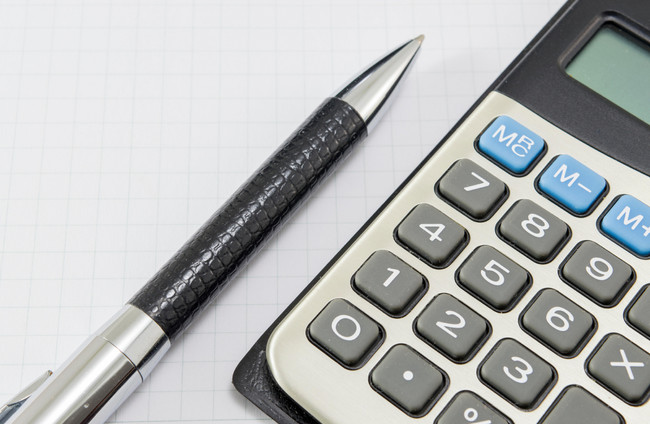
IN HONOUR OF Maths Week, as is our annual tradition, we’re setting our readers some puzzles. Give them a go!
The Basic Operators
With the development of counting came the need to add, subtract, divide and multiply numbers. These are the basic operations of arithmetic, and the word arithmetic comes from the Greek word arithmos, meaning “number”.
Ancient civilisations such as the Sumerians, Babylonians, and Egyptians used early forms of arithmetic to keep records of trade, land, taxes, and food production.
Our own ancient ancestors would have used their own form of arithmetic to build amazing structures such as Newgrange.
We still use arithmetic for our daily problem-solving activities, but it also underpins higher branches of math like algebra and geometry. While we mostly use the four basic operations there are also more complex operations such as powers and roots. In arithmetic we use standard symbols for the operators, for instance: + – ÷ x and = .
This makes it easier and quicker to write down our work. It is essential that these are standard symbols, so they are clearly understood by others anywhere in the world. The use of symbols is a feature of maths and while they are used for efficiency and clarity, they do often add an extra layer of difficulty.
Here are some arithmetic puzzles that require only the four basic operators.
Sunday’s puzzles: The answers
Come back tomorrow at 7.30pm for the answers to today’s puzzle.
The puzzles this week have been compiled for The Journal by Eoin Gill of Maths Week Ireland and South-East Technological University (SETU).

To embed this post, copy the code below on your site











have your say