Sign in. It’s quick, free and it’s up to you.
An account is an optional way to support the work we do. Find out more.
Sign in. It’s quick, free and it’s up to you.
An account is an optional way to support the work we do. Find out more.
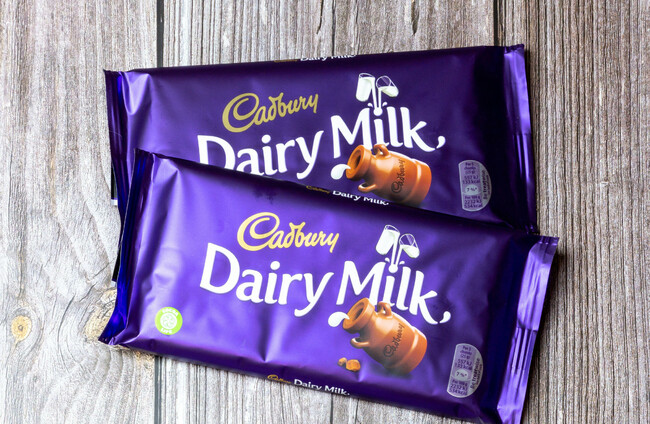
THE BOSS OF Cadbury’s parent company Mondelez International has defended so-called “shrinkflation”, saying chocolate bars are often made smaller because consumers are reluctant to accept higher prices.
Speaking on the BBC’s The Big Boss podcast, chief executive Dirk Van de Put said the company tries to keep products at familiar price points when soaring cocoa costs make manufacturing more expensive.
“The big question is what do you do?” Van de Put said.
“I believe most consumers love their Cadbury. They want to have their daily Cadbury, but when they were paying a pound, they don’t want to then pay one and a half or two pounds for the same quantity.”
“So what do we do? Yes, we reduce sometimes the size.”
Van de Put rejected suggestions that the practice is intended to mislead shoppers.
"It's not like we're trying to fool the consumer in any way."
— BBC Radio 4 Today (@BBCr4today) June 17, 2026
Dirk Van de Put, CEO of Mondelez International - the company who own Cadbury - tells @Leanna_Byrne how the brand wants to keep consumers happy with a familiar price point but that this can result in smaller products. pic.twitter.com/hPni848PYl
“People call it shrinkflation, but it’s not that we’re trying to fool the consumer in any way,” he said.
Instead, Van de Put argued that keeping products at established price points was often the best way to ensure customers continued buying them.
Cadbury has repeatedly reduced the size of some of its products in recent years. The company’s standard 200g Dairy Milk sharing bars were cut to 180g, while some individual Dairy Milk bars were reduced from 49g to 45g.
Multipack versions of products including Crunchie, Twirl and Wispa have also been downsized, with the company previously saying some changes were intended to reduce calorie counts.
The comments come after several years of rising chocolate prices driven by turmoil in the global cocoa market.
Poor harvests in major cocoa-producing countries, including Ghana and Ivory Coast, helped push cocoa prices to record highs, forcing manufacturers to either raise prices or reduce pack sizes.
Van de Put said stronger harvests over the past two years have eased some pressure and cocoa prices are beginning to “normalise”, although they remain well above historic levels.
He said the company studies how many consumers would stop buying products if prices increased before deciding whether to raise prices or reduce sizes.
“We look at how many people buy at that price point, and then we can study if we move it to one and a half, how many people will drop out of buying it,” Van de Put said.
Mondelez has faced significant cost pressures from rising cocoa prices in recent years, but the company remains highly profitable.
It reported net revenues of $38.5 billion (€33.4 billion) in 2025, up 5.8% year-on-year, while net income reached $2.45 billion (€2.11 billion).
Van de Put said soaring cocoa costs had squeezed margins and forced manufacturers to make difficult decisions on pricing and pack sizes.
Despite criticism from some consumers, Van de Put said Mondelez had ruled out changing recipes to cut costs.
“If you have a Cadbury bar, you want it to be real chocolate,” he said. “That was not an option for us.”
Cadbury was bought by Mondelez back in 2010, with the company telling The Journal that it “had not made any changes to the cocoa, dairy or vegetable fat content of our Cadbury Dairy Milk products.”
The executive also used the interview to warn that climate change remains a major challenge for the chocolate industry, describing the cocoa supply chain as one of the company’s biggest long-term concerns.
Mondelez owns a number of major brands including Cadbury, Oreo, Toblerone and Ritz.
They currently operate two production sites in Ireland – one in Coolock in north Dublin, and one in Rathmore, Co Kerry.

To embed this post, copy the code below on your site











have your say