Sign in. It’s quick, free and it’s up to you.
An account is an optional way to support the work we do. Find out more.
Sign in. It’s quick, free and it’s up to you.
An account is an optional way to support the work we do. Find out more.
MERCHANTS QUAY IRELAND (MQI), a charity which helps people experiencing homelessness and addiction, has seen a huge increase in demand for its mental health services.
From January to May this year, MQI’s mental health team cared for 313 clients, a 113% increase on the same period last year.
The team is “regularly faced with life and death situations”, MQI said.
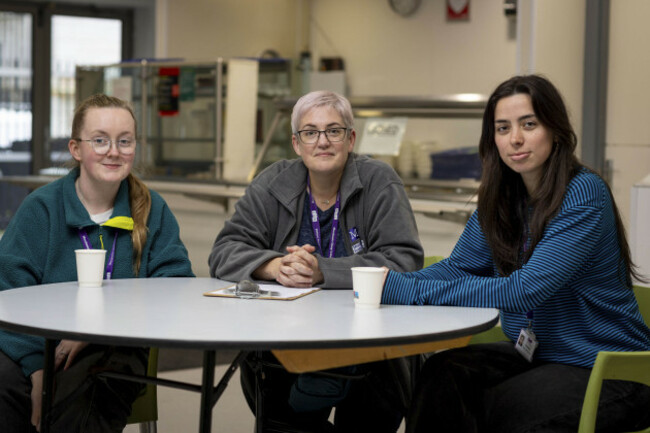
The group, which consists of a clinical nurse manager and two case workers, provides support and links people in with other services as needed.
MQI receives funding from the HSE, but said it needs an additional €50,000 to keep the mental health team up and running for the next 12 months.
Any additional funds raised through an appeal launched today will go towards expanding the service outside Dublin, the spokesperson said.
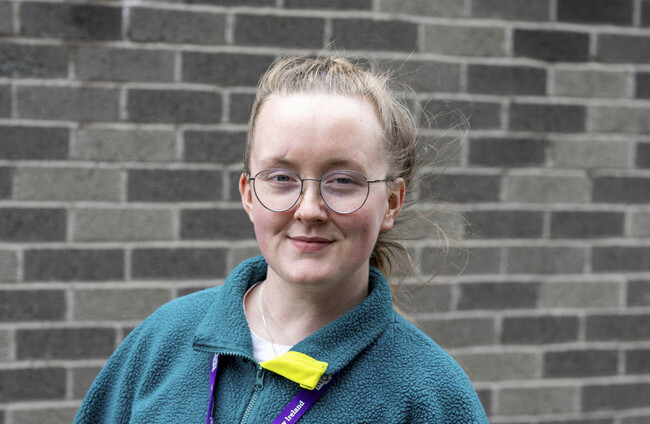
Ellie McGuinness, one of MQI’s mental health case workers, said she and her colleagues “help some of the most vulnerable members of society, people who literally have no one else in the world to share their problems with”.
“As you can imagine, your mental health can rapidly decline without a place to call home.
Daily life can be unbearably gruelling without any stability or comfort or knowing where you will sleep each night.
McGuinness said many homeless people have “survived overwhelming trauma, yet they sadly feel ashamed about asking for help”.
Eddie Mullins, CEO of MQI, told The Journal that people who seek mental health support from the charity are often “very distressed, very anxious”.
“They feel that there’s no hope in their lives, they just feel that the situation has become so unbearable that they can see no way out of the dire situation they’re in.”
As well as providing initial support, the mental health team refers individuals to other services as required.
“We’d work very closely with the HSE, we have a clinical care team as well, and we work closely with various hospitals across the city, so it’s a very collaborative approach,” Mullins explained.
“For many people, coming into Riverbank (MQI’s headquarters in Dublin city centre) is the first step in a process to try and deal with their mental health issues.
“We are very conscious that for many who end up on our doorstep, they don’t know where to go. They just find themselves in a really difficult situation.”
Mullins said sleep deprivation is a huge issue for homeless people, many of whom are too afraid to sleep on the streets due to safety concerns. He noted that this lack of sleep, naturally, has a negative impact on their mental wellbeing.
Research carried out by the Health Research Board in 2020 found that almost half (46%) of people who died while they were homeless had a history of mental health issues.
Many people who seek help from MQI also have addiction issues “often as a result of this stressful situation that they find themselves in”, Mullins told us.
“People might be detached from their families or they’re estranged from family members and they’re on their own.
So there’s a real sense of isolation, there’s a sense of ‘nobody really cares’.
“What we try to do is show people that there are people out there who care. That friendly face and that kind word can make a huge difference to somebody who was spent most of the day walking around talking to nobody,” he said.
More than 14,000 people lived in emergency accommodation in April, the highest number ever recorded, according to figures released last month.
As well as providing support to people who sleep on the streets, MQI also helps people who live in emergency or other unstable accommodation.
Mullins said MQI’s mental health team supports anyone who has “nowhere to call home”.
“It’s a cross section of people who are living in supported accommodation, in private rented accommodation, the various different types of accommodations that are not stable – where people are spending a night there and then they’re moving on during the day.”
Mullins said the current “funding gap” needs to be “urgently” addressed.
“The longer people are homeless, the more their mental health can suffer. We are seeing more and more people spending longer in the cycle of homelessness, which can lead to feelings of hopelessness and thinking there is no way out.
“Without a full team in place, we simply won’t be able to help the people who need it most, and lives could be lost.”
The Journal has contacted the HSE for comment.

To embed this post, copy the code below on your site















have your say