We need your help now

Support from readers like you keeps The Journal open.

You are visiting us because we have something you value. Independent, unbiased news that tells the truth. Advertising revenue goes some way to support our mission, but this year it has not been enough.

If you've seen value in our reporting, please contribute what you can, so we can continue to produce accurate and meaningful journalism. For everyone who needs it.

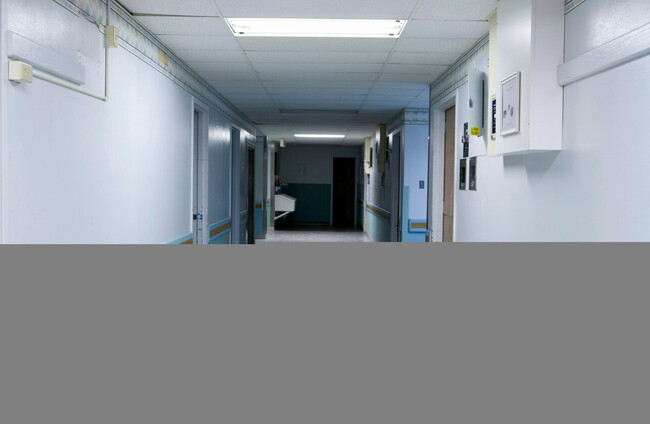
A stock image of a hospital corridor.

Multiple mental health units found to be critically or highly non-compliant with rules

Not all staff restraining patients in one centre were trained to do so, and in another staffing shortages meant patients couldn’t access the garden ‘even at the hottest point of summer’.

THE MENTAL HEALTH Commission has found several inpatient mental health centres across Cork, Dublin, Kildare Louth and Mayo to be critically or highly non-compliant with its standards for care. 

Some of the issues flagged included dirty premises, no staff being available to take residents outdoors in one unit, and the time being incorrect on a clock in a seclusion facility where people are kept if they are being restrained whilst experiencing an episode that puts themselves or others at harm. 

Patients living in these units did note positives about their experiences, but others complained about a lack of activities and intellectual stimulation, and some noted that they didn’t always feel safe. Patients in one home noted that there were not staff available to look after them, and that sometimes the unit was overly crowded. 

Several residents noted that the puzzles and board games on their units had pieces missing. 

The inpatient mental health service in St Stephen’s Hospital, Cork, was only 60% compliant with the rules, regulations and codes of practice of HIQA. 

Both the adult mental health Unit in Mayo University Hospital in Dublin and the St Aloysius Ward in the Mater Misericordiae University Hospital were both found to be 69% compliant. 

The Drogheda Department of Psychiatry, the Lakeview Unit in Naas General hospital, and St Michael’s Unit in the Mercy University Hospital had better rates of compliance, with each having a higher rate respectively, ranging from 71% to 84%. 

In the adult mental health unit in Mayo University Hospital inspectors found that the HSE’s pay and numbers strategy had impacted staffing levels,  and that a consultant psychologist post that was approved by payroll in April 2024, but was never signed off on by the executive, remained vacant. 

The inspection noted that this vacancy, coupled with the general staffing difficulties, meant that the unit could not sufficiently meet the resident’s needs. 

It was noted that not all staff had completed restraint training. 

One resident said 22 residents said they were sometimes spoken to by staff in a way that made them feel “demoralised and dismissed”. However residents were generally happy with the food, and the information available to them about their diagnosis. 

In the St Aloysuis Ward in the Mater Hospital, which is registered for 13 beds, there was a lesser level of non compliance than in 2023, but there were still eight areas the centre wasn’t compliant in. 

Residents in that unit said that “there is nothing on” on the weekends, causing them to feel long. Another said that the activities offered to residents were “infantalising”. 

Understaffing in this ward meant that staff couldn’t access the garden “even at the hottest point of summer”. 

The inspector also noted that there were few items of male clothing available in the ward’s emergency clothing stock. 

The seclusion area in the centre was found to be “dirty”, which meant that the resident’s right to personal dignity and privacy was not respected. 

In the drogheda Department of Psychiatry, a purpose built adult in-patient unit, the inspection team were particularly concerned that not all residents who had stayed in the centre over six months had had general health assessments. This resulted in the centre being found to be criticall non-compliant. 

In this centre too, not all staff who participated in restraining patients had had adequate training. 

The St Michael’s Unit, which is part of the Mercy University Hospital in Cork city centre, was found to be in a bad state of internal repair. 

Inspectors noted that floors throughout the facility were stained and unclean, some windows did not open, and there was graffiti in the women’s toilets. 

The inspector noted that three sets of cross-corridor fire doors had gaps in them which would impair their function in the event of a fire. 

The MHC will require corrective and preventative action plans (CAPAS) from all services where non-compliances are identified. If correction isn’t taken, the MHC is able to take enforcement action. Ultimately, the MHC can remove a centre’s registration, or push for prosecution in extreme cases of rule-breaking.

Readers like you are keeping these stories free for everyone...
A mix of advertising and supporting contributions helps keep paywalls away from valuable information like this article. Over 5,000 readers like you have already stepped up and support us with a monthly payment or a once-off donation.

Close
18 Comments
This is YOUR comments community. Stay civil, stay constructive, stay on topic. Please familiarise yourself with our comments policy here before taking part.
Leave a Comment
    Submit a report
    Please help us understand how this comment violates our community guidelines.
    Thank you for the feedback
    Your feedback has been sent to our team for review.

    Leave a commentcancel

     
    JournalTv
    News in 60 seconds