Sign in. It’s quick, free and it’s up to you.
An account is an optional way to support the work we do. Find out more.
Sign in. It’s quick, free and it’s up to you.
An account is an optional way to support the work we do. Find out more.
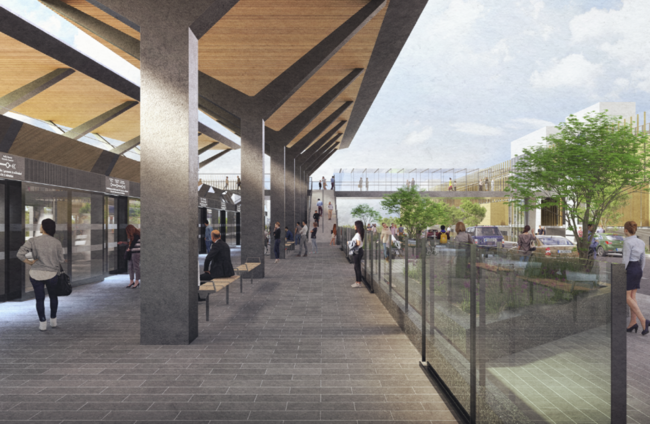
THE METROLINK IS the “only show in town” when it comes to transportation, despite recent criticism from billionaire investor Dermot Desmond and billionaire airline chief Michael O’Leary.
That’s according to Brian Caulfield, a professor in transportation at Trinity College Dublin.
He was responding to remarks reported in the Irish Times in which the Desmond claimed that Artificial Intelligence (AI) will make the planned Metrolink a “monument to history”.
If approved, construction of the long-delayed Metrolink in Dublin could begin in 2028 and is expected to cost up to €12 billion.
According to the project’s website, the completed line will “travel from Swords to Dublin city centre in approximately 25 minutes” and will be capable of carrying “up to 20,000 passengers per hour in each direction”.
However, Desmond, who made his fortune primarly through investment and finance, said Metrolink was “not going to be required” due to self-driving, autonomous vehicles.
“Within 15 to 25 years, I think it will be mandated that there will be autonomous vehicles,” he said.
Desmond is not the only billionaire to voice doubts about the project, with Ryanair Group CEO O’Leary also recently calling it a “waste” of taxpayer mone, prompting a rebuke from Transport Minister Darragh O’Brien.

In his comments on the future of transport in Dublin, Desmond also predicted that self-driving “Robotaxis” could result in a 60% reduction in private vehicles, and a 98% reduction in the “most optimistic case” for the capital.
Professor Brian Caulfield told The Journal that while autonomous vehicles are “definitely coming”, it’s unlikely that “platoons of autonomous vehicles are going to replace something like a metro system”.
The Metrolink is designed to carry around 53 million passengers per year.
“Physically, if you lined up all of the cars to take that many people, it just wouldn’t work and would be a huge congestion issue,” said Caulfield.
“Building a metro – putting people into bigger vehicles that move much quicker – is the way to do it and it’s the way most modern cities are doing it.”
“There isn’t a city on the planet right now that is doing what Dermot Desmond says that they want to do with all of these autonomous vehicles.
“In fairness, he does say it’s 15 to 25 years away, but to move that volume of people, with the road space we have, it just wouldn’t work.”
He added: “If you want something autonomous, you have it on the Metrolink, there will be no drivers on it.”
“There’s no other show in town to move that volume of people in the space that we have because of the physical size of cars and their inefficiency in terms of space.
“Regardless of how a car is powered, or if it’s autonomous or not, we still have the same amount of road space, unless these pods are very small and not like cars at all.
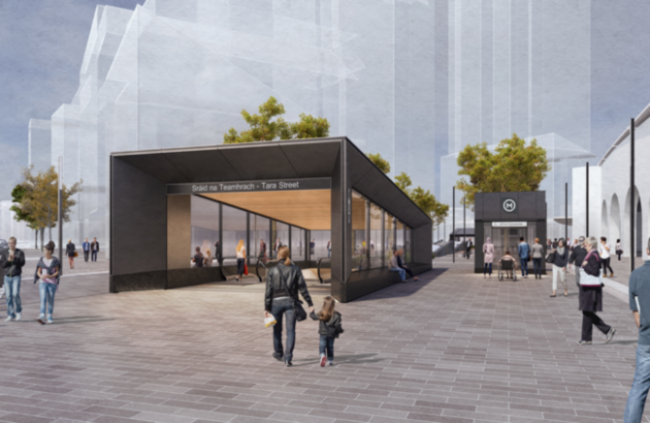
It’s a concern shared by Dublin councillor Feljin Jose, who is the Green Party’s spokesperson for transport.
He noted that “autonomous vehicles are still cars and the space constraints remain the same”.
He also questioned Desmond intervening on the Metrolink and added: “The man probably hasn’t used public transport in decades”.
Meanwhile, Desmond said that a rise in automated vehicles will mean that “people will not be allowed to drive anything”.
Caulfield said this is something that won’t be possible.
“In 20 years time, will we be able to take a car off of every single person in this country, including Dermot Desmond?”
He added that there are a lot of “questions” around the use of autonomous vehicles.
“When it comes to the technology, we could probably do it now but you have to think about the legal aspects, such as who’s responsible for the vehicle if there’s an accident.
“If an autonomous car is going to crash into a group of old people or a group of young people, what’s the AI in there that says what’s the right decision?
“There’s so many of those things that need to happen and that a whole country would give up all of its cars for this to happen, there’s no one else really talking like this.”
Caulfield added: “All former Transport Minister Eamon Ryan wanted to do was get people to go from a petrol or diesel to an electric car, in most cases, and use better public transport.
“What this proposal is, is to get rid of cars altogether, and that we’re going around in these autonomous pods.
“I really don’t see that washing with government, or with society either.”
However, Caufield does see a future for autonomous vehicles and said that they will be “very, very useful in rural parts of Ireland”.
“In some places in Ireland, if you want to go out for a meal with a glass of wine, you’re fully dependent upon a sparse taxi service.
“So autonomous vehicles in places like that would work quite well.”
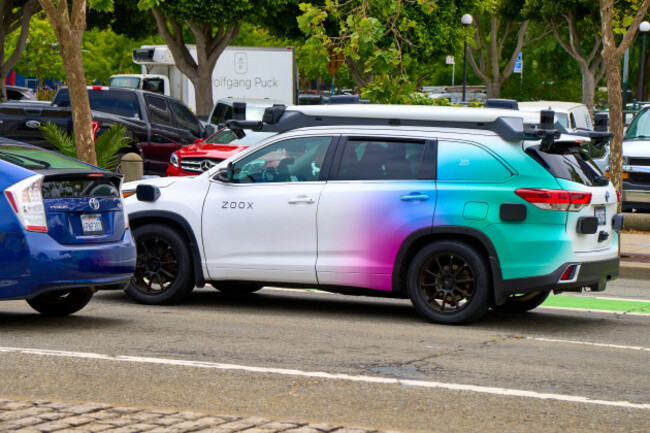
Autonomous vehicles and “Robotaxis” have already been rolled out in some US cities such as San Francisco, Phoenix and Austin but Jose said the “interactions with pedestrians and cyclists and other human driven-transport makes it incredibly complicated”.
“They would need their own dedicated roads, or huge limitations on pedestrians and cyclists on our roads,” said Jose.
“We have to be very careful to make sure that we don’t slowly and progressively give in to this technology and curb our own personal freedoms.”
While he said autonomous vehicles may have a purpose, it needs to be “thought out and regulated”.
“It certainly cannot be a case of dumping all our policies and getting on this autonomous vehicle bandwagon with no evidence whatsoever that is going to solve any of our mass transit problems,” said Jose.
“They’re taxis without a taxi driver, and there are space efficiencies that come with vehicles communicating with each other.
“But whatever efficiency you gain is still nothing compared to mass transit, trams, trains and busses.”
He also pointed to a project by X and Tesla owner Elon Musk to highlight the inefficiencies involved in creating new systems for autonomous vehicles.
The Vegas Loop is an underground transportation system in Las Vegas that transports passengers in electric vehicles, currently Tesla Model Ys.
Thanks for riding Vegas Loop!
— The Boring Company (@boringcompany) July 13, 2025
Check out https://t.co/nobnU57DW5 for operational hours and ticketing info. pic.twitter.com/o4b4XAgzwR
The loop is currently around 3.9 kilometres long and still requires a human driver, despite the vehicle being self-driving, due to regulatory hurdles.
The aim is to serve up to 90,000 passengers per hour in its final form.
However, the best it has achieved so far is a peak capacity of around 4,500 passengers per hour.
“So that’s the implementation of autonomous vehicles that we have at the moment,” said Jose.
“Teslas driving in small road tunnels, with a very limited capacity, and the autonomous vehicles still need to have a driver in it.”

To embed this post, copy the code below on your site







have your say