Sign in. It’s quick, free and it’s up to you.
An account is an optional way to support the work we do. Find out more.
Sign in. It’s quick, free and it’s up to you.
An account is an optional way to support the work we do. Find out more.
IN EARLY FEBRUARY, I walked around a vast breakfast buffet at a resort south of Cancun before boarding a bus to a friend’s wedding on a sandy beach on Mexico’s popular Caribbean coast.
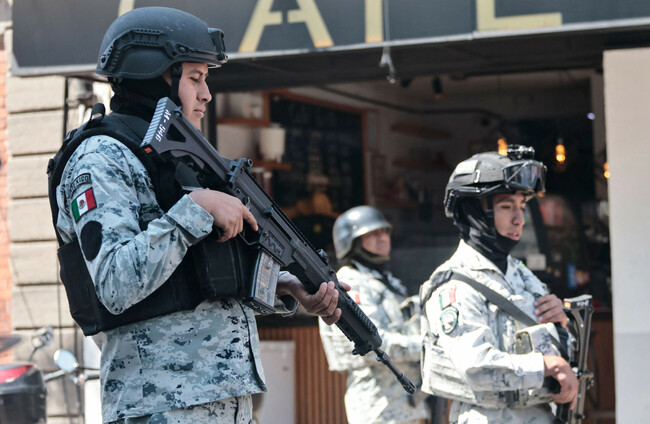
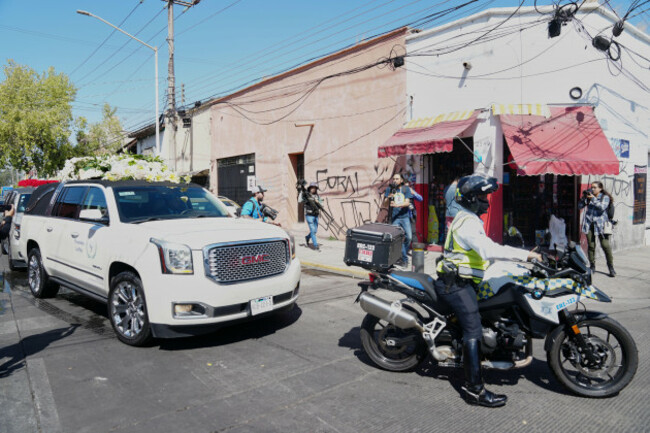
Two weeks later, tourists in that same area had to take shelter as armed gang members took to the streets after security forces killed Nemesio Oseguera Cervantes, the elusive drug cartel leader known as El Mencho, who led Jalisco New Generation Cartel (CJNG).
The killing of the 59-year-old CJNG leader in Jalisco State and Mexico’s most powerful drug lord triggered an immediate wave of mayhem and retaliatory violence across some 20 states, with cartel members blocking roads and highways with burning cars and engaging in gun battles with Mexican security forces and even attempting to take over Puerta Vallarta Airport.
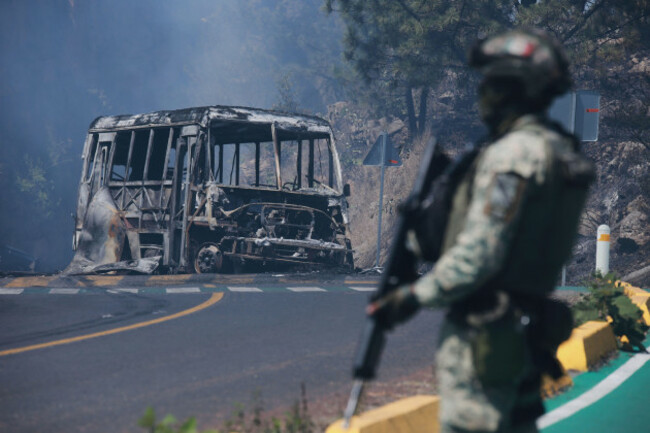
An Irish man living in a remote part of Jalisco, who did not want to provide his name for security reasons, described sitting in a restaurant as a member of the local cartel wearing a face covering, who arrived on a motorbike and cleared out the restaurant.
“We had no choice but to evacuate,” he told me in a message. During the wave of violence, more than 70 people were killed, according to official reports.
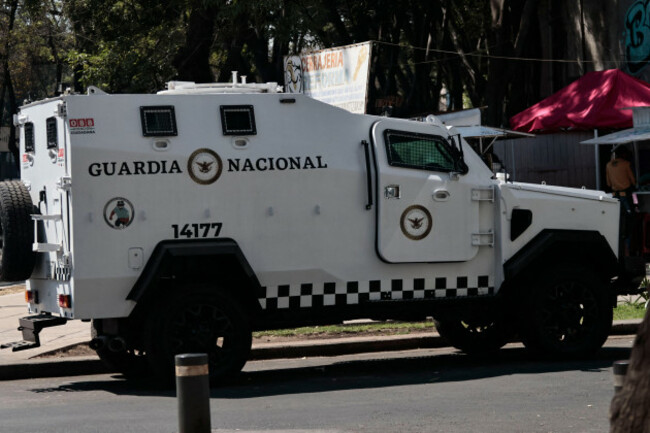
The targeting of El Mencho was undertaken in close partnership with US authorities, which reportedly provided key intelligence for the operation carried out by Mexico’s special forces.
The killing comes a year after the Trump administration designated CJNG a foreign terrorist organisation, threatened to carry out strikes in Mexico in order to target cartel leaders and linked negotiations of the US-Mexico-Canada trade agreement to improved security outcomes.
Unilateral US military action would violate the sovereignty of Mexico, one of the world’s largest countries with a population of around 135 million. The threat of military action in Mexico can be seen as part of an emboldened US foreign policy in the Americas, which Trump has labelled the ‘Donroe Doctrine’, and a national security policy that has, at times, conflated drugs and counter-terrorism policy, including through the use of lethal force against vessels alleged to be smuggling drugs in the Caribbean Sea.
“We’ve knocked out 97% of the drugs coming in by water, and we are gonna start now hitting land, with regard to the cartels,” Trump told Fox News in January 2026.
Mexico is a key pipeline to the US for both synthetic drugs, such as fentanyl, which have wreaked havoc in communities across America, as well as Colombian cocaine. However, the US is a key source of weapons – in some cases military-grade drones, grenade launchers and armoured vehicles – which are illegally trafficked to Mexico’s expansive network of drug cartels. In many cases, these well-armed gangs either work with pliable and poorly paid Mexican officials or kill those unwilling to cooperate.
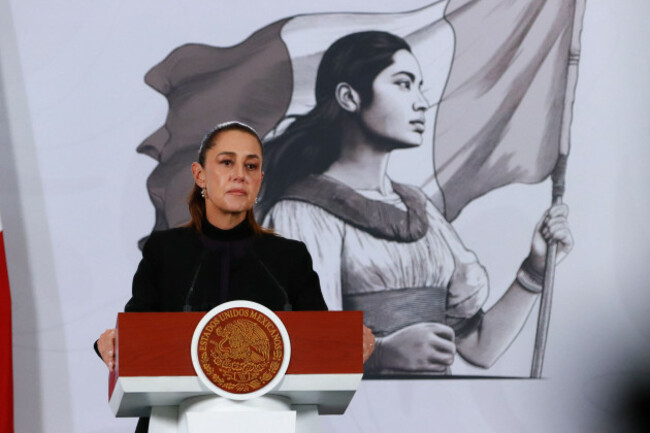
“In the crowded Mexican criminal landscape, the Jalisco Cartel also stood out for its propensity for brazen violence against government officials. In June 2020, its hitmen ambushed but failed to kill Omar García Harfuch, then leading Mexico City’s fight against crime and today chief of public security for President Claudia Sheinbaum. More recently, the cartel killed a popular mayor in Michoacán,” writes David Mora, a senior analyst at the non-profit International Crisis Group.
El Mencho’s heir in CJNG remains unclear, but there are unconfirmed reports that his stepson, Juan Carlos Valencia González, known as “El 03”, has assumed control. The potential successor will need to reassert their authority against an array of local groups operating in Mexico. “While El Mencho’s death delivered Sheinbaum a win with Washington, it is far from clear the killing will aid the president’s ultimate goal of pacifying Mexico,” writes Mora.
The Mexican government’s militarised efforts to take on the drug cartels since the mid 2000s has coincided with a staggering 130,000 people now deemed missing or disappeared across Mexico. A new report by the public policy analysis firm México Evalúa found that disappearances have increased more than 200% over the last decade.
In March 2025, a local group of volunteers and activists who search for missing people in Mexico reported finding hundreds of shoes, items of clothing, charred human remains, and what appeared to be several underground ovens on a ranch outside Guadalajara, the capital of Jalisco state and a notorious CJNG stronghold. By making bodies disappear, criminal groups “invisibilize the violence, because that puts them under the radar”, said Armando Vargas, a security analyst at México Evalúa.
“The elimination of a single leader, no matter how notorious, is not sufficient to unwind a group as wealthy, well-armed, and brutal as the CJNG. A bloody contest for control over the cartel, or even a splintering of the organisation into rival factions, could all exacerbate problems of insecurity in Mexico,” wrote Henry Ziemer and Ryan Berg in a recent article for the Centre for Strategic and International Studies, a think tank based in Washington DC.
El Mencho’s killing has delivered a high-octane moment designed to appease Trump, who quickly took credit for the operation in Jalisco. “We have taken down one of the most sinister cartel kingpins,” said the US President after the operation.
But there has been little discussion from the Mexican government about rooting out corruption and impunity within the country’s political and legal systems, which have enabled drug cartels to operate so widely. According to the UN, in 2022, more than 96% of crimes in Mexico went unsolved.
“No Mexican government has had a comprehensive strategy to weaken the gangs, nor strong enough rule of law to see it through,” Alejandro Schtulmann, founding partner at risk advisory firm Empra, told the FT. “Without strategy, intelligence and enforcement, targeting kingpins never works. I see little chance of it succeeding now.”
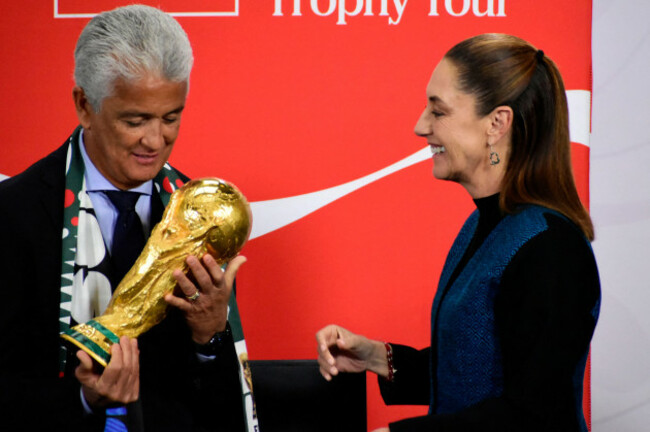
Of more concern to Sheinbaum’s government is that February’s violence could hurt tourism ahead of the FIFA World Cup. The international football tournament will be played partly in Mexico this summer, as well as in neighbouring the US and Canada. Mexico is expecting five million visitors and significant tourist spending,
Later this month, Jamaica’s national football team will be playing a qualifying match against New Caledonia in CJNG’s stronghold of Guadalajara. Michael Ricketts, the president of the Jamaican soccer federation, said: “We are very aware of what’s happening there, and, of course, you are very concerned.”

To embed this post, copy the code below on your site












have your say