Sign in. It’s quick, free and it’s up to you.
An account is an optional way to support the work we do. Find out more.
Sign in. It’s quick, free and it’s up to you.
An account is an optional way to support the work we do. Find out more.
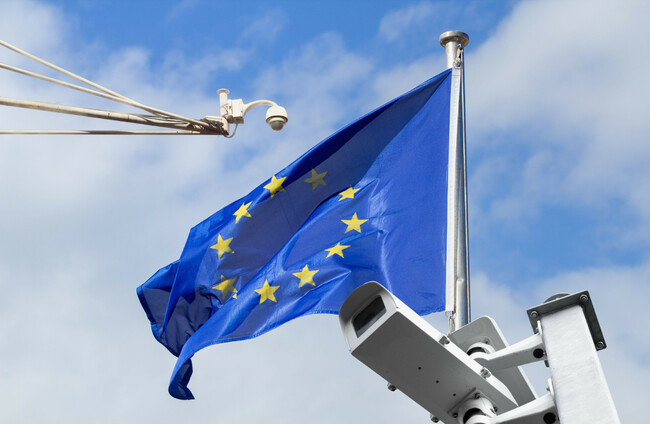
FOR A LOT of people, Ireland holding the Presidency of the Council of the European Union may seem irrelevant and inconsequential to our day-to-day lives.
The last two weeks saw a lot of pomp and ceremony as the six-month stint was kicked off with events in both Dublin and Cork, and in the main the only impact they had on ordinary people in Ireland was via traffic disruptions.
But how the Irish government operates over the next six months will have a lasting impact, not just in Ireland but on EU citizens as a whole.
Specifically in terms of how it brokers the EU’s next long-term budget.
The EU runs on a system where it plans a budget, known as the Multiannual Financial Framework (MFF), for the entire bloc on a seven-year basis.
Work on the EU’s next MFF began in July 2025 when the European Commission put forward its draft version.
The new MFF will be in place for the seven years encompassing 2028 to 2034 and a significant chunk of work on it will be undertaken while Ireland holds the presidency of the Council of the European Union.
It is due to be finalised by the end of this year, and then legislated for in 2027, before coming into effect from 2028.
Ireland, specifically Taoiseach Micheál Martin, will play a vital role in chairing debates between the 27 EU member states on just what the budget should be.
For the first time since we joined the EU in 1972, Ireland is now a net contributor to the budget rather than a beneficiary.
Fianna Fáil MEP Billy Kelleher has pointed out that this shifts Ireland’s perspective on things, giving us more of an appreciation of the viewpoint of some of the larger member states who have long been the principal funders of the bloc.
Regardless of this, Ireland will have to be impartial as it facilitates the negotiations between now and December.
Already there is unhappiness over what has been proposed by the Commission, with the European Parliament arguing it is not enough money and several member states arguing they do not want to contribute any more.
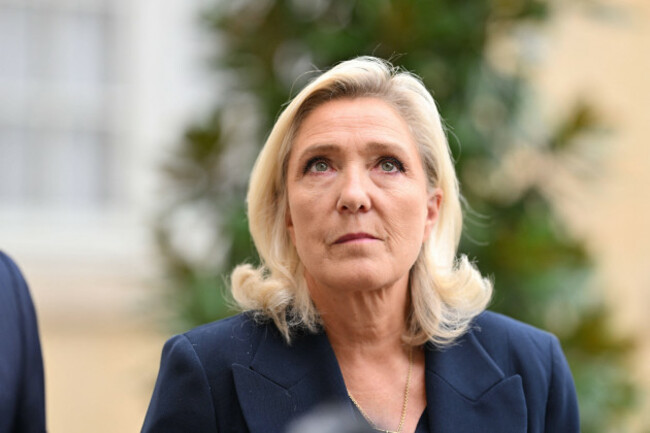
Increasing the pressure on Ireland to get the budget over the line by the end of the year is the fact that French elections in 2027 threaten to completely change the country’s approach to the EU, with the front-running far-right National Rally (RN) party already positioning itself for a showdown with Brussels.
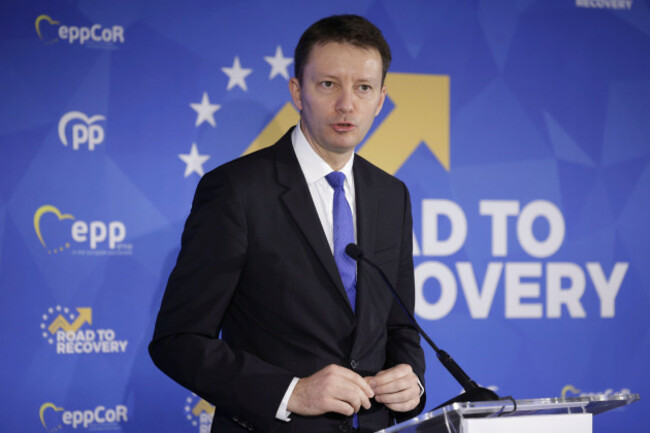
While in Strasbourg this week covering Taoiseach Micheál Martin’s visit to the parliament, The Journal caught up with Romanian EPP MEP Siegfried Mureşan, who outlined some of the proposals being put forward to grow the amount of money the EU has to play with.
Mureşan, who sits on the European Parliament’s Budget Committee, explained that security and defence, along with competitiveness, will be the priorities for the EU budget in the years to come.
He explained that the allocation for defence in the current budget, which runs from 2021 to 2027, was “insufficient” given that it was agreed before Russia’s invasion of Ukraine.
“We will increase significantly the allocation to defence from €15 billion [over seven years] to about €135 billion,” he said.
Mureşan said the European Parliament strongly believes that more needs to be invested into defence and security as well as competitiveness, but that this should not be done at the expense of the EU’s two traditional priorities: the Common Agricultural Policy (CAP) and the cohesion policy.
The MEP was critical of the draft budget put forward by the Commission last July, given that it is only marginally larger than the previous budget and more must be done with it.
The proposed budget amounts to 1.15% of GNI per member state, just 0.02% more than the current MFF.
In order to be able to spend more on defence and competitiveness, without reducing spending on CAP or the cohesion policy, then the EU’s budget needs to be bigger, Mureşan said.
“We, as a parliament, believe this budget is insufficient,” he said, adding that the European Parliament has proposed what it sees as a modest 10% increase on the current draft put forward by the Commission.
Rather than asking individual member states to cough up more, though, what is proposed is ‘own sources of revenue’ for the EU.
Mureşan argued that this would ensure the EU’s budget is funded more transparently and predictably and would remove a lot of the division that exists in budget negotiations, where traditionally each member state fights to contribute as little as possible.
Well, the European Commission has proposed some options, but given that unanimity is needed among the 27 member states to introduce them, the bar is extremely high.
One of the proposals is to impose a fee on all large businesses that have an annual turnover above €1 million.
In Mureşan’s view, this would be unworkable as it would fly in the face of the EU’s objectives around competitiveness.
Another option put forward by the Commission was an EU-wide tobacco tax, but this is heavily opposed by several member states, particularly those in Southern Europe.
Alternatively, the European Parliament has proposed three ideas, which Mureşan argued would not impact EU citizens or businesses.
The first proposal is a digital levy imposed on firms outside the EU who operate here.
The second is a levy on gambling, with online gambling targeted first but offline gambling eventually also included.
The final proposal is a levy on profits made with cryptocurrency transactions.
In Mureşan’s opinion, it is an “easy” choice.
“Either we look into charging the global technological giants…a tiny little fee for their access which has been free so far into the single market, or we reduce funding to farmers, to research, to innovation, to our security, to regions,” he said.
He added, however, that a digital levy would have to be done in a way that it does not endanger growth and job creation in Europe.
Of course, from the Irish government’s perspective, any levies that would place an additional burden on the tech firms that have thrived in Ireland would likely be deeply unpopular.
Indeed, Ireland’s relationship with the tech giants has long been pointed to as a conflict of interest as we take up the EU presidency, most recently with a group of international university professors arguing that Ireland should recuse itself from any negotiations on digital and corporate tax rules.
For Ireland’s part, the Taoiseach has repeatedly stressed that the government will act as honest brokers over the next six months and argued that no conflict of interest exists.
So while the Irish presidency of the EU may not have many immediate tangible impacts on people here, in the longer term, the work done on the EU’s budget over the next six months will have long-lasting consequences for the union as a whole.

To embed this post, copy the code below on your site












have your say