Sign in. It’s quick, free and it’s up to you.
An account is an optional way to support the work we do. Find out more.
Sign in. It’s quick, free and it’s up to you.
An account is an optional way to support the work we do. Find out more.
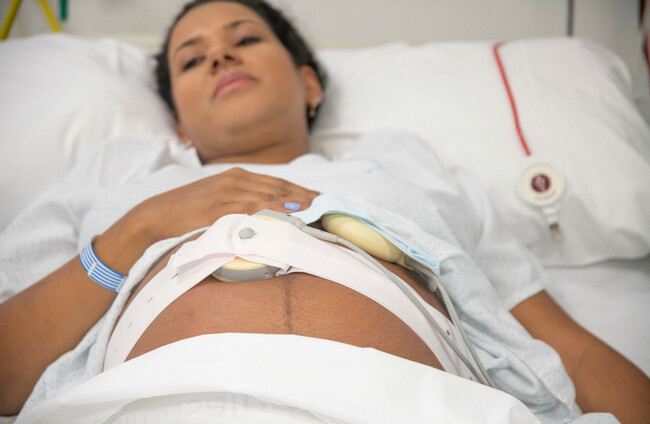

IN AN OPINION piece published in The Irish Times last Saturday, I warned about deficiencies in the current HSE National Clinical Practice Guidelines for Labour, most acutely in relation to the outdated concept of ‘latent phase’ labour – when a woman is told she is ‘not in established labour’ – and the resulting denial of pain relief to labouring women and appropriate monitoring of their babies.
Since publication and subsequent coverage in the Irish Times and on RTÉ, Newstalk and elsewhere, I have been contacted by many women and couples traumatised by their experiences of labour. This was often with their first babies, with mothers told they were less than 4cm dilated and therefore ‘not in established labour’, noted as ‘NIEL’ in patient records.
Many told me they were discharged home only to be rushed back to hospital, or that they delivered in an ambulance, or had an unplanned home birth without any professional assistance.
Other women on antenatal wards, who were repeatedly told they were in the ‘latent phase’ of labour found themselves suddenly rushed to the labour ward, often approaching or at full dilation, in a chaotic process that frightened them. For many it was too late to be given adequate, or indeed any, pain relief and their babies heart rate had not been appropriately monitored.
The trauma of such experiences can last a lifetime.
Many senior colleagues across the country, both doctors and midwives, also contacted me to express their agreement with my opinion.
Four example cases I have reviewed in the last two years demonstrate the harm of the ‘latent phase’ of labour approach. There are many other cases.
Woman A was having her first baby after IVF. She spent 23 hours in labour, 16 of which were deemed ‘NIEL’. She had a spontaneous vaginal delivery, but the baby died at birth.
Woman B spent 43 hours in labour, 22 of which were at home after she was discharged as being in the ‘latent phase’. She spent a further 13 hours on an antenatal ward deemed still in the ‘latent phase’ before admission to the labour ward. Eight hours later she had a spontaneous vaginal delivery, but the baby has a lifelong disability.
Woman C was having her fourth baby, having had one previous caesarean section. She spent 11 hours in labour, five of which were deemed ‘NIEL’. She suffered a ruptured uterus and the baby was asphyxiated at birth.
Woman D was having her first baby. She spent 25 hours in labour with the first 12-and-a-half deemed to be ‘latent phase’. She then had a caesarean section. She now lives with bladder trauma. In each case the ‘latent phase’ approach to early labour was a key factor in the adverse outcome.
In response to my warnings, the HSE alleged I was ‘cherry-picking’ just two issues in multiple guidelines. But pointing out serious and consequential deficiencies which are causing harm to women is not cherry-picking, it is highlighting the need for action and reform.
The HSE also pointed to the algorithms in the guidelines as evidence of ‘checks and balances’ and ‘safety-netting’. These are worth analysing and, in fact, confirm acute concerns. Algorithms 2 and 3 advise that the ‘latent phase’ may proceed for up to 12 hours before it is considered ‘prolonged’ and action taken.
If at this point a woman’s cervix is at least 4cm dilated ‘established labour’ is diagnosed. If lack of progress is suspected however, four more hours may elapse before transfer to the labour ward is considered, and a further two hours may elapse before the woman is actually transferred. This adds up to 18 hours in total, which is unacceptably long.
Bizarrely, the relevant algorithm is identical for first and subsequent labours, even though second births proceed faster than first ones. The algorithm also advises that fetal heart rate monitoring should commence only after labour is diagnosed; therefore, the baby can be unmonitored for up to 12 hours. This is a high-risk approach, in my view.
Another HSE response characterised the 520 cases detailed in the Ockenden Report as a series of ‘individual stories’, seemingly unaware that Ms Ockenden had emphasised a common thread in relation to the case of baby Harriet Hawkins, who died during labour, that her mother Sarah had been ‘repeatedly told that she was “not in labour”, which is a theme that was found across the timeline of the Review’.
As I wrote last week, Sarah had come into hospital 16 days overdue, was discharged home, and refused re-admission to hospital for nearly four days, at which point she was found to be 9-10 cm dilated.
In a third response, a Director of Midwifery at a leading maternity hospital told RTÉ that women who are in the latent phase of labour have the ‘choice’ to ‘go home’ or ‘walk the corridors’ of the hospital. In neither circumstance, of course, can the fetal heart rate be monitored or women have access to adequate pain relief if needed.
This is what the HSE guidelines look like in practice, and this approach illustrates exactly the problems I highlight.
For many years, and in particular over the past 10 years, I have acted as a medical expert witness in multiple maternity cases where adverse outcomes occurred.
In order to come to my opinions, I forensically examine the hospital records of women who have suffered injury or harm. The files often run to more than 1,000 pages. As a result I have considerable insight into both individual issues and recurring themes in problems in maternity care across the country.
To date the HSE has adopted an attitude of ‘nothing to see here, move along’. For the safety of women and their babies, however, it should act to review the guidelines without further delay.
To embed this post, copy the code below on your site














have your say