We need your help now

Support from readers like you keeps The Journal open.

You are visiting us because we have something you value. Independent, unbiased news that tells the truth. Advertising revenue goes some way to support our mission, but this year it has not been enough.

If you've seen value in our reporting, please contribute what you can, so we can continue to produce accurate and meaningful journalism. For everyone who needs it.

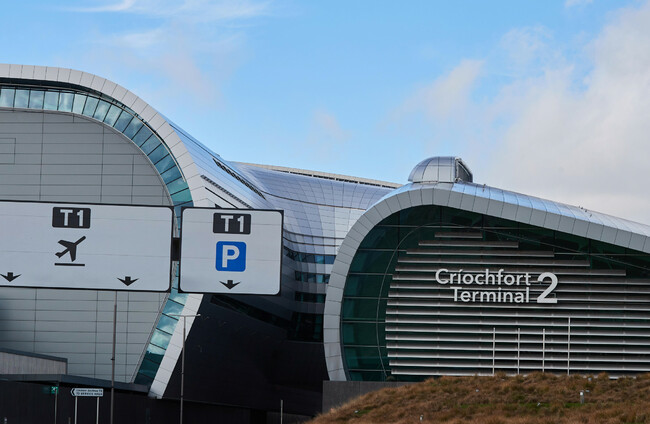
Terminal 2 of Dublin Airport. Alamy Stock Photo

This key point is always missed in MetroLink debates - it isn’t just for Dublin Airport

Billionaires, commuters and planners are still at odds as Dublin waits on a decision for the long-delayed MetroLink.

AS EONS PASS and stars collapse, as the earth shifts, mountains rise and fall, and continents drift, only one thing is truly eternal – the debate over Dublin’s metro.

In one iteration or another, the MetroLink has been discussed and debated for at least two decades.

It’s been announced, re-announced, shelved, and re-announced.

We’re finally inching towards a decision on its latest planning application. A decision which is already a year overdue.

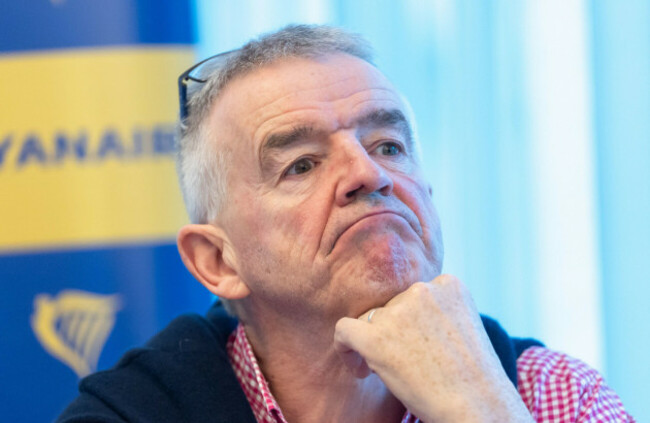
All this time has given people time to think. And argue the merits of the project. This of course refers to the recent comments from billionaires Dermot Desmond and Michael O’Leary, who recently spoke out against MetroLink.

o'leary Michael O'Leary. Alamy Stock Photo Alamy Stock Photo

A quick reminder of what MetroLink is. It’s a proposed 19km metro line which would run from just outside Swords on the northside of Dublin, past the airport and into the city centre.

The automated line would run driverless trains every three minutes during peak periods.

It’s anticipated it will be able to carry 20,000 people in each direction per hour. That’s 2.5 times as many people as the Luas Green Line can move.

The expectation is that, once completed, it will take thousands of cars off the road. It will allow people to commute more easily. 

And of course … it will provide a metro link between Dublin Airport and the city centre. What’s not to love?

Let’s focus on Michael O’Leary’s criticisms. As outlined in a letter to the Irish Times, the Ryanair CEO seems to have two main problems with the project:

  1. Dublin Airport passengers don’t need it (as buses can get people to and from the airport)
  2. It will cost too much money.

More than an airport line

With the first point, it’s worth noting – MetroLink is not just a metro line connecting Dublin Airport to the city centre.

Even if that’s how some people view it, that isn’t its primary purpose.

Brian Caufield, a transport professor at Trinity College, has pointed this out.

He said that while Dublin Airport will be the busiest MetroLink stop, the real project win will be providing “much-needed connectivity to North County Dublin”.

Swords is the largest urban centre in Ireland without a rail link. And that will be just one area which will be connected along MetroLink’s 16 stops. It’s estimated that 175,000 people will be within walking distance of a station.

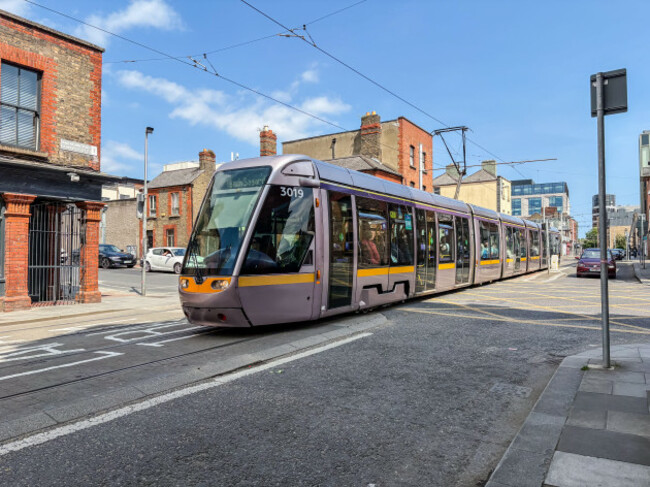
MetroLink was initially even more ambitious. The project was meant to involve upgrading the Luas Green Line to a metro. The Green Line was built with this in mind, and the upgrade could have been done quickly and cheaply.

luas-tram-dublins-light-rail-system-operating-through-urban-streets-in-ireland Alamy Stock Photo Alamy Stock Photo

There would then have been a high-capacity metro line running from north to south county Dublin, crossing the city centre.

As previously covered, that isn’t happening for some very silly reasons.

But that doesn’t change the fact that MetroLink will remove thousands and thousands of private cars from Dublin’s roads.

Dr Ciarán O’Carroll, a lecturer in enterprise and sustainability at TU Dublin, concisely summed it up.

In a letter to the Irish Times, he said: “With only about 18% of passengers expected to use the airport station, [MetroLink’s] real value lies in serving as a clean and efficient transport backbone for Dublin’s growing population.”

Between 2016 and 2022, the population of Fingal (ie, north county Dublin, or the area where MetroLink will serve) rose by 12%. This was the second fastest increase in the country, behind only Meath.

The Fingal population surged by over one-third between 2006 and 2022, and council officials plan for the area to be a key centre for new Dublin housing.

As stated by O’Carroll, a metro would be an ideal way to allow this area to commute.

It would also benefit other parts of Dublin and surrounding counties.

metro An artist's impression of the Tara Street MetroLink station.

Meath and Kildare recorded the first and third highest population growth in Ireland respectively between 2016 and 2022.

The number of people living in both counties, alongside Fingal, will likely continue to rise quickly.

Many of the new residents work in the city centre – as the population continues to grow, traffic will continue to get worse.

This is already happening – Dublin is regularly ranked among the worst cities in Europe for traffic congestion and commuting times are getting longer.

Many of the roads around the capital are small and narrow. There are only so many extra buses or cars you can throw onto them before they’re jammed completely.

Adding more vehicles to crowded roads can also cause buses to arrive late. Or not show up at all – again, a familiar issue for Dublin bus passengers.

MetroLink will take a massive number of people off the roads. As it will be mostly underground, it will also be separated from traffic – so it will run on time. So it would make life better for all commuters.

Cost vs. benefit

Onto Mr O’Leary’s second major objection – cost. This one has merit, but there are some caveats.

He mentions that the “projected cost” of the project is “approximately €20 billion”.

This isn’t exactly the case – a figure of €23 billion has been cited as around the ‘extreme upper limit’ of the expected MetroLink cost.

That’s if basically every single thing imaginable went wrong with the development.

He said a cost-benefit analysis “has never been published”. It has been, and showed the MetroLink would be a net positive.

Now, on the budget. The most recent estimate from transport officials gave a “range of potential costs from €7.16 billion to €12.25 billion”. This is where MetroLink’s actual cost should come in at.

Although the asterisk here is that these estimates are likely out of date due to inflation.

The longer the project is delayed, the higher the final bill will be. And it is delayed. As stated, a decision on the MetroLink planning application was meant to be made in 2024.

It’s just the latest in a long line of slips. The more of these there are, the more expensive the final price tag.

But does that all mean we shouldn’t build MetroLink at all?

Probably not. I’ve previously pointed out that the line will likely be far more expensive compared to metros built in continental Europe.

But given this will be Ireland’s first-ever time delivering underground rail, this is to be expected.

The Luas was also called too expensive when it was being built. You’d be hard pushed to find someone now who would claim the €700 million or so spent on it is bad value for money. Especially given that it has carried over 50 million passengers.

MetroLink will likely be the same. There is always controversy over the cost of large state infrastructure before it is built. And once it’s finished, people wonder how they ever did without it.

This isn’t to give the MetroLink team carte blanche on spending.

O’Leary is right that there should be a focus on delivering value for money for the taxpayer. We shouldn’t be cavalier about tacking another billion here or there onto the bill.

But the long term benefits of MetroLink will almost certainly be worth it. Even more so if we do actually see the light and upgrade the Green Line Luas to metro.

The development will likely be a crucial step towards making Dublin a greener, less congested city.

Planning permission is hoped to finally be delivered before the end of the year.

The focus now should be on building it as quickly and efficiently as possible.

Readers like you are keeping these stories free for everyone...
A mix of advertising and supporting contributions helps keep paywalls away from valuable information like this article. Over 5,000 readers like you have already stepped up and support us with a monthly payment or a once-off donation.

Close
64 Comments
This is YOUR comments community. Stay civil, stay constructive, stay on topic. Please familiarise yourself with our comments policy here before taking part.
Leave a Comment
    Submit a report
    Please help us understand how this comment violates our community guidelines.
    Thank you for the feedback
    Your feedback has been sent to our team for review.

    Leave a commentcancel

     
    JournalTv
    News in 60 seconds