Take part in our latest brand partnership survey

We need your help now

Support from readers like you keeps The Journal open.

You are visiting us because we have something you value. Independent, unbiased news that tells the truth. Advertising revenue goes some way to support our mission, but this year it has not been enough.

If you've seen value in our reporting, please contribute what you can, so we can continue to produce accurate and meaningful journalism. For everyone who needs it.

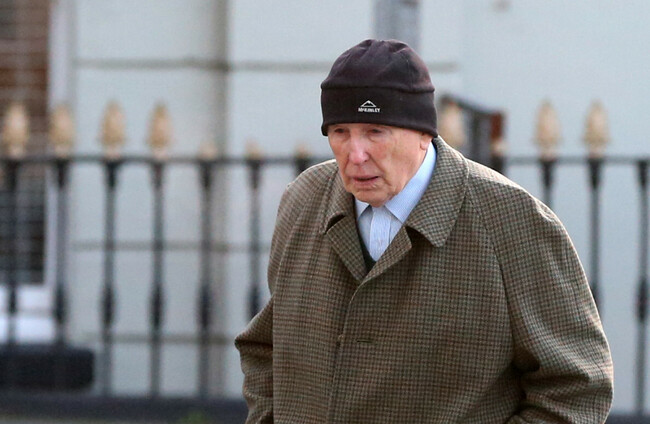
Michael Shine RollingNews.ie

'There were hundreds of victims, and I am one of them'

“For a long time, I thought silence was how you survived. I know now that silence only protects the past.”

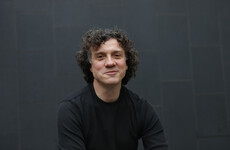
Paddy Comyn is our resident car expert. He writes a column for The Journal every Saturday and Monday. This week, a non-motoring news story impacted him on a personal level as the government announced an inquiry into one of the country’s most prolific child sex offenders. Today, he writes about how he was abused by Michael Shine when he was a boy. 

I STILL HAVE the plastic hospital wristband.

It’s faded now. The writing has almost disappeared, and the plastic has become brittle with age. Most people would have thrown it away decades ago. I couldn’t. And I never really knew why. A macabre memento from something I have sadly little trouble remembering.

It’s one of the physical reminders of a day in 1993 that changed my life forever.

I was playing basketball at school in St Mary’s in Drogheda when a sharp pain in my side eventually became agony. My PE teacher rushed me to Our Lady of Lourdes Hospital, where I was admitted immediately. My appendix was close to bursting.

The surgery brought me into contact with a man who would leave wounds no surgeon could ever repair.

The scar from my appendicitis is still visible across my abdomen. It healed, as scars do. The other scars never really did.

The surgery was a success, but it was carried out by Michael Shine.

Just this week, the government has agreed to establish a statutory Commission of Investigation with the power to compel witnesses and documents, not only to examine Michael Shine’s abuse but to investigate what was known, by whom, and why he was not stopped sooner.

There were hundreds of victims, and I am one of them.

To him, the surgery was no doubt routine — one he had performed countless times. But you can’t help feeling that part of his brain was preoccupied during the procedure. He saw opportunity.

Deference to certain men

My two encounters with Shine took place in the hospital ward and in his consulting rooms.

As I came around from post-op, groggy and confused, there was an examination that felt wrong and unnecessary. Did that happen? Surely that isn’t normal?

The second, in his rooms, was more sinister, more calculating and more intrusive. His rooms were a dark mix of mahogany and sterility.

In those rooms in Fair Street, I disconnected. It is a common reaction people have to protect themselves from situations they feel uncomfortable in. You dissociate — go to another place, remove yourself. Some people never really return to themselves wholly.

I didn’t tell my parents. Not because they weren’t loving and kind — they were. But this was an Ireland where a particular deference was given to priests and doctors. Men like that were not questioned. Who would take the word of a boy over the word of a surgeon?

Aside from trying to make light of it to a friend, I kept what happened to myself for over two decades before eventually reporting it to the gardaí and engaging with Bernadette Sullivan, the whistleblower who founded Dignity4Patients.

Speaking to her, in her offices in Drogheda, opened up a box of emotion that had been sealed shut.

Her kindness, her empathy, was unsettling and disarming.

Bernadette has since stepped back from Dignity4Patients, though the work she started has carried on without her. At the meetings there were familiar faces, peers, but also men older than me, earlier victims. Some were quiet and stoic. Some carried stammers, tics, visual clues to the pain underneath. Some fizzed with anger.

Nobody there was unaffected. For years, I convinced myself that what had happened wasn’t something I could speak about. Like so many survivors of childhood sexual abuse, I buried it somewhere deep inside myself and tried to get on with life.

From the outside, I did what many people do. I built a career. I became a father. I laughed with friends. I carried on. Inside, something had broken.

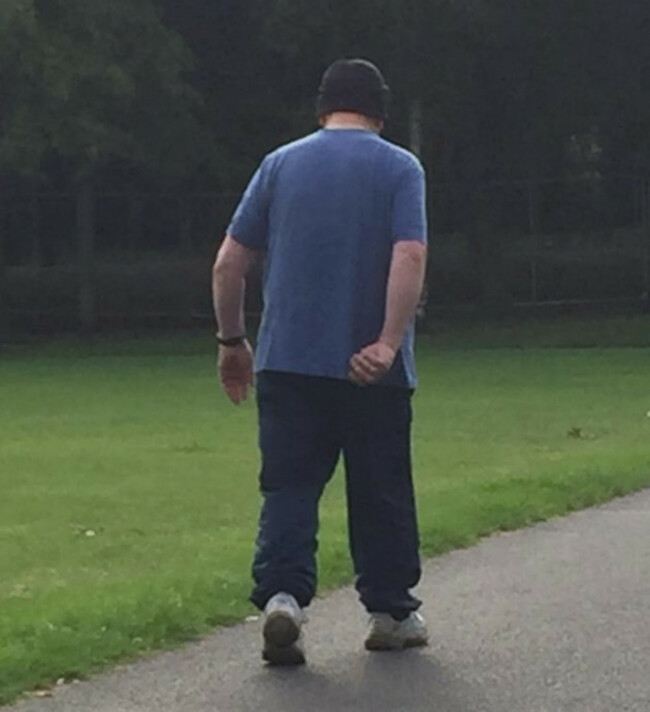
A few years ago, in a park in Dublin, he shuffled past me.

michael shine (1) Shine in 2015 after Paddy passed him in Herbert Park

For one fleeting moment of madness, retribution of some sort would have been simple.

Say something. Shout, scream. But I didn’t bother. It probably wouldn’t have made one bit of difference.

People often imagine abuse as a single event. They picture a moment in time. What they don’t see is what comes afterwards. They don’t see the decades spent questioning yourself, carrying shame that never belonged to you, struggling to trust, wondering whether the person you might have become was taken from you before you even had the chance to discover him.

That is the real legacy.

My story is one of hundreds. That sentence alone should stop us all.

Hundreds of boys and young men entered a hospital expecting care and left carrying something else entirely. Behind every one of those cases is a family, a marriage, children, friendships, careers and lives shaped by something that should never have happened.

The impact didn’t end when they walked out of the hospital doors. It travelled home with them. It sat silently beside them through school, relationships, parenthood and middle age.

The abuse happened in private. The consequences happened in plain sight.

Perhaps the hardest question is not simply how one doctor was able to abuse so many children over so many years. It is how so many opportunities to stop him appear to have been missed, why concerns were not acted upon sooner, and how children came to place their trust in adults and institutions that were supposed to protect them.

Those are questions that matter not only because of the past, but because of the future.

No child should ever have to wonder whether the adults around them knew something was wrong and chose not to act.

For a long time, I thought silence was how you survived. I know now that silence only protects the past.

I cannot change what happened to me. I cannot reclaim the years spent carrying someone else’s shame. But I can tell the truth about its impact.

I kept that hospital wristband because, somewhere deep down, I think I always knew one day I would need to tell this story.

Not because I wanted to relive it. Because I no longer want it to define me in silence.

View 7 comments
Close
7 Comments
This is YOUR comments community. Stay civil, stay constructive, stay on topic. Please familiarise yourself with our comments policy here before taking part.
Leave a Comment
    Submit a report
    Please help us understand how this comment violates our community guidelines.
    Thank you for the feedback
    Your feedback has been sent to our team for review.

    Leave a commentcancel

     
    JournalTv
    News in 60 seconds