We need your help now

Support from readers like you keeps The Journal open.

You are visiting us because we have something you value. Independent, unbiased news that tells the truth. Advertising revenue goes some way to support our mission, but this year it has not been enough.

If you've seen value in our reporting, please contribute what you can, so we can continue to produce accurate and meaningful journalism. For everyone who needs it.


Adidas says 99% of its polyester is recycled. Alamy Stock Photo

Tests show how much microplastic released by H&M, Shein and Adidas 'recycled polyester' clothes

The fashion industry says recycled polyester is green, but campaigners say it’s just greenwash.

CLOTHES MADE FROM recycled polyester release more microplastics into the environment than regular polyester garments, according to new testing.

The finding undermines one of the main sustainability claims currently being made to consumers by high street, online fast fashion and designer brands. Almost all major fashion firms are ramping up their usage of recycled polyester in a bid to seem green.

Polyester is a form of plastic. Recycled polyester is made from old plastic bottles.

The Microplastic Research Group at Çukurova University in Turkey tested the amount of microplastic released by 51 garments made from a range of materials. The garments were from five major brands: Adidas, H&M, Nike, Shein and Zara. 

This weekend, some of the companies have responded to the findings, with H&M telling The Journal it shares concerns about the environmental impact of fibre fragments, adding that cotton rather than polyester is its most-used material.

Adidas said most scientific studies show “no difference” between recycled and new fibres in terms of microfibre release.

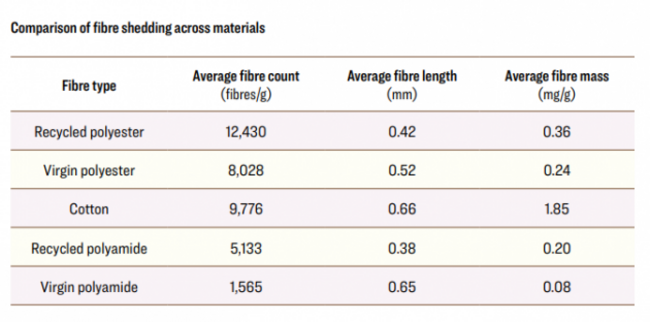
The testing, which was commissioned by the environmental NGO Changing Markets, found the highest number of fibres and fine particles were released by garments made from recycled polyester.

Polyester clothes – such as fleeces and sportswear – shed tiny plastic fibres when they are washed and this is a significant contributor to microplastic pollution in the ocean both in Europe and globally.

The report’s authors said these microplastics are one of the most pervasive forms of pollution when they leak into the environment. They contaminate soil, water and air, and enter the food chain, with growing evidence of harm to ecosystems and human health.

Test findings

The researchers used two laundering systems that simulate household washing and can measure the size, number and mass of fibres lost when clothes are washed.

They found that the recycled polyester garments in the sample released 55% more fibres per gram on average than virgin polyester garments.

The fibres dropped by recycled polyester were consistently smaller than those shed by virgin polyester, which means they will disperse more widely in the environment and can be more easily ingested by organisms, and penetrate deeper into lungs and tissues. Cotton shed longer, heavier fibres.

PastedImage-28091 Test results Changing Markets Changing Markets

Polyester problem

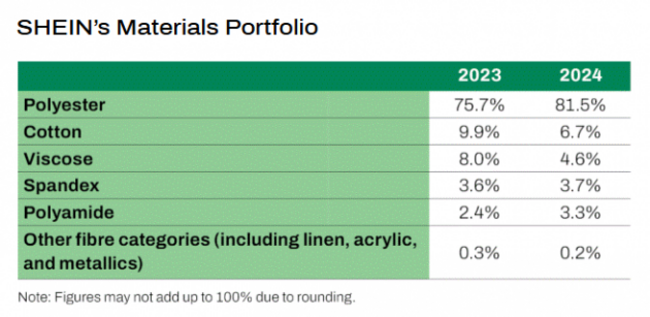
Polyester is about half the price of cotton, and its use has turbocharged the fast fashion industry. Over 80% by weight of Chinese fast fashion giant Shein’s clothing output is polyester. The equivalent figure for H&M is 22%.

PastedImage-15330 Shein's materials breakdown. Shein Shein

Recycled polyester is now widely used, and it’s one of fashion firms’ biggest green claims. Shein has said 31% of its polyester will be recycled by 2030.

Already, 99% percent of Adidas’ polyester is recycled, while H&M is at 94%. Adidas has claimed that using recycled plastic helps “stop pollution of the world’s oceans”, while Nike claims its use of recycled polyester is “reducing waste”.

The report’s authors said recycled polyester has allowed fashion companies to claim to make progress in reducing their reliance on virgin plastics while actually increasing their overall usage of synthetic materials.

“This trend unfolds amid an escalating plastic crisis. Plastic pollution is set to more than double within 15 years, driven largely by packaging and textile production,” the authors said, citing recent research by Pew.

Companies defend their clothes

H&M said it welcomed reports that help push the industry to make necessary changes. It said it’s researching how to reduce fibre fragment shedding, and supporting the development of laundry filters.

It said the fashion industry still needs synthetic materials to ensure the functionality and durability of some products.

Both H&M and Adidas emphasised that recycled polyester has a lower carbon footprint than new polyester, a fossil fuel-based material.

Adidas said: “Recycled polyester has a benefit, since it is not made from raw materials like crude oil.”

It added that fibre fragmentation is influenced by a number of other factors including dyeing, coating and the construction of the material. It cited research from a consortium of which it and other major fashion companies are backers.

Shein, Zara and Nike have also been approached for comment.

Readers like you are keeping these stories free for everyone...
A mix of advertising and supporting contributions helps keep paywalls away from valuable information like this article. Over 5,000 readers like you have already stepped up and support us with a monthly payment or a once-off donation.

Close
6 Comments
This is YOUR comments community. Stay civil, stay constructive, stay on topic. Please familiarise yourself with our comments policy here before taking part.
Leave a Comment
    Submit a report
    Please help us understand how this comment violates our community guidelines.
    Thank you for the feedback
    Your feedback has been sent to our team for review.

    Leave a commentcancel

     
    JournalTv
    News in 60 seconds