We need your help now

Support from readers like you keeps The Journal open.

You are visiting us because we have something you value. Independent, unbiased news that tells the truth. Advertising revenue goes some way to support our mission, but this year it has not been enough.

If you've seen value in our reporting, please contribute what you can, so we can continue to produce accurate and meaningful journalism. For everyone who needs it.

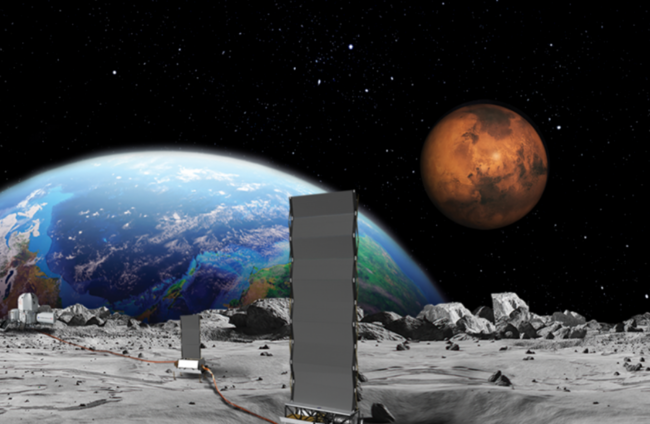
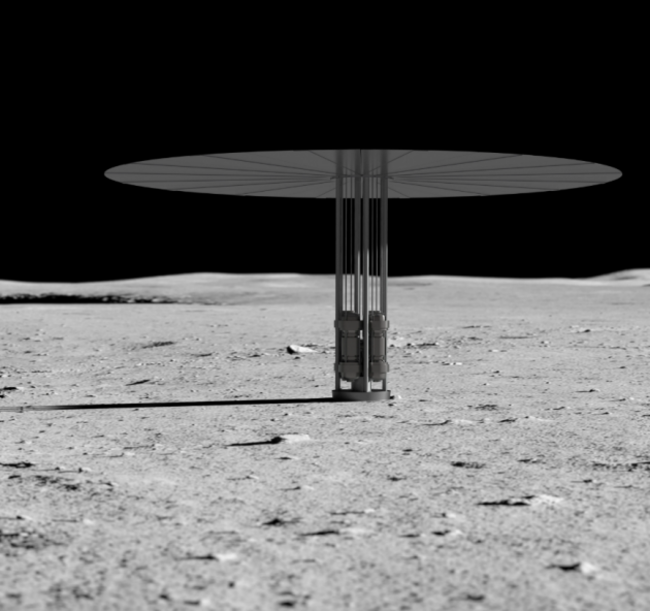
Concept imagery of the nuclear reactor on the moon. NASA

No, it's not science fiction - NASA has been ordered to put a nuclear reactor on the moon

NASA plans to build a the reactor by 2030 to power long-term human missions.

NASA HAS BEEN ordered to get a nuclear reactor up and running on the Moon by the end of the decade.

It’s not a pipe dream, rather it’s a formal directive from acting administrator Sean Duffy, who has set an aggressive timeline for America’s first lunar power station.

The reactor, capable of generating at least 100 kilowatts of electricity, is seen as a critical step towards long-term human missions on the Moon and, eventually, Mars.

Unlike solar panels, which struggle during the Moon’s two-week-long nights, a fission power system could provide continuous energy for habitats, rovers, and scientific equipment.

NASA has been working on nuclear surface power concepts for years.

Screenshot (140) Concept art of a lunar nuclear reactor.

In 2022, it awarded several $5 million (€4.3 million) contracts for early designs of compact reactors producing 40 kilowatts.

But this latest directive demands more power, faster progress, and a reactor ready for launch by late 2029.

There’s also competition, as China and Russia are developing their own lunar reactor. According to US outlets, both countries are targeting a deployment in the mid-2030s.

Duffy’s memo warns that whichever country arrives first could establish a “keep-out zone” on the lunar surface, complicating access for others.

washington-united-states-15th-jan-2025-former-u-s-representative-sean-duffy-r-wi-nominee-for-secretary-of-transportation-speaking-at-a-senate-commerce-science-and-transportation-committee-h Acting NASA administrator Sean Duffy. Alamy Stock Photo Alamy Stock Photo

To meet the timeline, NASA has been given strict marching orders: appoint a programme leader within 30 days, issue a request for industry proposals within 60 days, and move forward with maximum transparency.

The project is part of the broader Artemis campaign, which aims to return humans to the Moon and lay the groundwork for permanent operations.

But while the directive accelerates reactor development, NASA’s budget tells a more complicated story.

President Trump’s latest proposal would cut the agency’s overall funding by 24 per cent in 2026, the sharpest reduction since the early 1960s.

Programmes focusing on science, climate, and robotic exploration are facing major cuts, while crewed spaceflight initiatives, including the reactor, are still being prioritised.

Duffy has also called for NASA to fast-track the replacement of the International Space Station with privately operated space stations before 2030.

The agency plans to award contracts to at least two companies within six months of opening the competition.

Scientists have long argued that nuclear power will be indispensable for any permanent lunar settlement. But building a nuclear reactor on the Moon within five years is, by all accounts, a daunting challenge.

Readers like you are keeping these stories free for everyone...
A mix of advertising and supporting contributions helps keep paywalls away from valuable information like this article. Over 5,000 readers like you have already stepped up and support us with a monthly payment or a once-off donation.

Close
32 Comments
This is YOUR comments community. Stay civil, stay constructive, stay on topic. Please familiarise yourself with our comments policy here before taking part.
Leave a Comment
    Submit a report
    Please help us understand how this comment violates our community guidelines.
    Thank you for the feedback
    Your feedback has been sent to our team for review.

    Leave a commentcancel

     
    JournalTv
    News in 60 seconds