Sign in. It’s quick, free and it’s up to you.
An account is an optional way to support the work we do. Find out more.
Sign in. It’s quick, free and it’s up to you.
An account is an optional way to support the work we do. Find out more.
LAST UPDATE | 23 Apr
THE BUILDINGS ENERGY RATING (BER) system will be overhauled next month, and some less well insulated homes’ ratings could change as a result.
BERs – a measure of a home’s energy usage based on its insulation, size and heating system, among other factors – are an important metric for homeowners and prospective homeowners. The ratings must be given when a property is placed on the market to sell or rent, and they’re known to affect house prices.
Based on the information provided by the Department of Housing, the representative body that represents the banks said it does not envisage any impact for current mortgage customers that have a valid BER certificate, as a result of the introduction of the new BER scales.
Any potential future changes to mortgage rates are a commercial decision for each individual bank, it added.
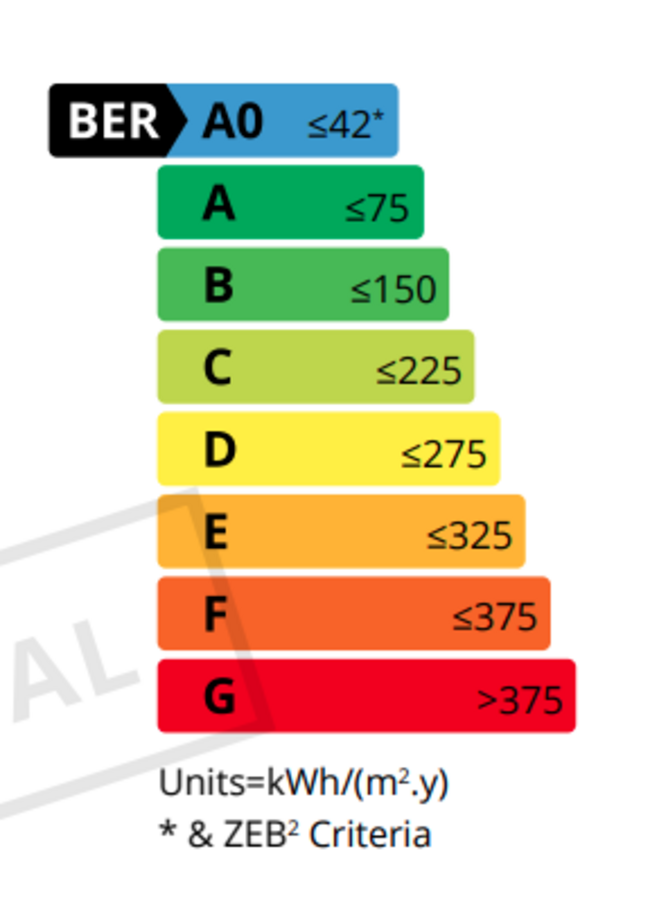
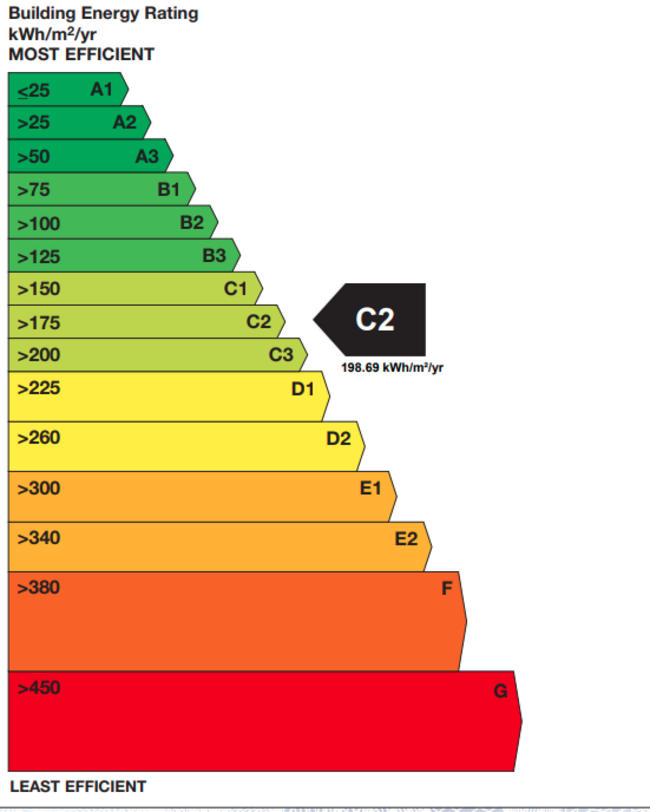
New EU rules mean Ireland’s current 15-point BER scale – which runs from A-G, with subcategories such as A1, A2 and so on – has to be simplified from 24 May to just A-G, with no more numerical subcategories.
There will, however, be one further category at the top of the scale – A0 – for zero-emissions, fossil fuel-free homes.
The changes won’t generally affect homes’ BER certificates straight away. These last for 10 years, so it’s only when a homeowner goes to get a new cert, for instance if they want to sell their property, that they will be assessed under the new system. Until then, the old certs remain valid.
It’s understood that a small minority of homes in the lower categories – D, E, F and G – could end up in a different letter band under the new system, particularly if they are on the border of two categories.
Behind the scenes, other changes are also being made to how BERs are calculated. In particular, recent decarbonisation of the electricity grid is being factored in when Irish buildings’ energy performance is calculated.
It’s understood that this will help to prevent more homes in the lower categories from being downgraded to G.
Under the new rules, the worst performing 14-18% of homes should be categorised as G. The Irish government has opted for the smallest proportion of G-rated homes, at 14%, again to minimise the number of homes ending up with a different rating under the new system.
As regards existing ‘Green Mortgages’ and financial products, while future changes to mortgage rates are a commercial decision for each individual bank, a housing department spokesperson told The Journal that it has been working with financial institutions to minimise any possible disruption to banking customers and has been actively engaging with them to ensure they are up to speed on the changes.
The Banking Payments Federation of Ireland has advised that they do not envisage any impact for current mortgage customers that have a valid BER certificate as a result of the introduction of the new Building Energy Rating scales.
The current BER system, in place since 2007, is different to the scales used in other European countries. The new system will apply across the EU, a measure intended to encourage financial institutions to designate funds for renovation, and support higher levels of retrofitting.
It’s understood that Irish financial institutions and the construction and property sector have been broadly positive about the changes. Homeowners with existing fixed rate ‘green’ mortgages linked with their home’s energy performance will not be affected. These are typically linked to a rating of B3 or better under the old system.
The new A0 category will give greater prominence to so-called zero-emissions buildings that use a very low amount of energy and produce a very low amount of greenhouse gas emissions. They must also have no fossil fuel boilers on site.
That means an A-rated home that contains a stove that can burn fossil fuels would no longer make it into the top category.
The government hopes the new A0 top rating may drive more people to aim for this standard when they are doing a deep retrofit. Housing minister James Browne said the A0 rating will pave the way for a “much higher” standard of energy efficiency.
The new system will make it slightly easier to qualify for Sustainable Energy Authority of Ireland ‘One Stop Shop’ retrofitting grants for major, project-managed programmes of works.
That’s because these grants require an improvement of 100 kilowatt-hours per metre squared per year, plus a minimum post-works BER of B2. This latter requirement will become a post-works BER of B (including the old B3 standard) under the new system. However, many homeowners doing a deep retrofit aim for A standard anyway, and are likely to continue to do so.
Under the new system, BER certs will contain additional information, including on the global warming potential of the building, including its materials and what might be involved in recycling them. The building’s renewable energy production, such as a heat pump or solar panels, will also be reflected on the new certs.

To embed this post, copy the code below on your site













have your say