Sign in. It’s quick, free and it’s up to you.
An account is an optional way to support the work we do. Find out more.
Sign in. It’s quick, free and it’s up to you.
An account is an optional way to support the work we do. Find out more.
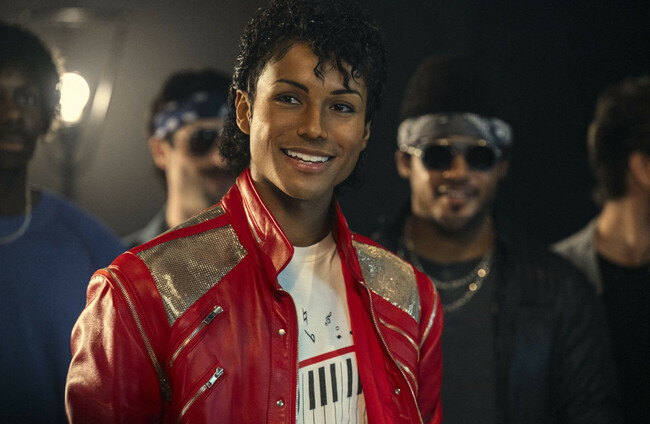
A NEW BIOPIC about Michael Jackson – partly funded by the Jackson estate and starring Jackson’s nephew – is due to be released across major Irish cinemas chains later this month, but it has been criticised for not including allegations of child abuse made against the star.
Organisations which support survivors of sexual abuse say the new biopic not only risks distressing sex abuse survivors, but sends a message to survivors that their abuse can be erased.
Jackson, who died of an overdose aged 50 in 2009, has been accused of child sexual abuse by multiple people. He has not been convicted of any wrongdoing, but has reached a financial agreement with one of his accusers.
The first allegations against Jackson emerged in 1993 when Evan Chandler accused Jackson of sexually abusing his then 13-year-old son Jordan. The Chandlers and Jackson eventually reached a financial agreement outside of court.
Following Chandler’s 1993 accusation, more individuals alleged Jackson abused them, leading to the People v Jackson trial in 2005, in which Jackson was acquitted.
But the 2019 documentary series Finding Neverland brought the allegations against Jackson back to the fore. The documentary features Wade Robson and James Safechuck, who allege they were befriended and abused by Jackson as young boys.
The Jackson estate denied the allegations – but the series led many to reassess Jackson’s legacy.
The new movie has not yet been premiered, but according to Variety, it originally opened with a scene set in 1993, just after Jackson was accused of child sex abuse, and then included the allegations again in the latter half of the movie.
Now, the movie allegedly ends at the zenith of Jackson’s movie career before any accusations surfaced in the 90s.
The decision to redo scenes involving the allegations, which allegedly cost millions in reshooting, allegedly came about after the Jackson estate found a clause in an agreement with Jordan Chandler preventing him from being mentioned or depicted in any movie.
The Jackson estate allegedly agreed to foot the bill to reshoot the movie and write out the allegations.
The Jackson estate was heavily involved in the production of the movie. Executor of the estate John Branca is a producer on the movie, and the estate’s senior executive Karen Langford is listed on IMDB as an executive producer.
IMDB also lists Jackson’s relatives as executive producers, including Jackie Jackson, Jermaine Jackson, La Toya Jackson, Marlon Jackson, Prince Michael Jackson and Tito Jackson.
One in Four, an Irish charity working with survivors of sexual child abuse, says advertising around the movie, and the fact that the film itself apparently does not reference the allegations, creates a “cycle of silence” around abuse.
“There’s a cultural tendency to protect powerful individuals and celebrated individuals, and that comes at the expense of children who were harmed,” Deirdre Kenny, CEO of One in Four, told The Journal.
“When a movie released like this erases the allegations that have been made, I think it does try to rewrite that history, and it sends a message to children who have been harmed that their abuse can be just erased and edited out.”
Kenny said this erasure is dangerous as it “reinforces that cultural silence that already exists around child sexual abuse”.
“I think that’s one of the biggest barriers that exists for survivors coming forward and telling their stories – that fear of not being believed,” Kenny added.
Kenny said that whether the producers of the movie intended to or not, by showing the movie without including the allegations, they made a value statement that “artistry matters more than the children who were harmed”.
Kenny is encouraging anyone who views the movie to engage with it critically and be aware of the allegations against Jackson.
“People still enjoy the legacy that’s there, but I think we need to be really aware that there are children and there are credible allegations. As a society, we have to keep reminding ourselves of that,” she added.
“We have to honour the integrity and the resilience of people who tell their story and share that responsibility as a society. This is part of the legacy, and we all have a responsibility to remind ourselves of what we can do to protect children.”
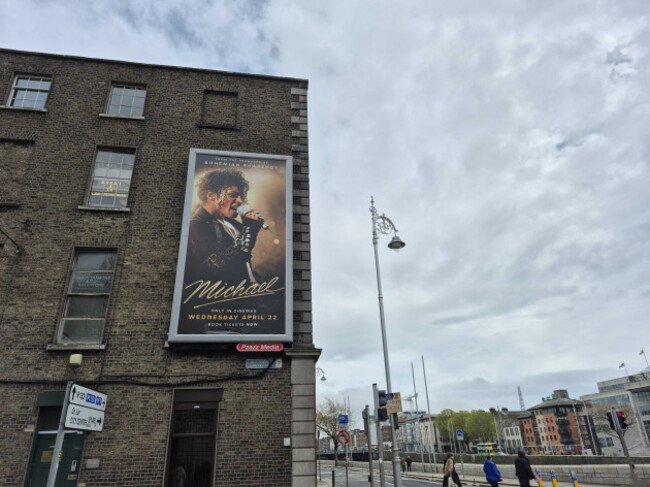
The movie is currently being advertised on large billboards in prominent locations across the country, something Kenny said may distress survivors of child sexual abuse.
“Unexpected exposure to any sort of images or names associated with child sexual abuse can be very distressing for survivors. We know that from our own work, and it’s very well understood in trauma informed practice,” she said.
A large billboard like that in a public space gives people no choice whether to encounter it or not.
Kenny said she would welcome a conversation with the advertising industry on what voluntary standards there could be around this type of content to protect survivors.
Chief Executive of Dublin Rape Crisis Centre, Rachel Morrogh, also said victims and survivors of past sexual violence can be very triggered by coverage and publicity around historical abuse cases.
Speaking to The Journal, she said: “This particular case involving long-standing abuse allegations may bring up difficult emotions for those who have experienced childhood rape and sexual assault.”
“Last year one in five calls to our National Helpline was from a survivor of abuse during childhood. We encourage anyone affected to reach out for support. It doesn’t matter when it happened, or who it was.”

To embed this post, copy the code below on your site















have your say