We need your help now

Support from readers like you keeps The Journal open.

You are visiting us because we have something you value. Independent, unbiased news that tells the truth. Advertising revenue goes some way to support our mission, but this year it has not been enough.

If you've seen value in our reporting, please contribute what you can, so we can continue to produce accurate and meaningful journalism. For everyone who needs it.


Alamy Stock Photo

Explainer: In a few weeks, new rent rules will kick in - here's how it might impact you

Changes to rental rules kick in on 1 March and its causing a lot of confusion.

A REFORM OF rent regulations went to Cabinet today, which will overhaul how the rental market operates from 1 March. 

There has been lots of talk about the new rental rules since the government announced the changes last summer.

However as the March date approaches, criticism has been ramping up from the Opposition benches about what this will mean for renters and how, in their view, they will end up paying a lot more in rent. 

So, what are the new rental rules due to kick in and how might they impact renters in a tenancy now, those who are thinking about renting soon and landlords? Let’s take a look. 

When do the rule changes kick in and who does it affect? 

The Residential Tenancies Bill 2026, which got approval to be published today, will come into effect for new tenancies created on or after 1 March 2026.

I am currently renting a property and I am already in a tenancy, does this affect me? 

No. All tenancies currently in operation will not be impacted.

If you are currently renting and in a tenancy, the new rules will not apply.

Tenancies created before 1 March date will not be affected.

There are no changes to a landlord’s or a tenant’s rights and responsibilities in an existing tenancy but the landlord will still have the right to end a tenancy in line with the current provisions of the Residential Tenancies Acts 2004.

If you are currently renting, there is no 6-year rent resetting option open to your landlord while you remain in that tenancy. 

aerial-view-of-housing-estate-image-shot-2008-exact-date-unknown Alamy Stock Photo Alamy Stock Photo

I will be entering into a tenancy after 1 March, what does it mean for me? 

The Bill provides that landlords will be able to reset rents to ‘market rent’ for new tenancies created on or after 1 March 2026.

After the initial rent is set, landlords will only be allowed to reset rents every six years.

The only way the landlord can reset the rent before the six years is when a tenant leaves of their own volition or where a tenant has breached their tenant obligations or where the dwelling is no longer suitable to the accommodation needs of the tenant household.

Renters who sign up to a new tenancy will have tenancy security for the first six years, meaning they cannot be evicted unless there has been a genuine breach to the rental agreement.

Again, the new rules will not apply to existing tenants who are currently already renting.

Smaller landlords (with 3 or fewer tenancies) will be allowed to terminate a tenancy during the 6-year term, if financial or other hardships requires the landlord to sell up or if the landlord or a close family member needs to live in the property.

How are rent prices set? 

For new tenancies from 1 March 2026, all landlords will be able to set rent at ‘market rates’ if the previous rent was below market level and the previous tenant left voluntarily or breached their tenant obligations.

The government hasn’t really explained how ‘market rent’ in an area is determined, with opposition TDs stating it essentially allows landlord sets the rents for new tenancies at whatever price they see fit. 

However, government representatives say this is where the new rent register will prove helpful (more on that later). 

After the initial rent rest, the following rent increase will be capped at the rate of inflation according to CPI or 2%, whichever is lower.

For new build apartments and student-specific accommodation, from 1 March 2026, the 2% cap on annual rent increases will not apply. 

For existing tenancies (in place on 28 February 2026), rent increases will be capped at the rate of inflation according to CPI or 2%, whichever is lower.

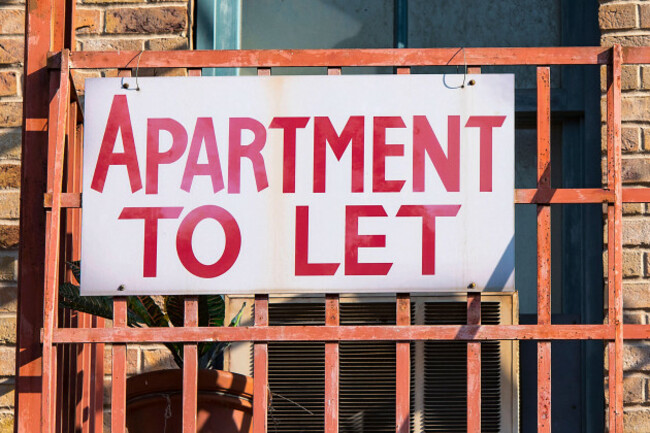
apartment-to-let-metal-sign-on-balcony-of-living-apartments Alamy Stock Photo Alamy Stock Photo

Where is the long talked about rent register? 

The Bill provides for the publication of a Rent Price Register, which the government said will provide greater transparency in rental prices for tenants, landlords and other stakeholders. 

Housing Minister James Browne has said it is an important and necessary source of information for the sector, particularly when setting and reviewing rents. 

The Department of Housing has confirmed that the rent register will be up and running on 1 March. 

Landlords will be expected to self-assess whether rents they set truly reflect market rates under the Government’s rental reforms.

Under the legislation, market rent will need to have regard to similar properties with similar characteristics, size, energy rating, and the local electoral area.

This information will be contained on a new national rent register maintained by the Residential Tenancies Board (RTB) and will involve self-assessment from landlords.

The measure is likely to lead to a series of disputes for the RTB following queries from prospective tenants and the board’s own investigations.

However, it is not envisaged that the rent register system itself will automatically flag a rent inputted by a landlord that is an outlier to market rates.

It is understood there will be potential fines for landlords for “improper behaviour” in misusing the rent register.

minister-for-housing-local-government-and-heritage-james-browne-speaking-to-the-media-at-a-press-conference-on-the-housing-infrastructure-investment-fund-at-the-government-buildings-in-dublin-pictu Housing Minister James Browne. Alamy Stock Photo Alamy Stock Photo

Why are the government doing this? 

Browne hopes the Bill will reform the rental market to attract new investment in the sector to increase the supply of rental properties, while also aiming to provide increased security for renters.

“I want to grow the supply of rental homes available – attract more landlords and retain existing landlords in the market. Providing the policy conditions for a sustained increase in supply is essential because it will help ease price pressures across the rental market, and will widen the pool of available rental properties, thereby facilitating greater choice for individuals and families,” the minister said today. 

The Opposition don’t agree

The Opposition disagree with government.

Sinn Féin’s housing spokesperson Eoin Ó Broin said the legislation was “terrible” and will only lead to higher rents, given that landlords will be able to increase rents to market rates between tenancies or every six years.

He said the new measures will hit student renters particularly hard, as they tend to only rent on a yearly basis, leaving their tenancy after one year, allowing the landlord to reset the rent for that property.

“We are going to fight this bill tooth and nail, because renters have had enough and they simply can’t take any more,” he said.

Ó Broin also argued that the new legislation will introduce too much complexity into the sector by imposing different rules on different landlords, depending on how many properties they own.

He said the new rules are “incredibly confusing”, and will be “virtually impossible to enforce”.

“And why has James Brown done this? Because this is what the big institutional investors have asked for. They want a market reset. That’s what they’ve got. Everything else is window dressing. It’s actually going to make things worse, not better, and that’s where we’re going to oppose this legislation,” the Dublin Mid-West TD said.

Mary Lou McDonald said the bill was written for vulture funds and investment funds who are looking to rip-off renters. She said the rent will increase for new tenants and in time, all tenants, as they leave and enter into new tenancies. 

Responding during Leaders’ Questions, Taoiseach Micheál Martin asked McDonald why she is against increasing the level of protection for renters.

Meanwhile, Labour TD Marie Sherlock said the new rental rules are merely a method of “placating” institutional landlords.

“This is the seventh time in a decade that the government has introduced changes to rental legislation, and I think that speaks volumes as to the situation,” Sherlock said.

She said it represents a failure of Government policy to date and that her party will be opposing the legislation.

Readers like you are keeping these stories free for everyone...
A mix of advertising and supporting contributions helps keep paywalls away from valuable information like this article. Over 5,000 readers like you have already stepped up and support us with a monthly payment or a once-off donation.

Close
8 Comments
This is YOUR comments community. Stay civil, stay constructive, stay on topic. Please familiarise yourself with our comments policy here before taking part.
Leave a Comment
    Submit a report
    Please help us understand how this comment violates our community guidelines.
    Thank you for the feedback
    Your feedback has been sent to our team for review.

    Leave a commentcancel

     
    JournalTv
    News in 60 seconds