Sign in. It’s quick, free and it’s up to you.
An account is an optional way to support the work we do. Find out more.
Sign in. It’s quick, free and it’s up to you.
An account is an optional way to support the work we do. Find out more.
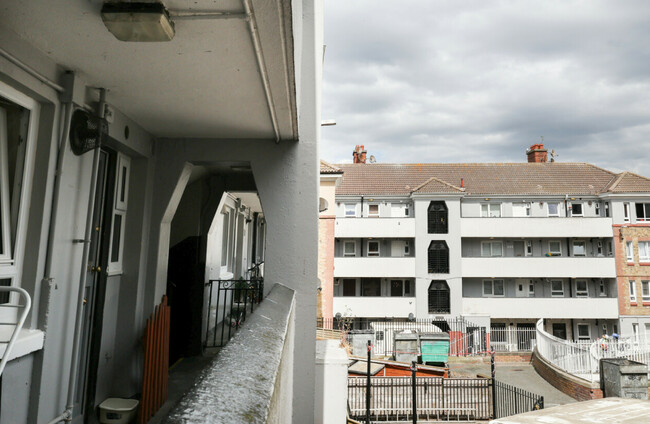
DUBLIN CITY COUNCILLORS from across the political spectrum have condemned the government’s decision to halt the planned regeneration of Oliver Bond House, warning it risks abandoning residents living in “barely habitable” conditions.
An emergency motion on the issue was brought before Dublin City Council this evening by Labour councillor Darragh Moriarty, following the Department of Housing’s decision last week to withdraw funding for the long-awaited regeneration of the inner-city flat complex.
More than 20 councillors spoke on the motion, with representatives from a number of political parties all criticising the move.
The flats, built in 1936 in the Liberties, house around 1,200 people across almost 400 flats. Residents have long raised concerns over damp, mould, overcrowding and poor living conditions.
Speaking during the meeting, Moriarty said residents of Oliver Bond House were “2.4 times more likely to live with respiratory issues and asthma” compared to others attending the same GP practice.
“I’ve stood in many of the homes that people have lived in for generations and felt the sheer neglect,” Moriarty said.
“These homes, for the most part, are barely habitable.”
Moriarty said residents and officials had spent more than four years working through detailed regeneration plans, with an understanding throughout that some flats would need to be amalgamated into larger homes to meet modern standards.
“All along, over the last four and a half years, we knew that regenerating Oliver Bond would inevitably mean we would have to lose some units,” he said.
“The sheer size of how cramped and miserably small some of these people’s homes are meant they would have to be amalgamated.”
He accused the Department of Housing of prioritising housing unit numbers over living conditions.
“The short-sightedness of this is incredible,” Moriarty said.
Social Democrats councillor Lesley Byrne said the debate had become too focused on statistics rather than people.
“We keep hearing about units, numbers on a page, targets to be met,” Byrne said.
“But the people living in Oliver Bond are not units. None of us say after this meeting that we’re going home to our units tonight, we’re going home to our homes.”
She said many residents had accepted housing in Oliver Bond years ago on the understanding regeneration would eventually happen.
“The regeneration plans offered hope, hope for modern, safe and dignified homes,” Byrne said.
Sinn Féin councillor Ciarán Ó Meachair said there was “anger and frustration” throughout the local community.
“I think one very proud community has been completely betrayed,” Ó Meachair said.
Ó Meachair said residents had engaged with the regeneration process “in good faith for several years” only to see the plans abruptly halted.
They’ve been led up the garden path by the state.
Green Party councillor Michael Pidgeon argued that national policymakers did not understand the reality of older inner-city flat complexes.
He called for a separate national regeneration fund for older urban flat complexes that would not be tied solely to housing delivery targets.
During the meeting, Dublin City Council’s Assistant Chief Executive for Housing, Mick Mulhern, outlined how the council had already revised the regeneration proposal following concerns raised by the Department of Housing over housing numbers.
He said the council had removed plans for new-build units within the Oliver Bond courtyard because they were considered too complex and expensive, while also proposing 42 new apartments on a nearby Bridgefoot Street site.
Mulhern said the council would now examine a fresh range of options following the department’s intervention.
“What we’ve committed to now is to go back to the community group at the next regeneration forum in about six weeks’ time to have carried out a full assessment of a range of options,” he said.
The council will assess proposals ranging from the department’s suggested retrofit approach to “larger demolition opportunities”, he added.
A planned meeting between Housing Minister James Browne and residents, originally expected this Wednesday, has now been postponed.
Lord Mayor Ray McAdam said he would formally write to Browne, Taoiseach Micheál Martin and Tánaiste Simon Harris following the meeting.
McAdam said councillors wanted the correspondence to reflect the broad cross-party concern over the government’s decision, as well as suggestions raised during the debate, including calls for a dedicated regeneration fund for older flat complexes.

To embed this post, copy the code below on your site













have your say