We need your help now

Support from readers like you keeps The Journal open.

You are visiting us because we have something you value. Independent, unbiased news that tells the truth. Advertising revenue goes some way to support our mission, but this year it has not been enough.

If you've seen value in our reporting, please contribute what you can, so we can continue to produce accurate and meaningful journalism. For everyone who needs it.

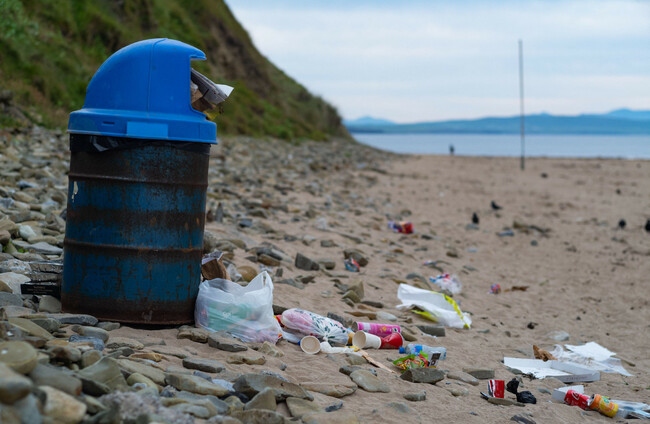
File image of rubbish by a bin at Ballybunion beach in Co Kerry Alamy Stock Photo

On-the-spot litter and dog fouling fines set to rise to €250 from September

A Cork councillor said the move will mean little ‘unless local authorities are given practical powers to enforce the rules effectively’.

ON-THE-SPOT litter and dog fouling fines are set to increase by €100 in September, rising from €150 to €250.

Minister of State for the Circular Economy Alan Dillon will today announce the plans, which will come into force from 1 September.

It’s also understood that Dillon will seek to encourage local authorities to improve enforcement with the extra revenue generated.

Meanwhile, Dillon will also announce a €3m investment in anti-dumping initiatives across all local authorities, as well as funding for some 200 anti-dumping projects nationwide.

These anti-dumping projects include clean-up operations, CCTV monitoring, public awareness campaigns and enforcement initiatives.

However, Cork City and Labour councillor Peter Horgan has criticised the decision to increase fines “without addressing the completely unworkable enforcement system” in place.

Horgan said the move “risks becoming another headline without any meaningful change on the ground unless local authorities are given practical powers to enforce the rules effectively”.

He said local authorities struggle to issue “any fines at all because of the impossible evidential burden involved”.

“At present, a litter warden effectively has to witness the offence in full, identify the individual involved, and then rely on members of the public being willing to go to court,” said Horgan.

“That system simply is not working.”

He added that “simply increasing the fine while leaving the same broken enforcement system in place will not solve the problem”.

“If anything, it risks creating the illusion of action while councils continue to issue little or no penalties,” said Horgan.

He called for the “focus to shift toward practical enforcement measures rather than publicity announcements”.

“We need visible enforcement at the times when offences are actually occurring, not just more posters and press releases.

“We also need legislation that removes the current burden of proof that is preventing wardens from acting effectively.”

Readers like you are keeping these stories free for everyone...
A mix of advertising and supporting contributions helps keep paywalls away from valuable information like this article. Over 5,000 readers like you have already stepped up and support us with a monthly payment or a once-off donation.

Close
50 Comments
This is YOUR comments community. Stay civil, stay constructive, stay on topic. Please familiarise yourself with our comments policy here before taking part.
Leave a Comment
    Submit a report
    Please help us understand how this comment violates our community guidelines.
    Thank you for the feedback
    Your feedback has been sent to our team for review.

    Leave a commentcancel

     
    JournalTv
    News in 60 seconds