Sign in. It’s quick, free and it’s up to you.
An account is an optional way to support the work we do. Find out more.
Sign in. It’s quick, free and it’s up to you.
An account is an optional way to support the work we do. Find out more.
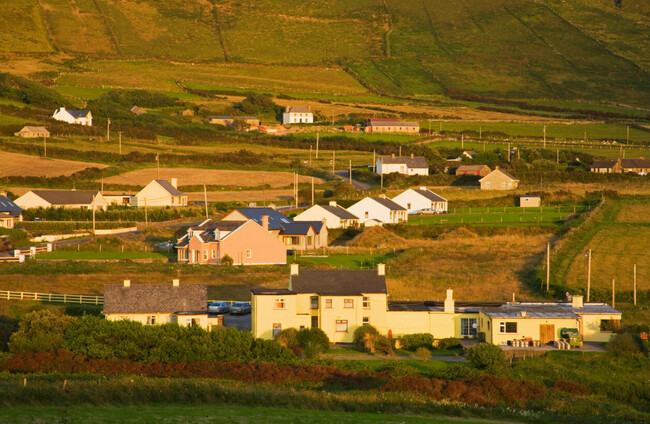
NEW RULES TO make it easier to build one-off housing nationwide have been announced by the government, in what ministers have described as the “biggest overhaul” of rural home planning in 20 years.
They aim to make it easier for families to build one-off homes in their locality while simplifying differences in planning regulations across different local councils.
The Draft Sustainable Rural and Gaeltacht Housing National Planning Statement, which cabinet signed off on Tuesday, looks to provide more clarity and consistency on where and how, new housing in rural and Gaeltacht areas can be developed nationally.
The new rules will no longer allow local authorities to impose restrictions on ribbon development, where homes are built in a sprawling fashion, or put caps on the number of homes that may be built on a farm.
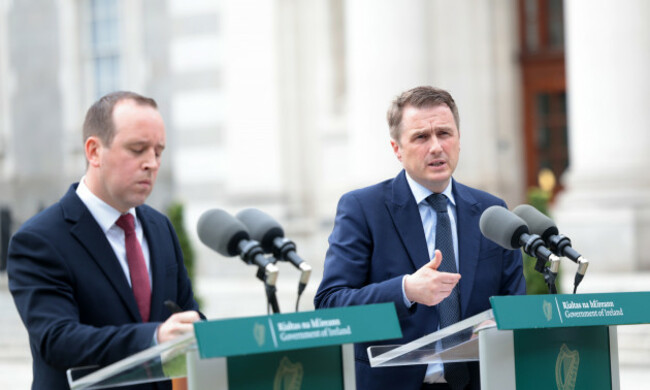
Councils will also be advised against setting restrictions on how many houses can be built in an area, under plans brought forward by housing minister James Browne and junior minister John Cummins.
Another change is that all settlements, towns or villages below 1,500 people in population will now be considered to have a housing need automatically. This means that planning permissions won’t be immediately refused as some councils have done during existing rules over the past 20 years.
Minimum road frontage requirements are to be scrapped, as are minimum site sizes for rural houses to be built. Road frontage is the length of land a property must have touching a public road – councils have traditionally required several dozens of metres in length.
In Gaeltacht areas, the person must live within 3km of the site and must have lived there for 10 years.
However, this can be relaxed to 5 years for people who speak Irish and can show a local need. It is understood this is to help protect and support the Irish language in these areas.
People will be able to get planning permission to build in a rural area depending on two criteria: social need and economic need.
In general, social need means that an applicant who has lived in or is living in the ‘local rural area’ – meaning within a proximity of up to 10km radius – can apply for planning permission to build a home.
They can also qualify if they have lived there either consecutively or cumulatively for a period of seven years.
Crucially, this includes returning emigrants and people moving back to a rural area where they grew up.
This new house must be the applicant’s primary home, criteria designed to avoid instances of people building holiday homes in the countryside.
They must also intend to live at the residence “for at least 10 years”, according to the draft plan, although it is unclear how this may be policed.
For economic need, the new guidelines will aim to benefit people whose main job depends on living in a rural area and those who need to live close to their workplace.
This includes not just farming but also essential services, such as a local teacher, or people starting or running a rural business.
Rural homeowners will also be permitted to build a second one-off house on their land to facilitate downsizing under the new guidelines.
Not quite.
Homes on the outskirts of large towns and cities look to still be off the cards, as the proposals state that the planning authority “may apply a more restrictive approach” in these instances.
The plans also rule out remote work as an option under the ‘economic need’ banner.
The government proposals said that while it may be possible to work remotely from a rural area in a job that is based elsewhere, this type of employment “is not in itself intrinsic” to a rural area.
They have been broadly welcomed by farming groups, with the country’s largest farm organisation, Irish Farmers’ Association dubbing them a “positive step” for rural Ireland.
Irish Farmers’ Association (IFA) President Francie Gorman said that “rigid and inconsistent” planning guidelines had prevented access to housing, making it harder for young people and families who want to live and work in the countryside.
They had also been a measure long pursued by the IFA – the proposals were even launched on the Co Louth farm of one IFA member on Tuesday.
Macra, the farming organisation 17-40 year olds, welcomed the efforts being taken to streamline how planning permissions are handled by different local authorities.
It said on Tuesday that many of its members have consistently highlighted the challenges they’ve experienced in gaining planning permission in their own local areas, “specifically noting the lack of fairness and consistency” between local authorities.
On this, minister of state with responsibility for planning Cummins said that the outgoing rules have been too often inconsistent, leading to frustrations because of local interpretations by individual county councils.
Green Party senator Malcolm Noonan has claimed on Wednesday that the “blanket approach to liberalising” Ireland’s rural one-off housing guidance ignores different dynamics in the regions, and even within individual counties.
“We have a lop-sided country where pockets within the west and midlands are experiencing population decline and as we move east, we can see many rural areas blighted by urban influenced one-off housing,” the Kilkenny-based senator said.
He added that the new housing will also place a strain on road infrastructure, waste collection services, emergency services and postal services.
“This poorly thought-out policy is more about political expediency than it is about a plan led approach to land management, protection of nature and water and to mobility.”
Sinn Féin housing spokesperson Eoin Ó Broin said that he thinks a “a lot is being made” of the new plans, but that it’s “not going to be earth-shattering” in terms of impact.
He pointed to high approval rates in some counties for one-off housing, with recent figures showing that the number of one-off houses that received planning permission in Q1 of this year surged by 12.4%.
According to the Planning Regulator, there are between 500 and 700 one-off housing applications made in rural areas that are refused each year.
There were 5,929 one-off houses completed in Ireland last year, representing a 12.5% increase compared to 2024.
“A lot of the rhetoric you’d hear is that you can’t get planning – the planning figures don’t bear that out. It’s bad for people who can’t get planning, but a lot do,” Ó Broin said. “This is not the major change that it’s being made out to be.”
Overall, the Dublin Midwest TD said there are “some positives and some negatives”, but also “some glaring omissions” in the government’s proposals.
The latter include problems facing planning for housing in the Gaeltacht and island communities, with Sinn Féin urging for a standalone policy framework to address those issues rather than “folding them into a wider rural planning document”.

To embed this post, copy the code below on your site
















have your say