We need your help now

Support from readers like you keeps The Journal open.

You are visiting us because we have something you value. Independent, unbiased news that tells the truth. Advertising revenue goes some way to support our mission, but this year it has not been enough.

If you've seen value in our reporting, please contribute what you can, so we can continue to produce accurate and meaningful journalism. For everyone who needs it.

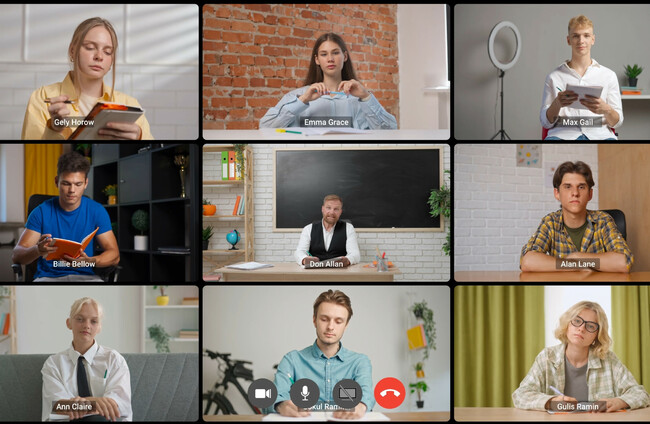
Many third-level institutions moved to remote or hybrid working models during Covid-19 - now some students are seeking compensation. Shutterstock

'A screen and silence': Our readers' sad and lonely experiences of college during the pandemic

“I feel genuinely disappointed about my college experience. I missed out on things people talk about for years.”

IT’S BEEN OVER six years since the first major Covid-19 restrictions were implemented in Ireland and many third-level institutions moved to remote or hybrid working models. 

Colleges were following best practice at the time, but since then, the social impact on young people has become clearer. 

Hundreds of students internationally are suing their colleges and universities for loss of educational experience during the Covid-19 pandemic.

One law firm told The Journal it has been “inundated” with emails from Irish students querying whether they could be entitled to compensation after their college experience was significantly disrupted by the pandemic. 

Phoenix Law, which is based in Belfast and operates both north and south of the border, has already launched a group action on behalf of students at Northern Irish universities.

The law firm believes that universities breached their contracts with students entitling them to in-person tuition, access to campus facilities and a comprehensive educational experience.

This feeling was shared by many of our readers, who we asked to share their experiences. 

A common theme in the responses was how readers felt they missed out on the education they paid for, as well as the vital social aspect of college – leading to increasing isolation and stress, something that stayed with them for many years in some cases.

Here’s what people had to say.

Loss of education 

“I feel genuinely disappointed about my college experience,” one of our readers told The Journal.

The former student of General Nursing in Trinity said nursing students had a particularly strange college experience during Covid as they were deployed to hospitals for placement without ever having an in-person college experience.

“I spent my entire first year of college without ever setting foot on Trinity campus. My first and only in‑person college experience didn’t happen until May 2021, in the final weeks of the academic year, when we were sent out on placement in acute hospitals.”

“I was placed in St James’s Hospital, which meant going from Zoom university straight into a functioning hospital during a pandemic. Before that, everything was online — lectures, tutorials, and somehow even MAPA training, which is essentially self‑defence.”

Safety Intervention Training, formerly known as MAPA, teaches de-escalation skills, as well as non-restrictive and restrictive interventions for workers, including healthcare professionals.

The former student said the experience was “trial by fire”. “Staff were dropping like flies, shifts were manic, and I was often asked to do things I probably shouldn’t have been trusted with.”

The experience led to difficulty making friends on the course, and caused many of their peers to drop out. 

“Looking back, I was so frustrated that the School of Nursing never fought harder for us to have on‑campus learning. We were out working long hours in hospitals to support the healthcare system,” they said.

“I feel genuinely disappointed about my college experience. I missed out on things people talk about for years. There were experiences I feel like I should have had. Instead, I worked through Covid, and in the end, there wasn’t much to show for it beyond a pat on the back.”

A Trinity spokesperson told The Journal that “Nursing and Midwifery programmes were delivered in a hybrid manner during the pandemic.”

“All of the mandatory, essential clinical skills training was delivered and taught to students in person, in compliance with the Nursing & Midwifery Board of Ireland standards and requirements. All other teaching moved to an online format in line with Government requirements at the time ,” they said.

“The Covid-19 crisis was one of the greatest challenges the world faced in recent times. The government took an extraordinary decision in March 2020 to close schools and universities. It was not until September 2021 that any return to campus was possible,” they said.

“Teaching and learning was hybrid during that academic year, in light of the prevailing rules on social distancing. The pandemic presented immense challenges for all frontline workers, and for nurses and nursing students, in particular.”

They added that Trinity researchers have been involved in studies examining the mental health impact of Covid on students and nursing staff, to help inform the response to future pandemics.

Another student said they feel that an online offering of their counselling and psychotherapy course was not a good enough replacement for in-person training.

“I more or less spent three years of a four year course online. As psychotherapy is primarily face-to-face with clients, so we can notice body language and subtle shifts in the client’s movements and tone, it is extremely hard to navigate and practice online,” they said.

Fees

Former primary school teaching student, Emer, was critical of the fees she paid for experiences she believes were not an adequate replacement for in-person learning.

“Lectures moved online, placements were canceled, and I was left to construct an imaginary junior infants class in my head, complete with fictional children, special educational needs, personalities, and plan lessons for a classroom that didn’t exist in order to pass my placement module,” she said.

“The Irish module of the degree included a trip to the Gaeltacht that is normally an immersive and invaluable experience. Instead, we were asked to pay €750 for an online version – five hours a day for three weeks – on top of tuition fees of €20,000.”

Emer said that when it comes to teaching, the practical experience of working in a classroom is where teachers “actually learn how to be a teacher and put the theory into practice”.

“Making up a fake class for the sake of achieving a module grade was what we were reduced to during Covid and still expected to pay the outrageous fee.”

As well as this, she said communication from tutors was not good. “The hands-on guidance that is so crucial for trainee teachers was replaced with a screen and silence,” she added.

Others also felt fee changes should have been made to reflect the change in circumstances.

“I was attending college that year it went online. The college still charged us for the year, even though the last five months were supposed to be online,” one reader said.

“I have a disability and I could not work online so I had to leave my course but I was still charged. They demanded the €3,000 even though I left the course. I got them down to €1,500.”

Mental health  

Several readers told The Journal that the isolation that came with online classes negatively contributed to their mental health.

The Economic and Social Research Institute of Ireland found four-in-ten 22-year-old men and over half of 22-year-old women were classified as depressed in 2020 – figures that are much higher figures than the two years previously.

One former student said being forced back into the box room of the family home and cut off from their peers impacted their ability to connect for years.

“The stress of my course along with stresses in my personal life felt exacerbated in the absence of any outlet or easy access to friends, distractions, or hobbies that couldn’t be enjoyed from a box room,” they said.

After one and a half years of this, they said they found it difficult to re-enter society: “Once the restrictions were lifted, returning to crowded pubs, small talk with strangers and bustling pubs was overwhelming and I initially wanted to retreat to my bubble.”

“College was supposed to be a time where we flourished socially, met new and varied people, figured out the type of people we were and wanted to be. Instead, we were stunted, and it has taken years to build the ability to connect that we lost during the Covid years.

Another former student, Daniel, said that the experience of part of his first year and the entirety of his second year in college being online impacted his mental health and contributed to feelings of depression.

“Second year was entirely online. I grew increasingly isolated during this time and it was rather unpleasant,” he said, adding that his motivation for college was eventually impacted too.

“During second year my motivation to study dwindled and I eventually completely stopped attending lectures. I very rarely saw anyone from my course and just hoped that one day I could go on campus for a lab or anything,” he said.

Daniel said that two largely solitary years, combined with his ASD diagnosis, made it difficult for him to adjust to normality when Covid-19 restrictions did eventually end.

“Final year was a disaster. I felt I had not made very many strong connections with people on my course and often felt out of place with the others,” he said.

“Ultimately I failed final year and had to repeat, during which I ended up having a more “regular” university experience.”

Readers like you are keeping these stories free for everyone...
A mix of advertising and supporting contributions helps keep paywalls away from valuable information like this article. Over 5,000 readers like you have already stepped up and support us with a monthly payment or a once-off donation.

Close
3 Comments
This is YOUR comments community. Stay civil, stay constructive, stay on topic. Please familiarise yourself with our comments policy here before taking part.
Leave a Comment
    Submit a report
    Please help us understand how this comment violates our community guidelines.
    Thank you for the feedback
    Your feedback has been sent to our team for review.

    Leave a commentcancel

     
    JournalTv
    News in 60 seconds