Sign in. It’s quick, free and it’s up to you.
An account is an optional way to support the work we do. Find out more.
Sign in. It’s quick, free and it’s up to you.
An account is an optional way to support the work we do. Find out more.
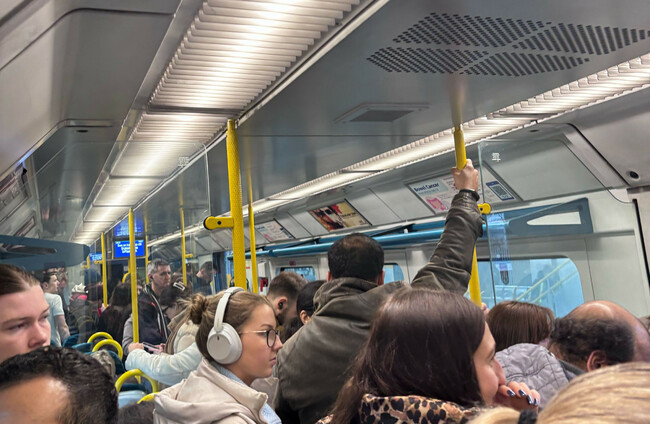
‘PACKED, SWEATY AND feels unsafe’ is how many of our readers have summed up their experience of commuting on Irish Rail services.
According to figures from the National Transport Authority (NTA), Irish Rail services, including DART, Dublin Commuter, and Intercity routes, carried 55 million passengers last year – a record.
Our readers say overcrowding, overheating, fainting and being forced to stand for over an hour are just some of the issues they are now encountering on their daily commutes.
They said the issues worsened after Covid-19, which is something readers put down to a lack of adequate transport infrastructure in commuter towns and companies enforcing return to office protocols.
@IrishRail How can the Rosslare to Dublin train already be jam packed in Wicklow Town? The his has been going on for years and Irish Rail is doing nothing about it pic.twitter.com/L2UH5yP8pu
— Daniel Bourne (@bournedaniel196) September 18, 2025
Finn, 27, said that just last week he witnessed an older man faint on the commuter train from Rosslare to Dublin Pearse – a service he said has no seats available from as early as Wicklow.
“All passengers boarding at Wicklow are packed into the train like sardines,” he said.
“An elderly man fainted while standing on the train due to overheating on the packed carriage. Calls went down the carriage to open a window, and to see if anybody had water or a spare seat for the man to recover.”
Finn described the experience as “horrible to witness” and said he is dreading what will happen when the weather gets warmer.
A man from Dublin who wishes to remain anonymous said he has witnessed three people faint due to the excessive heat on his train in the last six months. On top of that, he said the conditions are causing “hostility, shoving and general nastiness” as people attempt to get a seat.
Delia, 25, who also travels from Wicklow on the Rosslare to Dublin line said she has seen “many people faint from standing for over two hours. “Someone fainted this morning and the temperature isn’t even that hot yet.”
Grace, who also commutes from Wicklow on the Rosslare to Dublin line said the train arrives at her stop, and reaches “dangerous levels of capacity” by the Greystones stop.
By the time the train reaches Bray, she said the driver announces that it is very crowded and advises that people switch to a Dart service.
“Nobody does – they are either trapped in their seat or standing in an aisle surrounded by other people, or they have gotten on at Greystones and actively decided they’d rather this than the Dart,” Grace added.
Meanwhile, another woman described a journey she took from Dublin to Mullingar as “overwhelming and frightening”.
She said she and her husband had reserved seats as she has an invisible illness, but as well as the seats being occupied, they could not access them for most of the journey due to crowding.
“There were older people sitting on the ground, the carriage aisles were full in every direction. There was no way of getting on or off the train safely. We would crowd into the bathroom to let people off the train.”
A commuter who wishes to remain anonymous said they believe overcrowding on rush hour trains is an “accident waiting to happen”.
“If there were to be any sort of emergency on the line, the train is overweight, overcrowded and would lead to injury at a minimum. This is the same for morning and evening journeys, passengers crushed against doors and each other.”
A woman from Dublin said she logged a complaint to Irish Rail just last week after using a train service so full she feared she would get lice from standing so close to others. She also believes the situation makes people vulnerable to pick-pocketers.
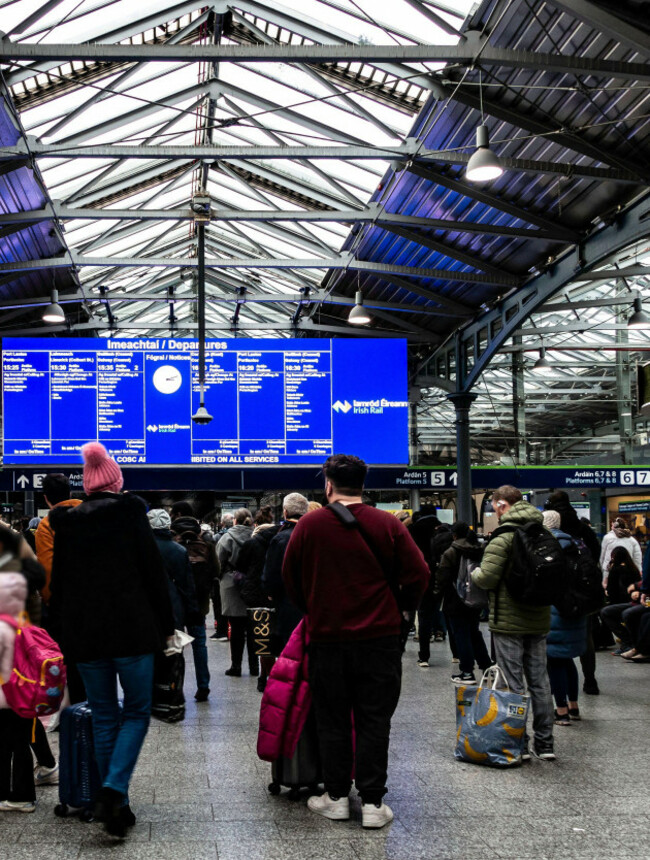
Many readers living in the commuter belt – towns in areas like Kildare, Meath, Wicklow, and Louth – said they bought homes in commuter towns after being priced out of Dublin, but now feel transport resources are not matching the population increase.
“Commuting hasn’t been really what I thought it would be. I’m grateful because I now have a house for my family but the whole commute is not helping at all,” one man said.
Rafal, 47, who lives in Sallins, Co Kildare said the commuting situation became worse after the pandemic: “Within a year, the morning crowds had nearly doubled. Then month by month, it just kept deteriorating.”
“I have not had a seat in months and that is not an exaggeration. The train arrives in Sallins already full. Hundreds of people are left scrambling to squeeze in. It’s chaotic, uncomfortable and completely undignified.”
Rafal said he has lived in several countries and described Ireland’s transport infrastructure as “prehistoric” in comparison: “I can say without hesitation that Ireland’s system is among the worst I have seen in a developed economy.”
“How was it ever realistic to expand the economy, attract multinational companies, and dramatically grow commuter towns without building a transport system capable of supporting that growth?”
Another commuter said they believe Irish Rail is now “at a tipping point”, adding that they have been forced to get off trains due to heat and crowding.
Several commuters said that although they could get the train to work, they are now opting to drive instead. “I have avoided it altogether recently and I end up in the traffic jams in my car,” one woman said.
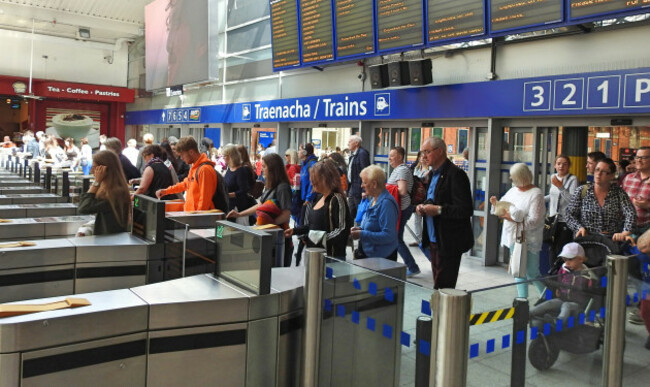
A woman living in Dublin said her journey has “definitely got worse the past couple of years” – something she puts down to companies ordering workers back to the office.
Another reader said “the forced return to office has been a disaster for Dublin’s commuters”. They commute from Adamstown, an area they feel is not being supported with travel infrastructure to match population growth.
“Adamstown is the second stop and by the time the train arrives, there’s already people standing due to all seats being taken. Whenever the train doors open, there’s a shove to get in and stand in the aisle between seats because nobody wants to be shoved up against the door when it opens.”
Several readers questioned if services were operating at safe levels due to overcrowding and wondered why more carriages are not provided at rush hour, or for growing commuter towns.
When The Journal put these comments to Irish Rail, a spokesperson acknowledged the increase in passengers is “resulting in pressure on capacity at our busiest times on some routes”, notwithstanding extra services and additional capacity added from 2022 to 2024.
“All of our trains are designed to safely accommodate full loading, both sitting and standing. For Dart and Commuter services, as with all such urban systems internationally, high levels of standing is typical at peak times – it is first and foremost a comfort issue,” they said.
They said that Irish Rail use all available fleet at busiest times, so they do not have additional carriages that can be used.
They said the first new Dart train will begin entering service on the Drogheda route from the first half of 2027, which will increase capacity on the Drogheda route and free up Intercity and Commuter carriages currently in use on the route.
“In total, 285 new carriages are on order (made up of 57 five-carriage trains) of which 185 carriages will be new capacity (the remaining 100 will replace the original 1984 DART fleet). We expect ten 5-carriage trains to enter service in 2027, all providing additional capacity, with the remainder of the fleet entering service continuously as they are manufactured from 2027 to early 2030,” they said.
They also said they are investing in their network to improve capacity, including the Dart+ Programme which they said will see rail capacity in the Greater Dublin double.
The Department of Transport and the National Transport Authority have been contacted for comment.

To embed this post, copy the code below on your site











have your say