We need your help now

Support from readers like you keeps The Journal open.

You are visiting us because we have something you value. Independent, unbiased news that tells the truth. Advertising revenue goes some way to support our mission, but this year it has not been enough.

If you've seen value in our reporting, please contribute what you can, so we can continue to produce accurate and meaningful journalism. For everyone who needs it.


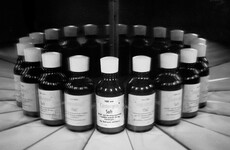
One of the booths in the facility where a person can inject their drugs under the supervision of a nurse. The Journal

Over 270 non-fatal overdoses have been treated in Ireland's first supervised injection centre

The Joint Committee on Drugs will today hear that 1,500 people have visited the facility over 17,000 times between December 2024 and November last year.

OVER 270 NON-FATAL overdoses have been treated in Ireland’s first supervised injection facility since it opened over a year ago, an Oireachtas committee will hear today. 

The assistant secretary at the Department of Health will tell TDs and senators that over 1,500 people have visited the facility over 17,000 times between December 2024 and November last year. 

The injection facility, which cost about €5 million, is over halfway through an 18-month pilot after being licensed by the Department of Health. It is operated by Merchants Quay Ireland, the national homelessness and addiction charity. 

It was designed to reduce the health risks associated with intravenous drug use, including overdose and the transmission of conditions such as HIV and Hepatitis C through people sharing or reusing needles.

The centre was met with opposition from local residents, businesses and schools when it was first proposed and planning permission was refused in 2019. Those against the facility cited concerns about the potential for anti-social behaviour and what they called the “over concentration” of drug services already in the area.

David Leach will tell the Joint Committee on Drug Use that an interim evaluation of the facility found there was no increase in the frequency of injecting behaviour in those accessing the service. 

The evaluation highlighted other positive findings, including the success of the service in accessing people with high levels of vulnerability, the promotion of safer injecting practices and the number of overdose and medical interventions performed there.

“A separate academic paper identified a reduction in drug use and drug related litter in the local area, and increased levels of community engagement,” Leach will say. 

Naloxone

He will also tell the committee that the anti-overdose drug naloxone was administered 412 times in 2025, “equating to 16 lives saved”. 

Naloxone is a prescription-only medication that is used as an antidote to temporarily reverse the effects of opioid drugs like heroin, morphine, methadone and synthetic opioids like nitazene if someone overdoses. It can be administered via injection or nasal spray. 

The availability of the drug was vital in saving lives during clusters of overdoses in Dublin and Cork in late 2023. Leach will tell the committee that the “health-led approach” taken at the time “ensured the harms from this drug were minimised”. 

The Programme for Government commits to increasing the availability of naloxone and to train more people to administer the drug.

The committee will hear that the HSE supplied 4,571 units of naloxone to services nationwide last year, while over 3,000 people have availed of opioid overdose awareness and naloxone administration training.

Politicians will also be told that the Department of Health is “committed to providing harm reduction services and early warning and emergency responses to novel drugs and emerging trends”. 

“The Department has provided additional funding to the HSE for harm reduction initiatives to provide a rapid response to the threat of synthetic drugs, including a wastewater drug surveillance programme and an early warning programme in acute hospital settings during 2026,” Leach will say. 

Health Diversion Scheme

He will also touch on the new Health Diversion Scheme, the operation details of which are being finalised by An Garda Síochána. 

Under the new scheme, a person found in possession of drugs for personal use will avoid a criminal prosecution and instead be referred to the HSE for a health screening and a brief intervention.

“It is important to say that drug possession will remain illegal, but people with illicit drugs for personal use would be afforded, first and foremost, the opportunity to engage voluntarily with healthcare services,” Leach will tell the committee. 

He will say the HSE has a regional network of 10 healthcare practitioners in place who are ready to provide a screening and health intervention, known as SAOR, once gardaí begin referrals.

SAOR (Support, Ask and Assess, Offer Assistance and Referral) can be delivered online or in person. It will take the form of a short conversation with a person about their drug or alcohol use, who can then be referred to specialist services if they have more complex needs. 

“Brief interventions have been shown to be effective in initiating change in consumption for people with mild to moderate alcohol/drug problems and in helping people with more significant difficulties to access specialised treatment services.”

Rachel Woods, the head of the criminal justice policy function within the Department of Justice, will tell the committee that the outstanding legal and operational arrangements for the Health Diversion Scheme are currently being finalised. 

“It is anticipated that the scheme will become operational in the early part of this year,” she will say. 

Woods will also touch on the independent review of the Dublin Drug Treatment Court, which was commissioned by the Department. 

“The final evaluation is now complete, and its findings are currently under consideration, with ongoing engagement with the Courts Service and other stakeholders.”

Homeless facility

The committee will also hear about the community care facility for homeless people at Usher’s Island, which the Department and the HSE recently allocated €1.9 million of extra funding to. 

Some 75 beds are now open in the facility, which is run by Dublin Simon Community. It’s expected to deliver “approximately 1,000 treatment episodes per annum”.

Services provided at the facility include alcohol and benzodiazepine detox and stabilisation, blood-borne virus stabilisation and low threshold addiction recovery. 

Budget 2026 included funding of over €6 million for a number of initiatives, including increased access to treatment for opioid dependence, enhanced services for under-served populations and an additional 30 residential treatment beds for people with complex medical needs, and those who are homeless.

Leach will tell the committee that the increased investment is reflected in the Health Research Board National Drug Treatment Reporting System’s data for 2024, which shows that a record figure of almost 13,300 cases were treated for problem drug use.

“This represents a 50% increase in the capacity of treatment places since 2017 and reflects the ongoing investment in expanding services,” he will say.

There were a further 8,750 cases treated for problem alcohol use, the highest annual figure for over a decade, while 5,500 cases reported both drug and alcohol use. 

Readers like you are keeping these stories free for everyone...
A mix of advertising and supporting contributions helps keep paywalls away from valuable information like this article. Over 5,000 readers like you have already stepped up and support us with a monthly payment or a once-off donation.

Close
Comments
This is YOUR comments community. Stay civil, stay constructive, stay on topic. Please familiarise yourself with our comments policy here before taking part.
Leave a Comment
    Submit a report
    Please help us understand how this comment violates our community guidelines.
    Thank you for the feedback
    Your feedback has been sent to our team for review.

    Leave a commentcancel

     
    JournalTv
    News in 60 seconds