Sign in. It’s quick, free and it’s up to you.
An account is an optional way to support the work we do. Find out more.

Sign in. It’s quick, free and it’s up to you.
An account is an optional way to support the work we do. Find out more.


WITH SUMMER WINDING down and the nights starting to get a bit longer, we’ll all be spending much more time indoors.
With the busy Christmas period only a few months away, autumn is the perfect time to take some action and make some changes around the house.
One of the best things you can do yourself to transform the atmosphere of a room is to give it a fresh coat of paint. Whether you’re changing the colour because you want a new vibe or simply refreshing what’s already there, you can be guaranteed there’s a sense of satisfaction when you finish painting a room.
This week, we’re looking at some advice and hacks to help you take care of a DIY paint job.
Make sure you’re well-equipped
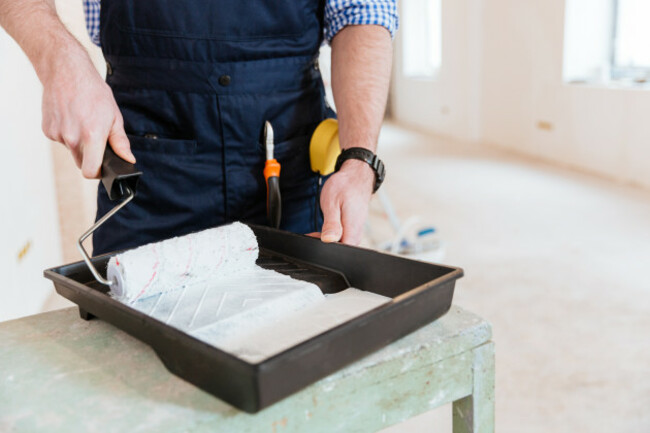
A paint job is the kind of thing that does require a bit of preparation. Before you start, make sure everything is as you want it and that any holes in your walls are properly filled in. Do a deep clean on your walls and dust them thoroughly so that you aren’t painting over cobwebs, hairs, or anything else that could end up making your paint job uneven.
Make sure to stock up on roller trays and a few paintbrushes of varying sizes. One hack for keeping your roller tray clean is to wrap it in tinfoil before pouring the paint, saving you time on eventual clean-up duties. Make sure to also have something disposable that you can wipe your brushes on, ideally along with a bucket of warm water to take most of the paint off the bristles.
Keeping it all covered
Cover the floor well with old newspapers or old blankets that you don’t mind getting paint on. Actually, if anything, old blankets look kind of cool with some dried paint on them. The same goes for flannel shirts, so maybe wear one of those if you think you’re going to get paint on yourself.
There’s no need to move all of your furniture out of the room. Move whatever you can into the centre of the room and cover it with something.
You’ll also want plenty of painter’s tape to cover things like electrical outlets or other immovable items you don’t want getting a splash of paint. Painter’s tape is also essential for any corners where you don’t want paint crossing over onto the adjacent wall.
If you need an even more versatile solution to cover certain things, Vaseline serves much the same purpose as painter’s tape. If you don’t want surfaces such as windows, door hinges, and screws to be painted, just cover them in a healthy dollop of the stuff. It will wipe clean off and prevent paint from sticking.
All about the technique
Use the ‘W method’, also known as the ‘zig-zag method’. If you’re doing a paint job by yourself for the first time and you don’t necessarily know the basics, one thing to learn is to paint using the W method.
When using a roller or a brush, if you paint in up-and-down or side-to-side strokes, you’ll almost certainly end up with thick and thin spots, leaving an uneven finish when you step back to admire your work. By zig-zagging, or making a W shape, you distribute the paint more evenly and avoid build-up with overlapping strokes.
Ultimately, this will save you time, because you won’t be realising halfway through that your paint is looking fuller in some areas than others.
Finishing touches
If you haven’t been washing your brushes as you go, there’s a chance that the paint may have hardened on the bristles. In this case, be sure to wash them with warm water and vinegar to soften them up.
Remove your painter’s tape while the paint is still slightly wet to avoid it drying over the tape and causing marks when you peel it away.
After you’ve removed your tape (and/or Vaseline), you might find that paint has ended up where it wasn’t supposed to, in which case rubbing alcohol can be an effective way to remove any loose splotches.
If you’d like to learn more about getting the cover you need, or get a quote online, you can visit the Allianz website. Allianz p.l.c. is regulated by the Central Bank of Ireland. Standard acceptance criteria and policy conditions apply.
To embed this post, copy the code below on your site











have your say