Sign in. It’s quick, free and it’s up to you.
An account is an optional way to support the work we do. Find out more.
Sign in. It’s quick, free and it’s up to you.
An account is an optional way to support the work we do. Find out more.
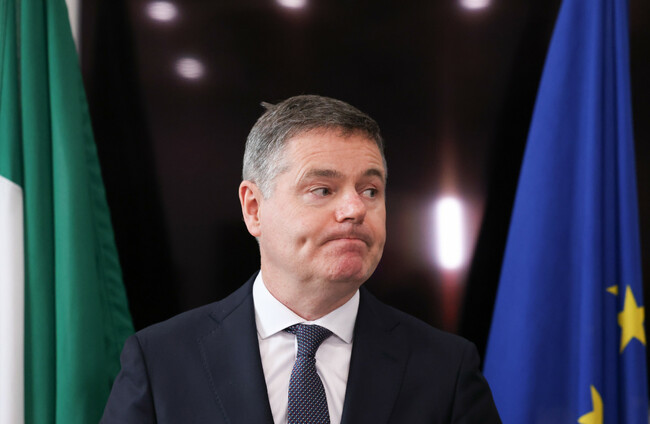
MINISTER FOR FINANCE Paschal Donohoe has ruled out a mooted wage subsidy scheme to support exporting firms in response to Trump’s tariffs.
Such a scheme was suggested by the Labour Party this week, with Labour finance spokesperson Ged Nash arguing that such a scheme would protect jobs in exposed industries like the pharmaceutical sector.
Speaking on RTÉ Radio’s News at One, Donohoe ruled out any immediate scheme, for now.
“I don’t believe an economy-wide wage subsidy scheme in the way we had during the Covid pandemic would be appropriate. And I am hopeful that our efforts to engage with employers in combined with the high level of employment that we already have here in Ireland, will offer a sufficient response back,” the minister said.
“We need to avoid doing anything that has such a cost that it, in turn, could create other difficulties for us in the time ahead.”
Donohoe said the government will engage with firms on an “employer by employer” basis to see what supports are needed.
He said the government will be working to assist firms to find new markets for their goods as the tariffs unfold.
As a result of the tariffs, Donohoe said the government will have to examine any proposed policies that could negatively impact the competitiveness of exporting Irish firms.
When asked if this would include scrapping plans to introduce two additional days of sick leave for staff and introducing health warnings on alcohol bottles, the minister said both of these issues will be looked at.
Donohoe said that based on what we currently know about the planned US tariffs, they will have an effect on our public finances and will negatively impact our economic growth and job creation.
He reiterated, however, that Ireland is approaching this from a strong position and our public finances are currently “in a resilient and strong position”.
He said we have not yet hit the worst-case scenario in relation to these tariffs.
Projections received by the minister earlier last month forecast that Ireland could see the loss of up to 80,000 jobs in a worst-case scenario.
The minister said today that this projection of job losses still stands, but pointed out that if it materialised, Ireland’s employment would still be “significantly” ahead of where we have been historically.
Donohoe reiterated the government’s stance that a “measure response” to Trump’s tariffs is required by the EU.
“It is still our very strong desire to see can the worst be avoided by negotiation, rather than by the global application of tariffs and a global trade dispute,” he said, adding that he believes a “degree of countermeasures will be needed.”
“I believe we need to do this in a graduated way.”
In response to Donald Trump’s previously announced tariffs on steel and aluminium, the EU proposed a 50% counter-tariff on US bourbon.
In response to this, Trump threatened a 200% tariff on all European alcohol imports – a move that would have a particularly negative impact on Ireland’s whiskey producers.
Asked about the proposed bourbon tariff today, Minister Donohoe said this decision will be made by the European Commission in the coming days.
He said Ireland has made the case to avoid measures that would have a disproportionate impact on the Irish economy.

To embed this post, copy the code below on your site















have your say