Sign in. It’s quick, free and it’s up to you.
An account is an optional way to support the work we do. Find out more.
Sign in. It’s quick, free and it’s up to you.
An account is an optional way to support the work we do. Find out more.
THE EU’S PHARMACEUTICAL sector could be in line for 15% tariffs as the result of a “Section 232” investigation in the US.
This agreement came just five days before the US was due to impose 30% tariffs on many European imports.
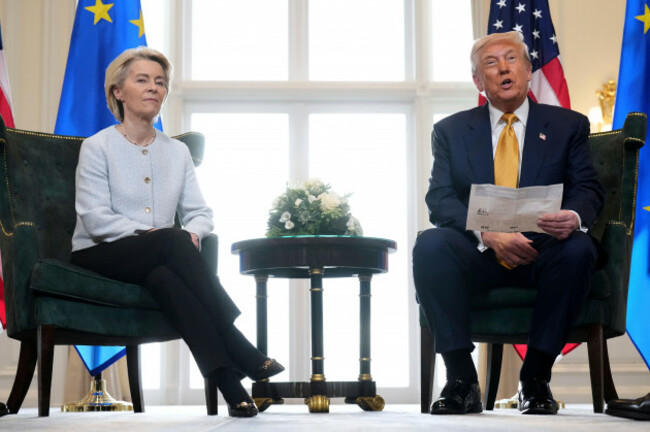
However, there was some confusion as to whether pharmaceuticals, which are currently tariff free, would come under these tariffs of 15%.
Speaking yesterday, Trump said pharmaceuticals were not covered by the deal.
“Pharmaceuticals won’t be part of it because we have to have them made in the United States,” said Trump.
“Pharmaceuticals are very special. We can’t be in a position where we’re relying on other countries.
“Europe is going to make pharmaceuticals, drugs and everything else for us too – a lot – but we’re going to also have our own.”
In a letter to the Trade Forum, Tánaiste Simon Harris said his understanding from von der Leyen is that the “rate of 15% is a ceiling on any potential tariffs that may be imposed following the conclusion of the section 232 investigations”.
“In other words, any tariff would not increase beyond 15%,” Minister for Enterprise and Trade, Peter Burke, told RTÉ this morning.
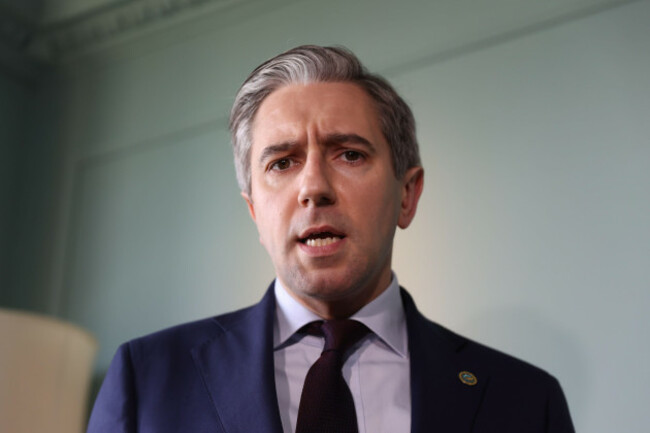
He added: “Von der Leyen has been very clear that 15% will be a ceiling, and Trump has been clear as well that there will be other areas that he can look at on pharmaceuticals.
“Pharmaceuticals are very complex and a lot of the product that is exported over to the US is not a complete product.
“Almost 70% of it is components of the final product that will come together.
“That’s why we need to ensure that we have a very keen rate to ensure we incentivise innovation in that sector.”
On 16 April, the Trump administration initiated new investigations into the imports of pharmaceuticals under Section 232 of the Trade Expansion Act.
The purpose of a Section 232 investigation is to determine the effect of imports on US national security and whether certain imports “threaten to impair” national security.
Such investigations are said to “recognise the close relation of the economic welfare of the Nation to our national security”.
The investigations also probe whether the “displacement of US products by excessive imports” could result in “substantial unemployment, decreases in government revenues, and/or loss of investment and skills”.
In the context of pharmaceuticals, the investigation will look at the role of foreign supply chains in supplying the US market and the extent to which domestic US production can meet demand.
The investigation will also probe potential attempts by foreign states to exert pressure by exploiting US dependencies in this sector.
At the conclusion of this investigation, Secretary of Commerce Howard Lutnick is due to recommend possible trade policy measures on the sector, including the introduction of possible additional tariffs on pharmaceutical products.
The Section 232 investigation was launched on 16 April and the Trade Expansion Act compels Lutnick to submit a report to Trump within 270 of initiating the investigation.
It’s expected that he will file this report within the next three weeks.
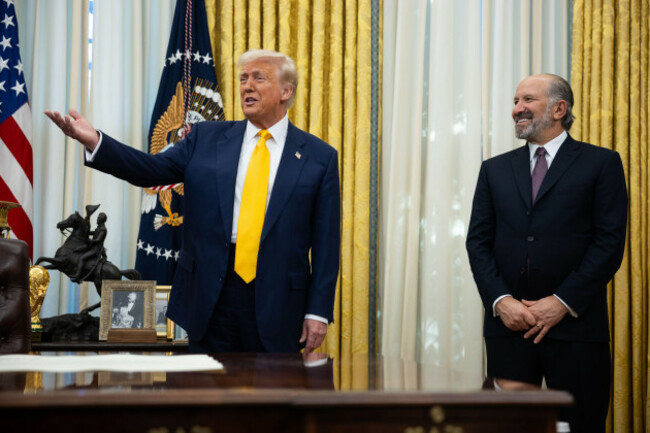
If Lutnick determines that there is a threat to US national security, Trump has 90 days to decide whether he agrees, and if he agrees, whether to act.
If Trump decides to act, he then has 15 days to implement that action.
However, Trump could decide to enter into negotiations instead, should Lutnick report that there is a threat to US national security.
In this scenario, if Trump enters into negotiations and no agreement is made after 180 days, or the agreement “is not being carried out or is ineffective in eliminating the threat” to national security, Trump will take further action.
Earlier this month, Trump claimed that tariffs on European pharmaceutical companies could be as much as 200%.
And during Taoiseach Micheál Martin’s St Patrick’s visit to the White House, Trump said Martin was “lucky” he wasn’t president when US pharmaceutical companies moved to Ireland as he would have placed 200% tariffs on them.
Speaking to reporters today, the Taoiseach said the Irish government was confident follwoing discussions with EU officials that the tariff on pharmaceuticals would not go above 15%.
“Our clear understanding is that the 15% is a ceiling in respect to pharma and semiconductors,” he said.
“The supply chain is a complex one, it benefits both Europe and United States, and we don’t want to do anything, and I’m sure the United States doesn’t, either that would in any way injure or harm what is a very, very important relationship in terms of pharma that benefits patients, consumers and workers.”
Trump carried out seven Section 232 investigations during his first term and all but one found a threat to US national security.
This resulted in tariffs on steel and aluminium in 2018, though this was later modified and some countries were granted exemptions.
For other goods, Trump entered into negotiations with trading partners, though he didn’t agree with his then-Commerce Secretary’s assessment that there was a national security risk around uranium.
In his second term, Trump has commenced Section 232 investigations once more on uranium, as well pharmaceuticals, critical minerals and rare earth elements.
He has also revived a Section 232 investigation from his first term on cars and car parts, initiated new investigations on copper, timber, and semiconductors for manufacturing equipment, and also expanded Section 232 tariffs on steel and aluminium.

To embed this post, copy the code below on your site














have your say