Sign in. It’s quick, free and it’s up to you.
An account is an optional way to support the work we do. Find out more.
Sign in. It’s quick, free and it’s up to you.
An account is an optional way to support the work we do. Find out more.
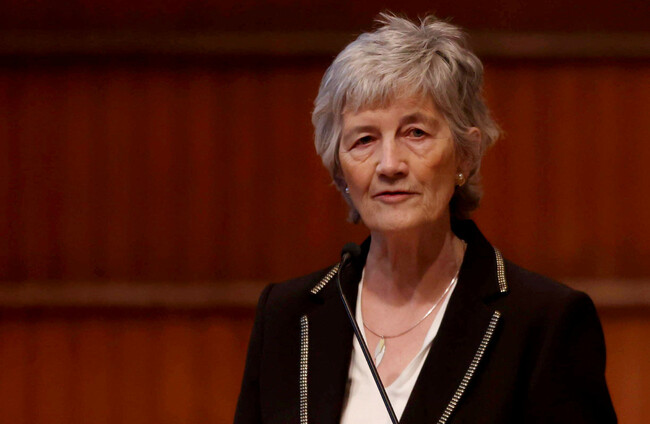
PRESIDENT CATHERINE CONNOLLY has convened a meeting of the Council of State to discuss the constitutionality of the International Protection Bill 2026.
The Bill, which was passed through the Houses of the Oireachtas by government last night, will reform Irish asylum laws and aims to implement the new EU Migration and Asylum Pact.
However, the Irish Human Rights and Equality Commission (IHREC) cautioned that the Bill contains “significant human rights concerns”.
The meeting is to be held at Áras an Uachtaráin on Monday at 2.30pm. It will be the first time the President convenes a meeting of the Council of State under Article 26 of the Constitution since taking office.
Article 26 gives the president the power, after consulting the Council of State, to refer specific Bills passed by the Oireachtas to the Supreme Court to test their constitutionality before signing them into law.
In a statement last night, a spokesperson for Justice Minister Jim O’Callaghan described the legislation as “the most significant reform of Irish asylum laws in the history of the State”.
They said the overall objective of the Bill is to provide a fair, sustainable and efficient asylum procedure that is consistent with how asylum laws operate across the EU.
O’Callaghan said: “This Bill represents a pivotal step in our implementation of a rules-based migration and asylum system in Ireland and across all EU member states.”
“The Pact recognises that migration requires sharing responsibility, robust and fair management of external borders, and stronger governance of asylum and migration policies.
IHREC said a number of important amendments made to the Bill during Oireachtas debates, but raised said concerns remain with.
It said concerning aspects of the Bill, include new powers to detain applicants in order to establish elements of their claims, the absence of legal advice and representation at first instance, and amendments to family reunification.
Chief Commissioner of IHREC Liam Herrick said: “While it is positive to see that the Minister has amended the Bill in line with some of our recommendations, serious concerns remain.”
“The Bill still provides for overly broad and questionable powers of detention, does not provide for access to legal advice and representation at the first stage and purports to restrict the right to family reunification.”
“Family reunification remains a key concern, as current proposals place significant obstacles to families separated by war and conflict being able to reunite with their children and loved ones.
“Being separated from family is one of the most difficult parts of being an international protection applicant. Being reunited with them is one of the most effective ways of promoting integration and family cohesion.”
In a statement issued this evening, the Government said:
“The convening of the Council of State is a matter for the President, as provided for in the Constitution, and the Taoiseach and Tánaiste look forward to participating in the Council’s meeting to advise the President on the Bill.
“It is the very long-standing tradition that the proceedings of the Council of State are treated with strict confidence.
“A decision to refer a Bill to the Supreme Court under Article 26 of the Constitution is a decision for the President alone.”

To embed this post, copy the code below on your site












have your say