Sign in. It’s quick, free and it’s up to you.
An account is an optional way to support the work we do. Find out more.
Sign in. It’s quick, free and it’s up to you.
An account is an optional way to support the work we do. Find out more.
 GE2024Looking Back
IF YOU READ the Programme for Government agreed between Fianna Fáil, Fine Gael and the Greens back in 2020, you’ll see many loosely-worded commitments and pledges to review areas such as public transport, healthcare, policing and the environment.
In fact, the word ‘review’ appears more than 130 times in the 128-page document.
A Programme for Government is a blueprint – setting out to the public the goals of an incoming administration.
Promises to ‘prioritise’, ‘ensure’ and ‘progress’ appear regularly. These pledges have vague goals and are, often, difficult to quantify.
We took a look at the coalition’s performance across a number of key areas over the last Dáil term and compared it to the goals set out in the 2020 Programme for Government.
1. Public Transport
Pledge: “Develop and implement a Sustainable Rural Mobility Plan.”
It was widely accepted that changes and reforms to public transport, particularly in rural communities, were desperately needed.
The National Transport Authority (NTA) developed and implemented the Sustainable Rural Mobility Plan. A blueprint of the scheme was completed by 2021.
It committed to delivering public transport to 70% of those living outside of cities and began after a public engagement phase in 2022.
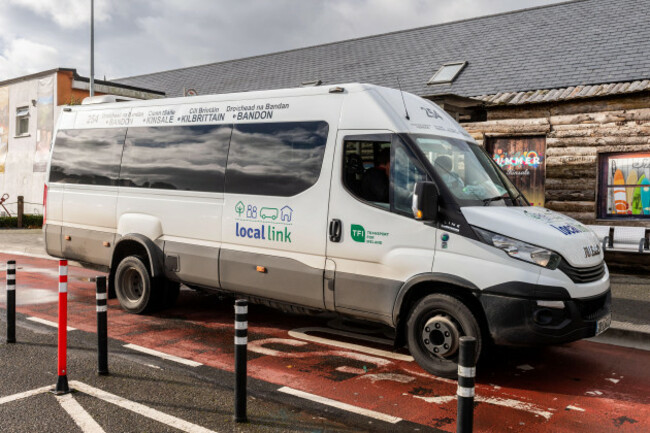
As of the second quarter of this year, over 120 new local connections – using Local Link bus services primarily – have been introduced, according to the NTA.
25 services were introduced in rural and remote areas this year alone. The plan is on track to be fully implemented by 2025 and has completed almost 5 million journeys.
Pledge: “Ensure a national integrated public transport system with an integrated timetable, one tag-on ticketing system and coordination between bus and rail timetables of all operators.”
The commitment to introduce a nationwide, integrated timetable fell through. It was listed alongside a promise to implement a pre-existing plan to connect all of Ireland’s public transport systems together.
The NTA published a five-year plan in 2019. It commits to having the necessary infrastructure and services in place so that people can, in practice, catch a bus to a train station and vice versa.
There is no mention of an integrated timetable in the document. This would make sure that arrival times match up with departing times between services.
While passengers can get the bus to the train station, the government did not redraft the existing plan or commit, in writing, to making sure that a train would be at the platform when commuters get off the bus.
Pledge: “Increase the social housing stock by more than 50,000, with an emphasis on new builds.”
It was a major goal of the outgoing government to increase social housing supply by 50,000 more homes. As of the second quarter of this year, 44,953 social homes have been delivered since the beginning of 2020.
Though the figures for the final half of this year have yet to be published, it can be accepted that the outgoing coalition are going to meet its goal, according to figures from the Central Statistics Office and Housing For All updates.
However, a Housing Commission report said earlier this year that more needs to be done on social housing, and any new government will need to consider those recommendations.
The Commission said there is a significant shortage of social housing and that it should represent at least 20% of the total housing stock nationwide.
While figures are slowly growing, the Housing Commission also outlined that there is still a housing deficit of roughly 250,000.
Pledge: “Improve the supply and affordability of rental accommodation and the security of tenure for renters.”
The outgoing coalition made amendments to the Residential Tenancies Act 2004 which secured renters their tenancy for an ‘unlimited duration’ after a six-month probationary period. Existing leases reached unlimited duration status on a staggered basis.
The report found that the cost of an average rent is up 43% compared to pre-Covid times – before the existence of the outgoing coalition. The average rent is €1,955 per month as of the third quarter.
Author of the report Ronan Lyons, an economist at Trinity College Dublin, said supply was largely driving the price surges, adding that the pipeline of homes around the country is beginning to dry up.
Pledge: “Prioritise the development of microgeneration, letting people sell excess power back to the grid by June 2021.”
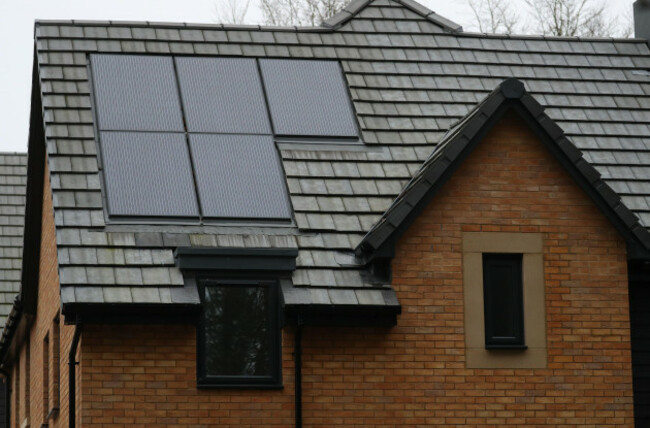
Microgeneration is the generation of electricity from renewable sources, such as solar panels, by households and small businesses.
Under a programme called the Microgeneration Support Scheme (MSS), people whose homes or businesses produce more energy than they need are able to sell it back to their electricity suppliers.
Government may have prioritised the development of microgeneration, but the necessary arrangements were not in place by 2021. In September 2022, thousands of households were still unable to sell excess power back to the grid.
While most of these issues have been resolved, Electric Ireland recently cut rates for people availing of the scheme and the industry has called for expansion in recent days.
Pledge: “Developing major drive to realise the immense potential of Ireland’s offshore renewables.”
The government did publish a major offshore ‘future framework’ document earlier this year.
It set out big targets: 5GW (gigawatts) of offshore wind installed by 2030, rising sharply to 20GW by 2040 and then 37GW by 2050.
While this fulfils the pledge, and is attracting worthwhile investment into Ireland, it is now almost certain that these targets will be missed.

To embed this post, copy the code below on your site














have your say