Sign in. It’s quick, free and it’s up to you.
An account is an optional way to support the work we do. Find out more.
Sign in. It’s quick, free and it’s up to you.
An account is an optional way to support the work we do. Find out more.

IT WAS THE former tánaiste Mary Harney who once declared Ireland needed to be more like Boston than Berlin, but in the upstairs of Doheny and Nesbitt’s pub at Baggot Street in Dublin, the plan is to make it more like Texas.
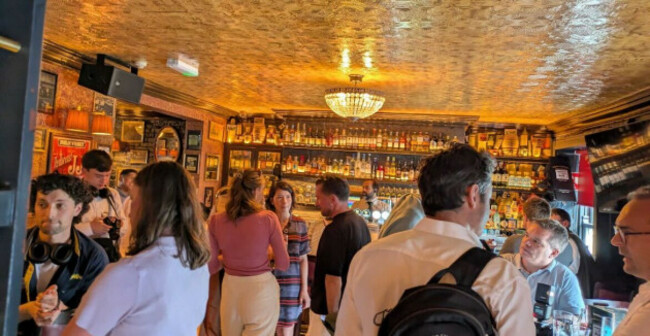
The bar – a popular watering hole for politicians that is just around the corner from Government Buildings – is the venue for what has become a monthly meetup for Progress Ireland.
Formed three years ago, the think tank has come to the fore in recent months, due in part to its recent push for garden homes that has now been adopted by the government, but also because of one of its billionaire funders, Stripe boss John Collison.
Its chief executive and founder Sean Keyes pointed to Dallas, Houston and Austin as places Ireland can draw inspiration from during this week’s meetup in Dublin city centre.
“In Austin and Dallas, there was a big build-to-rent boom where rents dropped from the peak they saw during Covid,” he told The Journal. After increasing supply by 30% in some cases, around 5% was shaved off rent and house prices.
While Keyes accepts that Ireland’s planning system is a far cry from one of the most free-market-led US states in the home of capitalism, he wants us to learn from them so we can “simplify” our own planning system and intensify construction.
Ways of doing this, Keyes argues, extend to scrapping the requirement for planning permission to bring more beds into the system, like with garden homes.
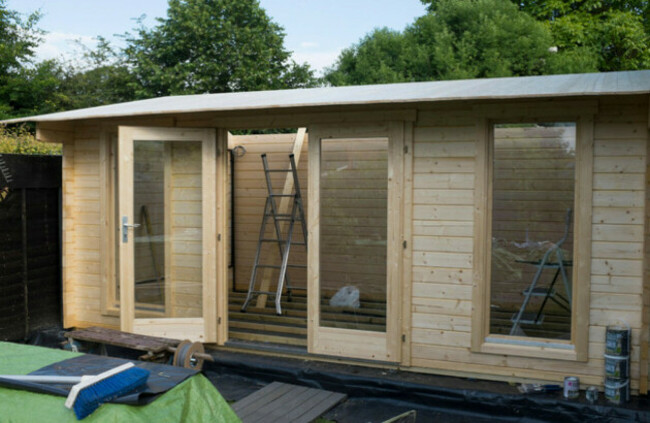
Dubbed ‘seomraí’ by Progress Ireland, but derided as ‘beds-in-sheds’ by sceptics, they are viewed by the likes of Progress Ireland as a way of giving cheaper options to renters suffering in Ireland’s housing crisis.
The government proposes that modular units of between 32 and 45 square metres in size in gardens at the back of people’s homes will be exempt from planning permission. They can be rented out privately under the Rent-A-Room scheme, where people can earn up to €14,000 tax-free each year.
But the research group has also increasingly found itself getting noticed due to its financial backing by Collison, who has weighed in to the debate on Ireland’s infrastructure crisis.

In a 2,500-word essay for the Irish Times last year, the Limerick tech entrepreneur slammed the lengthy delays facing major water and housing projects.
Progress Ireland has been looking to build on its funder’s essay, with Keyes describing how the government and the wider political system is “hungry for ideas” as it tries to solve some of the country’s most pressing difficulties.
“Obviously there is frustration in Ireland with our problems. Maybe where we’ve tapped into something is we’re not negative in any way, we try to be constructive,” he said.
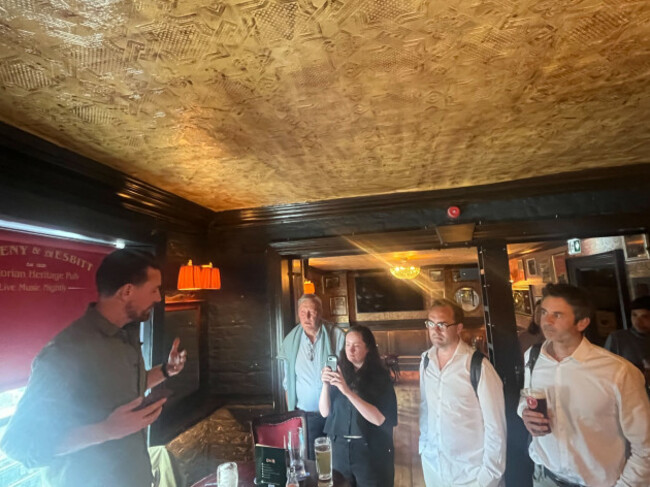
In Doheney and Websites on Wednesday, Keyes addressed a crowd of roughly 15 people who had turned up on a roasting, hot evening to hear about his plans for Ireland’s housing and infrastructure woes.
The event attracted a combination of planners, wind energy consultants and others that would probably be happy to be described as policy nerds.
Keyes wants to see the following turn into a “movement” of “tens of thousands” and here, at least, there is real interest.

These get-togethers have also proven fruitful for Progress since it started hosting them last year.
Sarah Scales started attending after reading a US book co-authored by New York Times writer Ezra Klein called Abundance – the book was cited by a number of people at Wednesday’s gathering and has become a bible for many in these circles.
At its core, the book argues that strides made on environmental legislation over recent decades now thwart development in ways that were never intended. It proposes resolving these as a way to reinvigorate political parties.
At ground level, this means trying to resolve issues with ‘Nimby’ objectors and instead wants people to become Yimbys – or ‘Yes In My Back Yard’ – for new housing and infrastructure.
“It was a different way of thinking,” Scales told The Journal. She left her job at a startup firm Bright Flag and is now Progress Ireland’s first press officer.
Another attendee, a retired machinery wholesaler, shook Keyes’s hand as he told him he drove into the city centre from Straffan in Co Kildare after reading a Progress Ireland newsletter earlier that morning.
Delighted @ProgressIreland played a part in this. Thousands of small homes will soon be popping up all over the country. More options for renters and lower rents for everyone. And for homeowners, help with the bills. https://t.co/xy0lOkY2o1 pic.twitter.com/jkIT7ImotK
— Seán Keyes 🖐️ (@Keyes) April 21, 2026
Elsewhere at the gathering, two young planners – one who works at local council level, another from the private sector – explained to The Journal that they felt Progress Ireland was “coming up with solutions” to logjams they face in their own jobs.
“It gives you a bit of hope that something can be done and there’s a positivity to it,” one planner aged in his 20s said.
However, the same men expressed misgivings about the garden homes policy.
While they felt the policy will be positive for giving people a stepping stone to more sustainable housing, they also felt that it was “admitting defeat” that homing people in back gardens was now a measure to be pursued.
The plans pursued by Progress Ireland have also seen them attract criticism from TDs.
People Before Profit’s Paul Murphy recently claimed at an Oireachtas committee that the lobbying effort is part of a “corporate takeover” to remove “democratic oversight” from the planning system.
“In the last month or so we’ve noticed an uptick in people having a go at us,” Keyes said.
Keyes said the criticisms by “fringe” TDs have left some of his five-strong team feeling “dispirited” about their work.
“In my view, if Progress Ireland is being effective and having an impact in any way, by definition it’s going to attract opposition,” he said, before borrowing a quote attributed to various US politicians:
“If you want to make an enemy, change something.”
I had the honour of speaking on a panel at the Assistant Secretary Network annual conference last week. It was great to meet civil servants in their element. Day and night, all the chat was about how to improve the workings of government. pic.twitter.com/MYKXS84t2L
— Seán Keyes 🖐️ (@Keyes) April 27, 2026
Asked by one attendee if the political establishment is listening to Progress, it was pointed out that recent weeks have seen Keyes address a conference for Department of Public Expenditure officials, where he urged them to loosen the reins on major projects like Metrolink.
So despite these strides made in government circles, is Keyes disappointed that the group has not seen more takeup aside from the homes in the backyard?
“Honestly, no,” he said in response, before referring to one of the current government’s flagship plans that he sees as linked to Progress.
The task force is aiming to solve the infrastructure crisis by aligning different government departments on big projects, covering water, the environment, planners and more.
But to look at it in another way, we should consider what was taking place nearby in Leinster House at the Fine Gael parliamentary party meeting: the Tánaiste was busy outlining plans to “overhaul” rural housing policy to make it far easier to build one-off housing.
The proposed removal of restrictions in the planning system, combined with the desire to build much more homes, echoes Progress Ireland’s own belief system – and maybe a sign that its influence goes beyond the garden homes plan.
Measures such as the Critical Infrastructure Bill are signs that the tide has been moving in this direction, with the government taking these steps amid a wider desperation at infrastructure failings in the political system across Europe and the US.
Before we finish up, Keyes touches on a hot debate in the way out of Ireland’s housing crisis. It centres around whether increasing supply of homes will actually result in what so many people want: lower house prices and lower rents.
Turbocharging supply is sometimes rejected by some experts in the field as failing to capture the whole picture around the complex housing system, but Housing Minister and Taoiseach have regularly pointed to how building all types of housing – whether it’s one-off homes, garden units, or smaller apartments – is the best way to bring down the cost of housing.
Progress Ireland is a firm believer in this. It wants the government to make market conditions favourable to boost supply, particularly over interventions such as rent caps.
Housing officials have expressed doubt over whether the government’s target of 300,000 homes by 2031 can be met, but Keyes thinks that even if they are, it may not be enough.
Prices can “definitely drop” with enough supply, he continued, while conceding that there is a “big weakness” in this point of view.
“If you do add 5% to national housing stock it will absolutely drive down rents,” Keyes said.
But he added:
“The big weakness of Yimby and Progress Ireland and our worldview is, yeah, maybe we are empirically correct about supply driving affordability, but you really have to build an awful lot.
“You have to double or more the amount you build every year to make a dent. I will concede that and that’s what we’re working on.”
Some in power may well agree with several parts of Progress Ireland’s platform, but they will be hoping Keyes is not correct on that front.

To embed this post, copy the code below on your site
















have your say