Sign in. It’s quick, free and it’s up to you.
An account is an optional way to support the work we do. Find out more.
Sign in. It’s quick, free and it’s up to you.
An account is an optional way to support the work we do. Find out more.
LAST UPDATE | 15 Apr
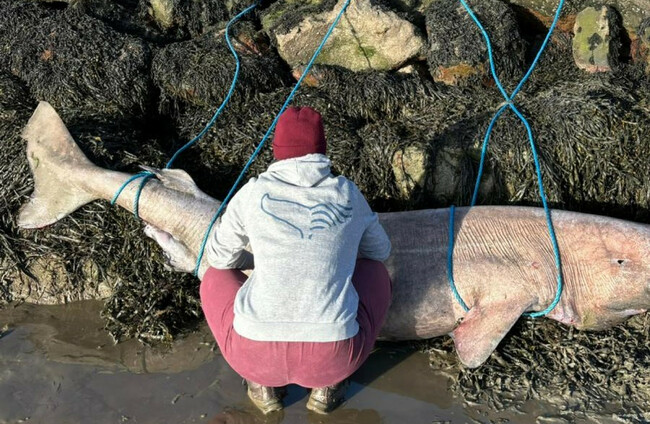
A RARE GREENLAND shark washed up on the Sligo coast is now in the possession of the National Museum of Ireland for dissection and research.
The Irish Whale and Dolphin Group (IWDG) said that on Saturday it received a notification on its hotline as a member of the public believed they came across a dead basking shark, however the photos indicated the animal was a Greenland Shark.
The IWDG described the discovery of the shark as a “very rare and interesting stranding”.
The Greenland shark has the longest known lifespan of all vertebrate species, living up to 500 years in some cases.
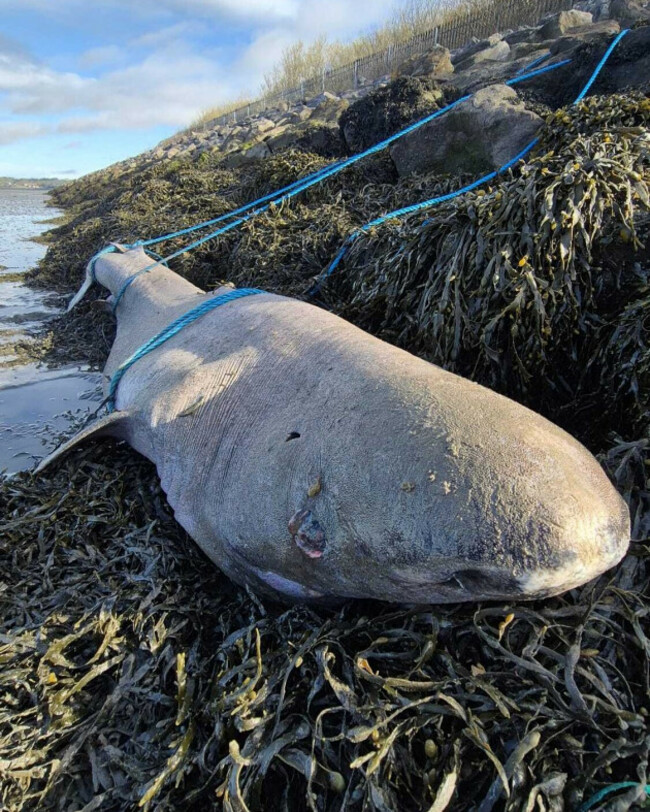
The IWDG said the male shark stranded in Sligo was 2.87 metres in length and had developed claspers.
They estimate he was on “the brink of maturity”, which could put him at around 150-years-old.
Amy Geraghty of the National Museum of Ireland said today on RTÉ’s Morning Ireland that she received a call from a colleague on Sunday evening, saying an “unusual shark” had stranded in Sligo.
Her colleague asked if she was interested in coming out to see it and bringing it back to the museum’s collections.
They coordinated with the local council, the harbour master, and oyster farmers to organise removing the shark from the store and bringing it to a space where it could be studied.
The shark weighs close to 200kg, although researchers have yet to confirm an age.
Little is known about the Greenland shark as their natural habitat is deep in the North Atlantic and Arctic Oceans.
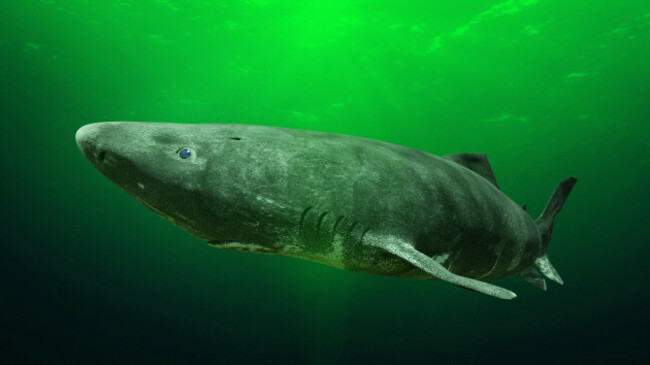
The shark is a large breed. The largest recorded was 6.5 metres and weighed more than 1,000kg.
They reach sexual maturity around 150 years of age and female sharks have a gestation period of between eight and 18 years.
The sharks are often blind as parasites attach to their eyes, but they are still able to scavenge in dark waters.
Sightings officer with the IWDG Pádraig Whooley said when the group’s volunteers came across the stranded shark, “We knew it was something interesting and unusual”.
However, it’s the stranding of the specimen on Irish shores rather than the specimen itself that is unusual. The Greenland shark is a deep-sea creature and is rarely recorded as a result, but it’s possible they are extremely common in their natural habitat, he said.
It’s unclear whether factors like climate resulted in the shark moving from the deep sea.
“When you’ve got a sample size of one you can speculate all you want,” Whooley said. “Lunar cycles, aurora borealis, climate change – we really don’t know.”
The likes of the Greenland shark wouldn’t hunt for its food, but feed on carrion, like the carcasses of seals and whales, allowing it to conserve its energy.
He said the breed of shark is incredibly fascinating due to its lengthy lifespan. “It’s a result of living in frigid, cold waters, ” he said. “It’s adaptation to basically living in a freezer – everything slows down.”
Additional reporting by Emma Hickey

To embed this post, copy the code below on your site













have your say