Sign in. It’s quick, free and it’s up to you.
An account is an optional way to support the work we do. Find out more.
Sign in. It’s quick, free and it’s up to you.
An account is an optional way to support the work we do. Find out more.

LAST UPDATE | 9 Jul
THE WAVE OF heatwaves that have pounded European countries since June are making life miserable for millions of people.
Thousands have died.
Sweating more than most are the politicians of the far right who have spent the last decades denouncing climate change as a scam or furiously working to undo environmental regulations.
To distract from their record of denialism, they are now rounding on incumbent governments for failing to roll out air conditioning for homes and public buildings.
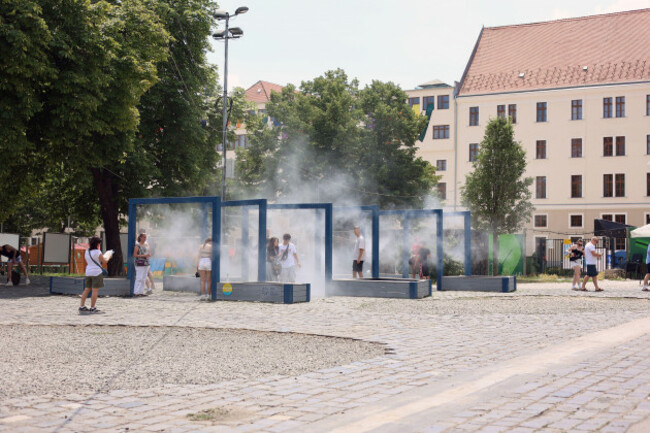
Even in Ireland, where most people will welcome the sunshine and warm days, those left to work in buildings where air conditioning is rare will be feeling the pressure.
Bearing in mind that this is not a new normal, weather extremes will continue to worsen so long as we keep pumping greenhouse gases into the atmosphere. Adapting our towns and workplaces to these new conditions is an urgent task.
The most important path to protecting ourselves from the dangerous effects of climate change is to stop the emissions of greenhouse gases and, in particular, to stop burning fossil fuels.
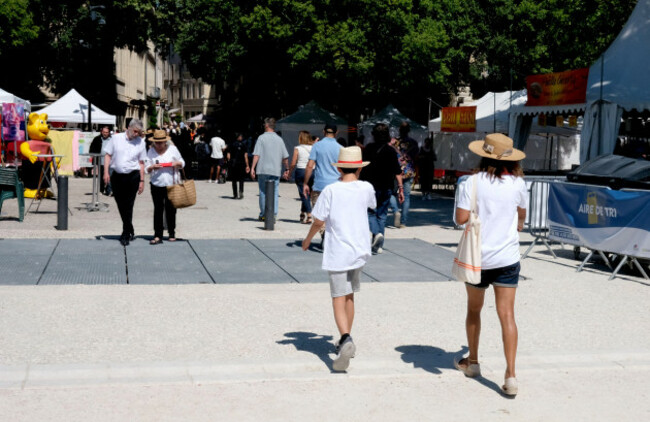
However, even in the most optimistic of scenarios, global temperatures are going to continue to rise for the foreseeable future. Responding to this inevitability is referred to as climate adaptation and will require greater rollout of air conditioning in hospitals, nursing homes and other key buildings where this technology can save lives.
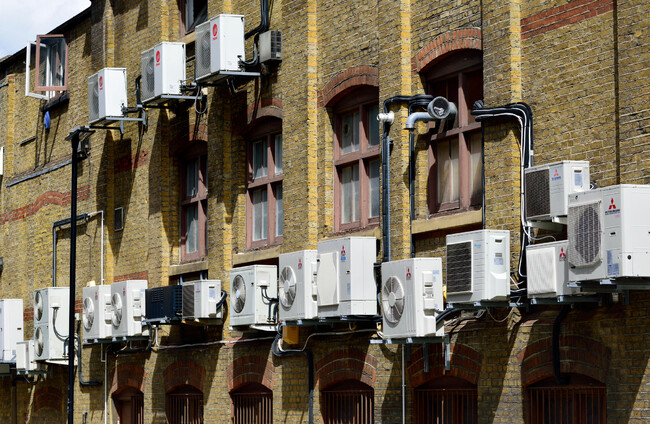
However, the downside of air conditioning is that without clean energy to power it, it adds to the warming effect. According to Our World in Data, air conditioning is already responsible for around 3% of greenhouse gas emissions, roughly the same as aviation or global shipping.
Cities are already hot due to a phenomenon called the ‘heat island effect’, largely due to the replacement of natural vegetation with concrete and asphalt, which, rather than reflecting heat, tend to absorb it.
What’s more, the use of air-con can make them even hotter, increasing nighttime temperatures by 1-1.5 degrees according to one study.
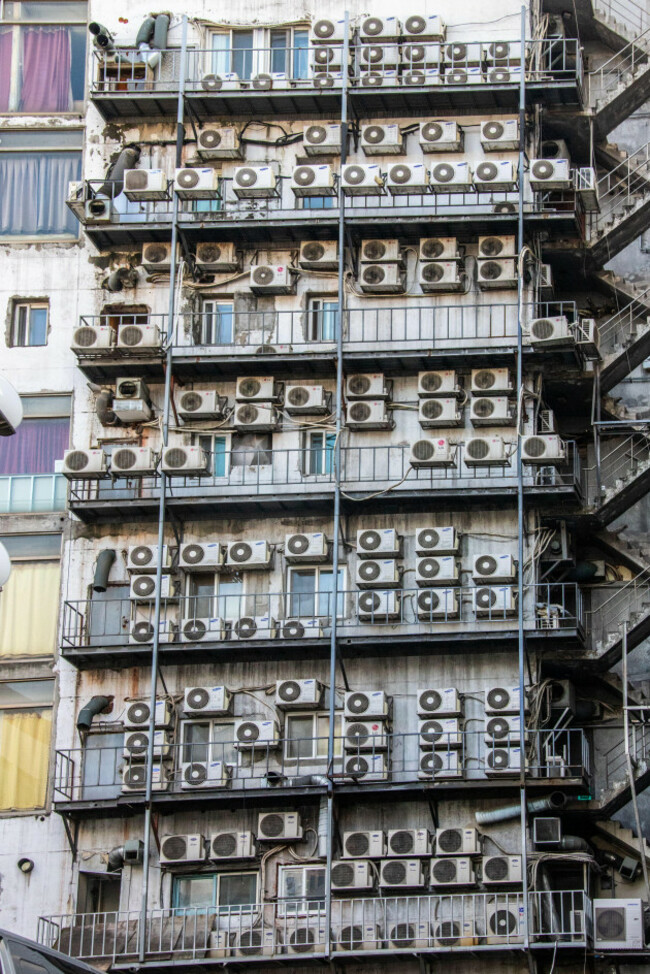
Air conditioners will be adopted by those who can afford them but will not be a solution for those who can’t, not to mention the fact that intensifying climate breakdown will continue to cripple food production and damage essential infrastructure.
But there are other things we can do to help our towns and cities adapt to hotter summers or wetter winters, and this is where nature-based solutions come in.
For instance, tree cover has been shown to reduce temperatures experienced by pedestrians by up to 18 degrees Celsius.
Mature trees can also shade buildings from the sun in summer and the wind in winter. The benefit of trees in cities has long been appreciated, and yet many neighbourhoods have few to none.
A concept that has gained popularity in recent years is known as the 3-30-300 rule, developed by Cecil Konijnendijk of the Nature Based Solutions Institute in Barcelona.
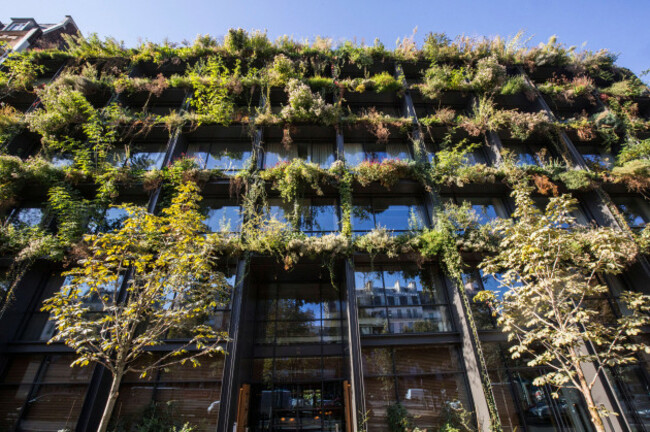
This proposes that three mature trees should be visible from every home, school and workplace; every neighbourhood should have at least 30% tree canopy cover; and that there should be a green space available to everyone within at least 300m of home.
A recent study looked at how well European cities were meeting the 3-30-300 rule and found that only 15% of the population were meeting all three criteria, with cities in Scandinavia and Germany coming closest.
Meanwhile, over a fifth of the urban population lives in neighbourhoods that meet none of the criteria. This gap frequently follows socio-economic divides, with wealthier neighbourhoods noticeably leafier.
In Dublin, it is estimated that there is a tree canopy cover of just over 10%, but this varies widely, with some neighbourhoods reaching 16% while many areas have near-zero. This is lower than Cork, which has a canopy cover of 13%, but these figures are very small when compared to some European cities: Oslo has an impressive 72% coverage, for instance.
Authorities in Paris have been removing concrete to plant trees, aiming to reach 25% canopy cover by the end of the decade. This has been part of a push over the past decade by former mayor Anne Hidalgo of ‘revégétalisation’ that has also seen increased public spaces for pedestrians and cyclists and improvements in air quality.
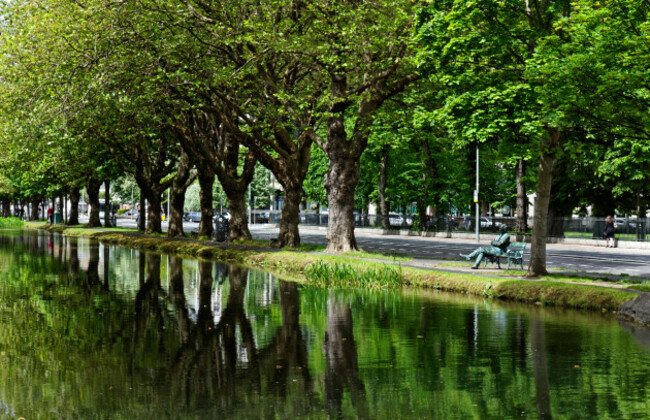
Trees, particularly native species, are the true heroes of urban nature-based solutions. They not only reduce temperatures but capture carbon, reduce pollution and provide home for wildlife. But even smaller areas of natural vegetation can bring big changes.
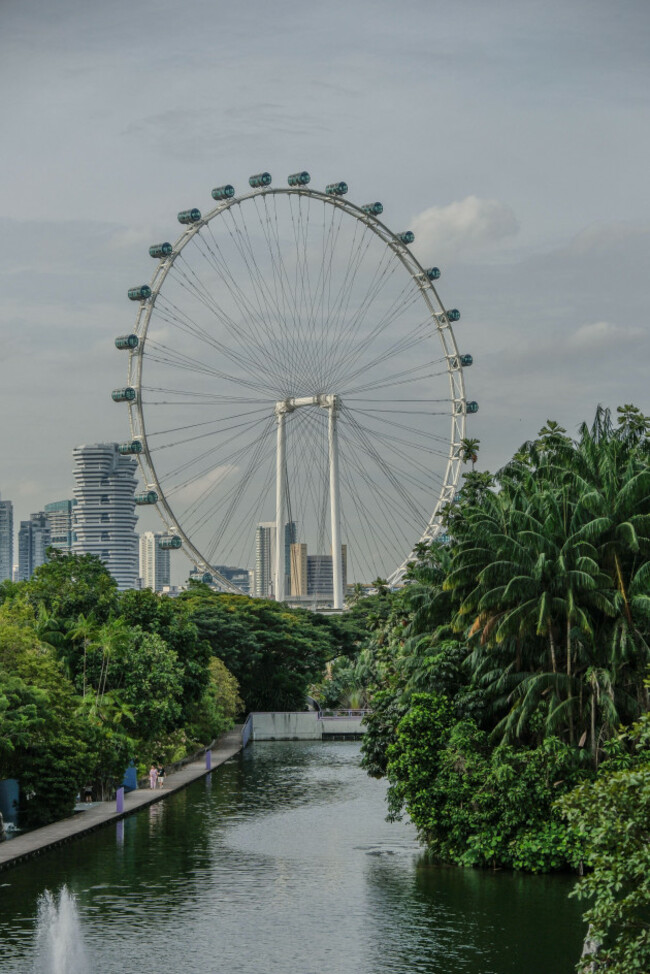
For instance, in the 1960s Singapore introduced a radical plan to restore wetlands and to bring streams and creeks that had been buried in pipes back into the daylight, creating a sponge effect for increasingly intense rainfall. This network of wetlands and waterways absorbs rainfall and slows its flow to sewers, helping to prevent flooding and even removing pollution.
And solutions don’t stop at the shore. Restoring oyster reefs, which were once found around the Irish coastline until they were dredged out, has been shown to reduce wave energy and so help to prevent coastal erosion.
Native European oysters also filter water and so help remove pollution, but only when they are part of healthy reefs, features that no longer exist. Cuan Beo in Galway and Green Ocean Foundation in Dublin are among those bringing the native oyster back.
On land, Pocket Forests in Dublin is donating native trees to residents of Dublin 8 while Cork City Council are currently undertaking a half-million euro study to increase greenery.
Actions such as these will form part of Ireland’s National Nature Restoration Plan, which will be published next year.
Nature-based solutions will not prevent extreme weather or rising sea levels and so should only be a part of our response to the environmental crisis.
However, they do bring multiple benefits at low cost, not least making our towns and cities more liveable and bringing us closer to nature.
Pádraic Fogarty is an environmental campaigner.
To embed this post, copy the code below on your site














have your say