We need your help now

Support from readers like you keeps The Journal open.

You are visiting us because we have something you value. Independent, unbiased news that tells the truth. Advertising revenue goes some way to support our mission, but this year it has not been enough.

If you've seen value in our reporting, please contribute what you can, so we can continue to produce accurate and meaningful journalism. For everyone who needs it.

Alamy Stock Photo

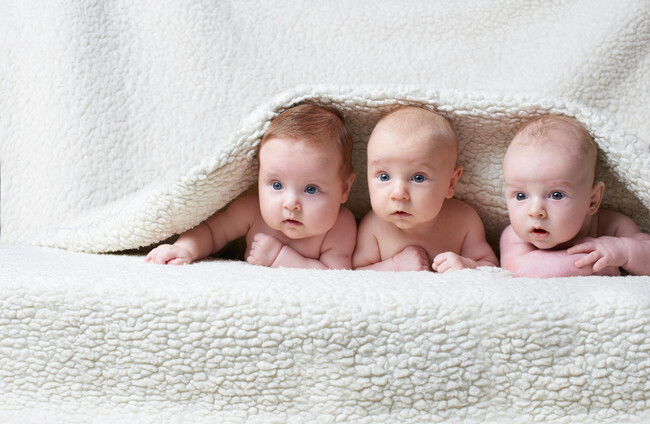
The Irish For Baby names - Rían’s fada and the myth of the ‘neutral’ name

Ireland’s latest baby-name data shows how parents bend tradition, blur gender lines, and quietly make wishes for their children’s futures, writes Darach Ó Séaghdha.

LAST WEEK, THE CSO released the baby name count for 2025 and, for the first time since fadas have been included in the statistics, we have a name with a fada at the top of the boy-name charts (I wrote about the rise of Rían a while back).

There were some other very interesting trends in the name lists, too. For example, Gareth and Roger are fully gone and are not coming back. The trend of giving our daughters a regular girl-name with “rose” stuck at the end of it appears to be on the way out: there were 63 such names in 2017, but only 14 last year.

But the trend of giving our daughters a regular girl name with “mae” stuck at the end is holding steady (72 cases in 2019, 72 last year).

Getting it right

When we name a child, we make a wish for them – what we hope they’ll grow up to be like, how we’d like people to respond when they introduce themselves. We want so much for them – some parents even want to give their children fadas that do not correctly belong to the chosen name.

But do we make different wishes for our daughters and our sons? Globally, there has been a trend to pick names for baby boys from bedtime story protagonists – not tough guys who come along and batter everyone, but gentle and honest lads who do the right thing. Jack and the Beanstalk, Noah and his animals, and Oliver Twist.

With names for baby girls, there has been a very wide range of spellings for a very limited number of syllables: Éala, Ayla and Aodhla have each risen every year this decade despite being pronounced more or less the same name, and there are eleven different spellings of Aoibhín/Aoibhinn recorded. It seems we wish for our daughters to be unique within limits.

This divergence is especially interesting when it comes to those names which appear on both lists. Naoise, for example, recently entered the top 100 boy name list. But 37% of the Naoises born in 2025 are baby girls, and no doubt you are familiar with Irish novelist and activist Naoise Dolan, who is also not a boy.

You could argue that no name is intrinsically male or female, and I’d be inclined to agree with you. In Ireland in the 1960s, Florence was almost as popular a name for boys as it was for girls. And while Stephen has tanked in popularity for the lads, Stevie has become quite popular for girls. Miley is no longer associated with the man from Glenroe, and Ailbhe (once considered the Irish version of Albert and Alfred) has changed sides almost entirely.

The boy/girl dilemma

The prevailing wisdom has been, to paraphrase Madonna, that it’s ok for a girl to have a boy’s name because it’s ok to be a boy, but giving a lad a female name was putting a target on his back. And the top “neutral” names – Jamie, Alex, Charlie, Dara – would suggest that this opinion still holds, even though the number of children with names that appear on both lists is rising.

So what might a gender neutral name in Ireland in the 2020s actually look like? Consider this: in 2025, 18% of boys born were given a name beginning with C or J – and a whopping 28% of youngfellas got a name ending in an N.

Meanwhile, 24% of young-ones in 2025 had a name beginning with A or E, and a colossal 40% got a name ending with an A. So by this rationale, Colleen would be a very typical male given name and Enda a female one.

It’s almost as if the rules and trends are completely made up! One way or another, the wish that parents make for their child when they pick a name will rarely be as wonderful as the child themselves.

Darach Ó Séaghdha runs @theirishfor Twitter account and the @motherfocloir podcast. 

Readers like you are keeping these stories free for everyone...
A mix of advertising and supporting contributions helps keep paywalls away from valuable information like this article. Over 5,000 readers like you have already stepped up and support us with a monthly payment or a once-off donation.

Close
14 Comments
This is YOUR comments community. Stay civil, stay constructive, stay on topic. Please familiarise yourself with our comments policy here before taking part.
Leave a Comment
    Submit a report
    Please help us understand how this comment violates our community guidelines.
    Thank you for the feedback
    Your feedback has been sent to our team for review.

    Leave a commentcancel

     
    JournalTv
    News in 60 seconds