Sign in. It’s quick, free and it’s up to you.
An account is an optional way to support the work we do. Find out more.
Sign in. It’s quick, free and it’s up to you.
An account is an optional way to support the work we do. Find out more.
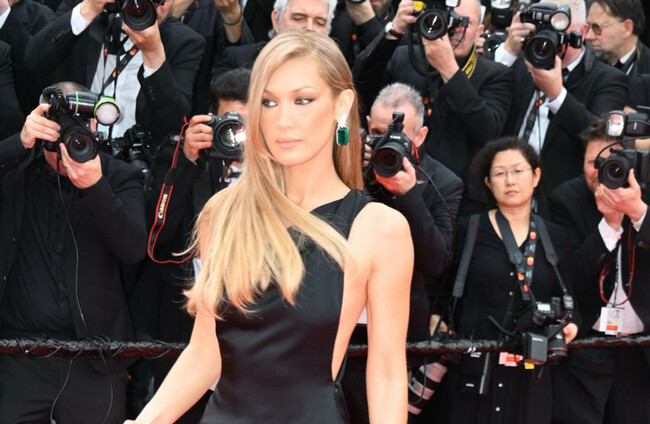

IN A RECENT interview with British Vogue, 26-year-old model Bella Hadid, who suffers from endometriosis, made a case for balancing the inequalities women face when working while on their period.
“You’re shooting Victoria’s Secret on your period, with endo. That should be illegal,” she said. “I’m going to talk to the White House about it because we should literally ban women working on the week of their period. And the week before, to be honest.”
We’d all love to be a fly on the wall for that particular Oval Office showdown, and while Hadid’s comments on confronting Donald Trump might have been a bit tongue-in-cheek, she raises an interesting question. Should we introduce statutory provisions for workplace menstrual leave here in Ireland?
My immediate reaction was yes, of course, period leave is a no-brainer, but without other meaningful changes in how we view women’s health, does it have the potential to be a regressive step for women in the workplace?
Karen O’Reilly, founder of Employflex and Employmum and expert in Equality, Diversity, and Inclusion, advises caution.
“Period leave? It sounds progressive until it becomes yet another reason to pass over women for promotions or jobs,” she says. “Bella Hadid made headlines, but let’s remember she suffers from endometriosis, a serious condition that isn’t the norm for everyone. Menstrual symptoms vary hugely, so why lump all women into one category that screams ‘fragile once a month’?”
“What we actually need are policies based in trust, flexibility, and common sense, not another pinkwashing initiative that could undo years of progress,” she adds.
We live in a world where 50% of the population bleeds once a month for a large portion of their lives. Girls are now beginning puberty as young as eight, and the average age for menopause in Ireland is 51. Like it or not, we live in a world that is often set up for men who do not know what it is like to have a period, and as a result, women are generally expected to go on about their business as if they are not bleeding.
At their very best, periods are an annoyance that can result in painful cramps every month, and that’s just assuming your equipment is functioning normally. At its worst, conditions like endometriosis, ovarian cysts, and Premenstrual dysphoric disorder (PMDD), to name but a few, can result in debilitating pain, abnormal blood loss, vomiting, fainting, mood swings, migraines, extreme fatigue and have a negative impact on a woman’s wellbeing.
According to trade union Fórsa recent research involving their 1,800 members found that 70% had taken time off work due to period pain. One in four also said they had been diagnosed with a specific menstrual condition, which resulted in medical symptoms including very heavy bleeding, migraines, and nausea. A VHI report from last year, found that 69% of women reported they suffered from menstruation symptoms, and 81% of these women said that it affects their work.
Surely then, period leave is the answer?
Interestingly, other countries that have introduced menstrual leave, such as Japan in 1947 and Indonesia in 1948, have seen low uptake, possibly due to the fear of stigma and workplace discrimination and less culturally permissive views around women’s health.
In 2023, Spain was the first European country to introduce period leave. The law, which requires a doctor’s note, allows for three days of menstrual leave, with the possibility of extending it to five for those with severe periods, which can cause heavy cramps, nausea, dizziness and vomiting.
However, according to a report by the Guardian, take-up has been low. Spain’s Ministry of Inclusion, Social Security and Migration stated that menstrual leave had been taken only 1,559 times in the first year that the law came into force.
It doesn’t add up. Research shows that women are suffering negative effects due to their period, with many feeling it has the potential to impact their work. However, the numbers indicate that period leave without a wider shift in culture and attitudes is not enough. VHI’s research found that 63% of women said they would be reluctant to talk about women’s health issues, such as menstruation, in front of male colleagues.
It’s not just periods, either. According to the Menopause Hub’s annual report, “37% of respondents said that they had missed time off work due to symptoms, with 18% missing 3 or more days. 77% were not comfortable telling their employer the real reason for taking time off work.”
In a world where periods are still whispered about or viewed as taboo, it’s hard to see progress. When some women still feel a need to hide a pad up their sleeve when going to the bathroom in the office or when we don’t talk to your girls and boys about what is a normal bodily function, or where period leave could be viewed as a barrier to progress in the workplace, it’s hard to see how period leave on its own will help.
As Bella Hadid’s experience illustrates, the world is not set up for those of us who menstruate.
Being taken short by your period when you don’t have a pad or tampon on you is a scenario every woman knows all too well. Even though I’m 42 and like to think the days of being taken by surprise by my period are behind me, you’d be wrong because this very thing happened to me recently, when I was leaving the swimming pool late in the evening.
With no period product in my bag, I headed to the vending machine. It was empty. There was no one else in the changing room at that hour. I asked the girl at the desk if she happened to have one spare, with no luck. So, like many women before me, I had to resort to the handfuls of tissue paper to tide me over.
As I made my way home, I couldn’t help feeling that if men menstruated, period products would rain down from the sky, and the very thought of them not being freely available would be ludicrous.
The workplace would presumably also be equally transformed. The veil of secrecy and stigma around a standard bodily function would be gone. Empathy, understanding and support structures would be commonplace, and period leave could be accessed by those who really needed it, like the estimated 155,000 women in Ireland who are affected by endometriosis. A chronic inflammatory disease where tissue similar to the lining of the womb (uterus) is found elsewhere in the body.
Niamh O’Reilly is a freelance writer and wrangler of two small boys, who is winging her way through motherhood, her forties and her eyeliner.
To embed this post, copy the code below on your site











have your say