We need your help now

Support from readers like you keeps The Journal open.

You are visiting us because we have something you value. Independent, unbiased news that tells the truth. Advertising revenue goes some way to support our mission, but this year it has not been enough.

If you've seen value in our reporting, please contribute what you can, so we can continue to produce accurate and meaningful journalism. For everyone who needs it.

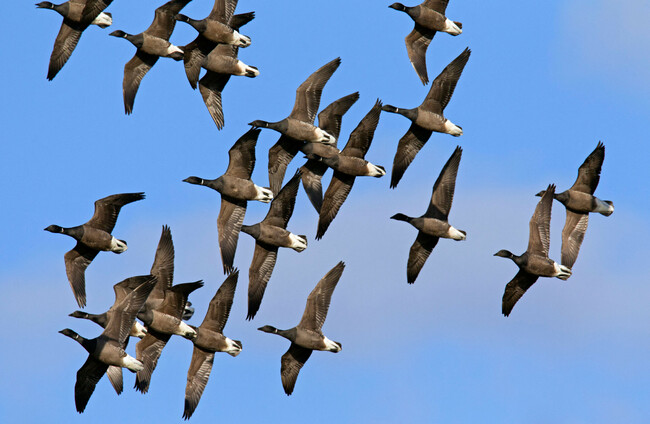
A flock of Brent Geese in flight Alamy Stock Photo

Ireland's nature heroes The birds that come here because it's winter

For a few weeks every year coming into the colder weather, the skies over Ireland are extraordinarily busy, writes Jack Morley.

IN IRELAND, WE’RE very familiar with the rhythm of the seasons. We learn it early in school and absorb it without question: winter is cold and wet, summer is warm (or at least less cold), autumn is when the leaves fall, and spring is when everything comes back to life. Nature can feel like it arrives in spring and disappears again in winter.

We’re also very familiar with one particular sign of spring — the return of birds like swallows, swifts and martins. Their arrival marks the change in the year as clearly as lambs in fields or longer evenings. They come from Africa, nest here, raise their young, and leave again before the cold sets in. All of that is true.

What most people don’t realise — and I don’t blame anyone for this, because it simply isn’t part of our shared “general knowledge” — is that just as many birds arrive in Ireland at the beginning of winter as arrive in spring.

In fact, for a few weeks every autumn, the skies over Ireland are extraordinarily busy. As our summer visitors head back south, winter visitors are arriving from the north and east. There is, quite literally, serious avian air traffic over the country.

Which raises an obvious question: why on earth would birds come to Ireland for the winter?

After all, winter here is grey, cold, windy and wet. Not exactly inviting. But the simple answer is this: where many of these birds are coming from is even colder, even harsher, and far less forgiving.

For birds breeding in Iceland, Scandinavia, Greenland and the Arctic, Ireland’s winter is comparatively mild. Our coastal wetlands don’t freeze solid. Our estuaries stay productive. Food remains available. So they come here to survive.

This blind spot in our collective understanding matters more than people realise.

Birds that “summer” in Ireland are better known, more celebrated, and generally better protected in the public imagination. The birds that winter here are often overlooked — despite the fact that Ireland is internationally important for many of them.

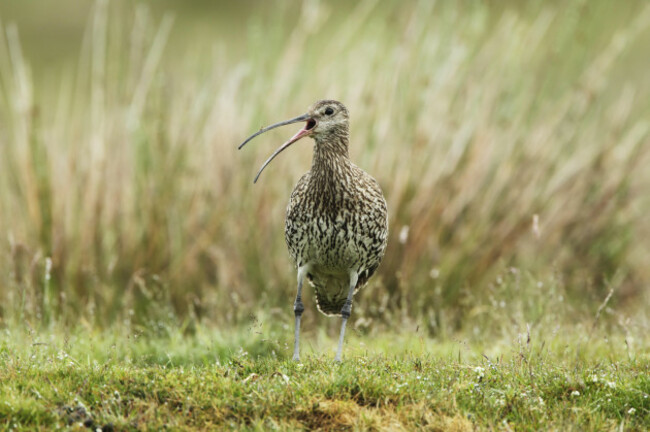
Take the Curlew, for example. Its bubbling call was once a familiar sound across the Irish countryside. Today, it is one of our most rapidly declining birds, both as a breeder and as a winter visitor. Ireland hosts internationally significant numbers of Curlew in winter, birds that have travelled huge distances to feed and rest on our wetlands. Yet disturbance and habitat loss continue to push them closer to the edge.

eurasian-curlew-numenius-arquata-on-rough-grassland-with-its-beak-open-while-calling A Eurasian Curlew Alamy Stock Photo Alamy Stock Photo

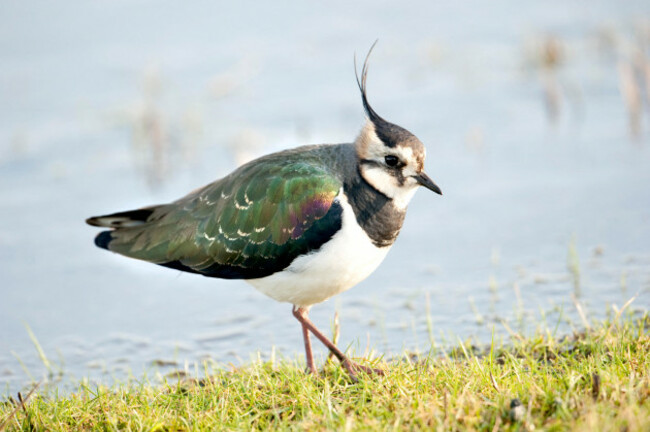
Or the Lapwing, selected as Ireland’s national bird. Its tumbling display flights are iconic, but in winter huge flocks gather on wet grasslands and estuaries. These birds are struggling across Europe, and Ireland is one of the places they rely on most during the cold months.

northern-lapwing-vanellus-vanellus-uk A Lapwing Alamy Stock Photo Alamy Stock Photo

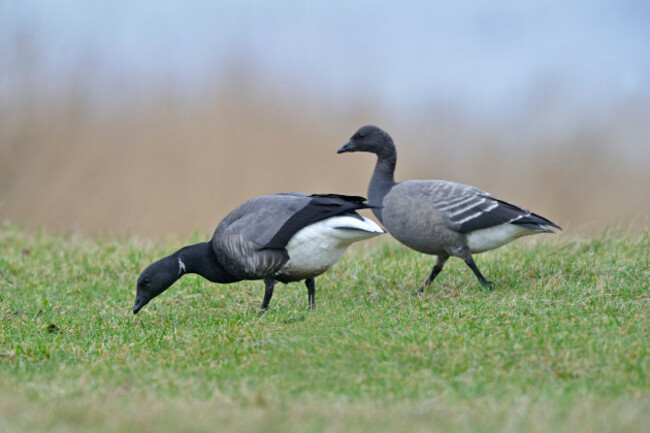
Then there are wintering geese, such as Brent Geese and Greenland White-fronted Geese, arriving from Arctic breeding grounds to feed on our coasts and fields. Their journeys are extraordinary, their energy reserves finely balanced.

two-brent-geese-branta-bernicla-dak-bellied-feeding-on-grass Two Brent Geese Alamy Stock Photo Alamy Stock Photo

Whooper Swans arrive from Iceland in winter, filling our lakes and flooded fields with their calls. Ireland is one of their most important wintering areas anywhere in the world.

These are just a few examples. There are many more: Golden Plover, Dunlin, Redshank, Bar-tailed Godwit, Teal, Wigeon, Shoveler. The pattern is clear — a large number of our winter visitors are wetland birds. They depend on estuaries, mudflats, coastal lagoons, strands and flooded fields to rest and refuel after journeys that can span thousands of kilometres.

Their biggest long-term problem is habitat loss and degradation. That’s a large, complex issue that requires policy change, funding and long-term planning.

But there is another major pressure — one that all of us can influence immediately: disturbance.

When birds are repeatedly flushed from feeding or roosting sites, they burn precious energy – energy they cannot afford to waste.

Each time a flock takes flight, it costs them calories they need to survive winter or make the return journey north. Do this often enough, and birds lose condition, fail to survive cold spells, or don’t make it back to breed.

One of the most significant sources of disturbance on Irish wetlands is off-lead dogs.

This isn’t about blame or bad intentions. I have two dogs myself sure. Dogs are doing what dogs do. But to a Curlew or a flock of Lapwing, a dog running across a mudflat is indistinguishable from a predator. Birds don’t know it’s “just being friendly” or “just burning energy.” They just know they have to flee.

This is a particular problem in places like Bull Island and other designated or “protected” wetland sites — areas these birds have specifically selected to rest and feed after flying enormous distances. They arrive exhausted, only to be repeatedly chased off by well-meaning walkers and their big, happy-headed Milly charging through the flock, tongue flapping in the wind.

When I say ‘wetlands’, I refer not just to muddy places you need to put on the wellies for. I mean strands, beaches, dunes, estuaries- anywhere near water. Which is also where we like to walk dogs. I’ll stick with Bull Island as an example, but this story is repeated all over the nation. Newcastle and Buckroney in Wicklow, Wexford Harbour, Rosslare Strand point, Ballycotton Bay in Cork, Lough Swilly in Donegal and many more.

The Curlew I mentioned earlier have declined significantly in recent decades, both as breeding birds and as winter visitors. National surveys indicate declines of around 3 % per year in some areas, and Bull Island supports these wintering populations as part of Dublin Bay’s broader network of sites.

The reality is that winter is not a quiet time for wildlife. It is a critical one.

For many species, survival hinges on conserving energy, feeding efficiently, and avoiding unnecessary disturbance. Ireland plays a global role in that survival — whether we realise it or not.

If we want to protect these birds, awareness is the first step. Recognising that winter is not empty, that our wetlands are full of life, and that the birds using them have travelled here because of the season — not despite it.

Spring arrivals are easy to celebrate. Winter arrivals require us to pay closer attention.

And once you see them — once you understand why they’re here — it becomes much harder to look at an empty-looking estuary or a grey winter shoreline and not think ‘where are all the winter birds that should be here?’.

You can follow Jack Morley’s Irish nature journey on his Instagram @the_rewildlife or on YouTube @TheRewildlife. If you have land you’d like to rewild, you can learn more here: Rewildyourland.ie. 

Readers like you are keeping these stories free for everyone...
A mix of advertising and supporting contributions helps keep paywalls away from valuable information like this article. Over 5,000 readers like you have already stepped up and support us with a monthly payment or a once-off donation.

View 14 comments
Close
14 Comments
This is YOUR comments community. Stay civil, stay constructive, stay on topic. Please familiarise yourself with our comments policy here before taking part.
Leave a Comment
    Submit a report
    Please help us understand how this comment violates our community guidelines.
    Thank you for the feedback
    Your feedback has been sent to our team for review.

    Leave a commentcancel

     
    JournalTv
    News in 60 seconds