We need your help now

Support from readers like you keeps The Journal open.

You are visiting us because we have something you value. Independent, unbiased news that tells the truth. Advertising revenue goes some way to support our mission, but this year it has not been enough.

If you've seen value in our reporting, please contribute what you can, so we can continue to produce accurate and meaningful journalism. For everyone who needs it.

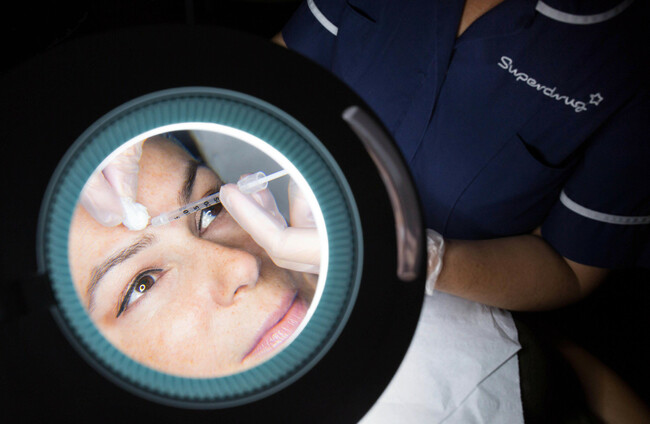
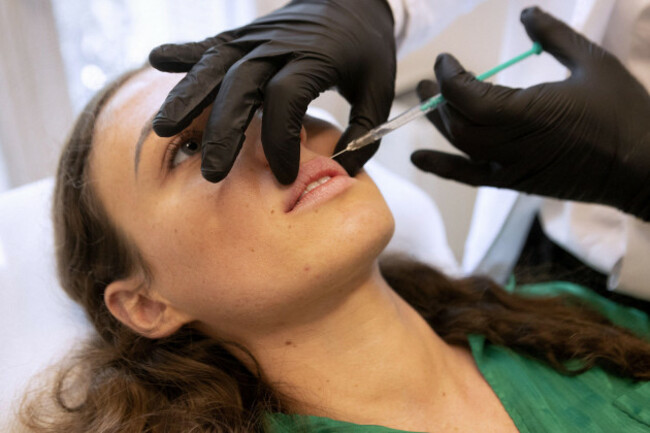
Lisa from London receives a botox treatment. Alamy Stock Photo

Keelin Moncrieff on Botox What happens if we all freeze our faces?

The content creator says that from Botox deals to facelifts, the race to stay young is reshaping how we age — and how we learn to feel.

AS SOON AS I turned 28, I began to notice the crows’ feet in pictures, the smile lines that had deepened when I looked in the mirror while washing my hands.

With that came the bombardment of cosmetic procedures I could avail of to fill, or smooth, or freeze the effects of an apparent life that has been lived, worn on my skin.

The tragedy is that I am not alone in this; friends and family often openly discuss what they’d like to adjust or inject into themselves to preserve their youth that feels to be slipping from their fingers.

From advertisements to anti-ageing skincare, the 4 for 1 injectables deals in aestheticians to now skincare lines dedicated to children, there is no escaping the pressure to slow down the inevitable, even with the potential for physical payback.

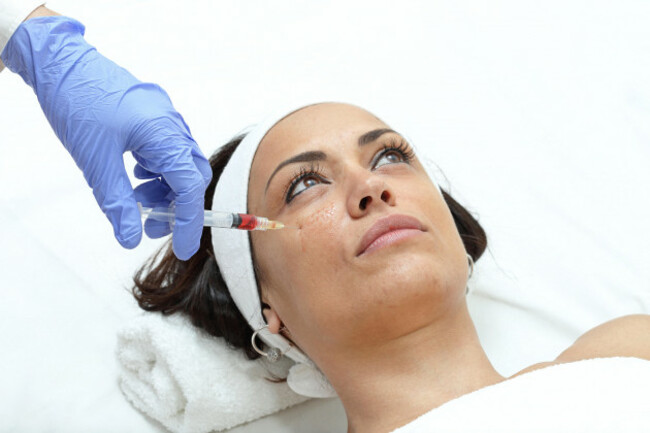
montpellier-france-29th-may-2023-may-29-2023-montpellier-occitanie-france-guillaume-bonnefontip3-montpellier-france-le-29-mai-2023-illustration-chirurgie-esthetique-une-jeune-femme-subit Alamy Stock Photo Alamy Stock Photo

It was expected that anytime a new season of Love Island rolled around, I’d endure a new guessing game as to the ambiguous ages of all the guests, all falling in around the 24 mark. But somehow ages ranged from 19 to 32, faces frozen and still, which I’ve now come to learn has much more insidious effects than just lack of movement. 

Normalising perfection

It was then reflected in what I saw on my phone. Influencers were offering discount codes for their followers, via beauty companies, showing the ease and accessibility to Botox, filler and other cosmetic adjustments we could avail of, and with 20% off for that matter! How could anyone pass up on a bargain like that?

Something, however, has shifted in the last two or three years; actors, the “real” people who acted out everyday stories on screens, showing emotion and feeling, are now coming out of the woodwork with new faces. Actors like Halle Berry have acknowledged the extreme pressure they feel within the media industry to conform to surgery-induced beauty standards. 

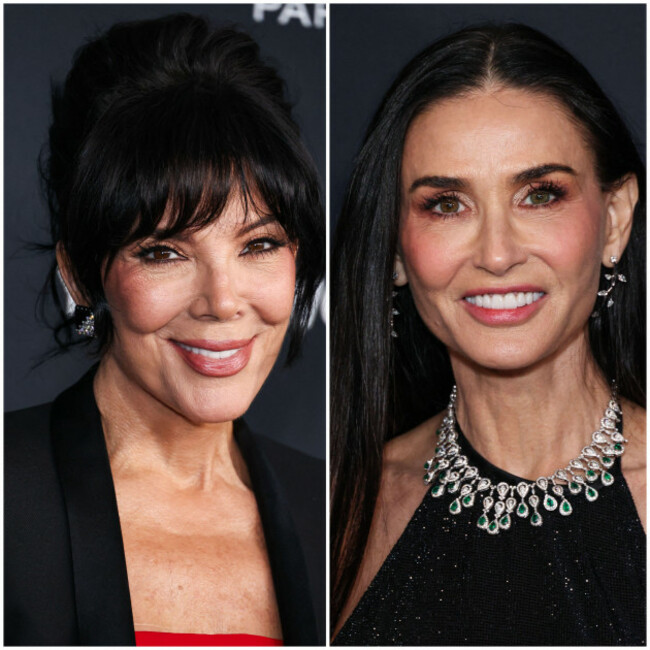
MixCollage-22-Jan-2026-02-58-PM-7494 Kris Jenner (70) and Demi Moore (63) have been praised for altering their looks to appear younger. Alamy Alamy

What we are seeing more of now are The Substance-level, portrait-in-the-attic worthy faces that now not only lack movement, but also the ability to emote sufficiently for the movie or TV show that we viewers consume.

This trend has had a knock-on effect on actors who have chosen not to restrict their facial movements, with comments such as “doing too much” or “over the top acting” popping up frequently. This was blatantly obvious after the performance from Claire Danes in The Beast in Me.

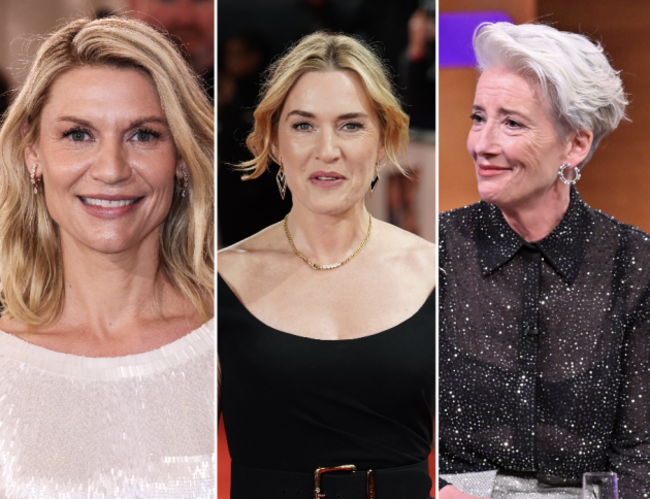
Screenshot 2026-01-22 at 12.55.12 Some big Hollywood names like Claire Danes, Kate Winslet and Emma Thompson have said they have avoided cosmetic procedures.

Viewers had become so desensitised to anti-ageing that they were now shocked and uncomfortable with a face that moves freely, as it’s supposed to. The tide seems to have so completely turned in favour of extreme youth that it’s hard to remember what ‘natural’ ageing looks like.

Of course, we can only imagine the level of pressure Hollywood actors feel in this regard, and there’s genuinely no judgment here. If people want to alter their faces, that’s their business. But we should also be conscious of the impact those changes are having on everyone else. Twenty years ago, ‘getting Botox’ was the preserve of the wealthy, usually an older demographic. Now, it’s greatly on the rise and is as frequent as a dental visit, and the users are much younger. 

Growing pressure via social media

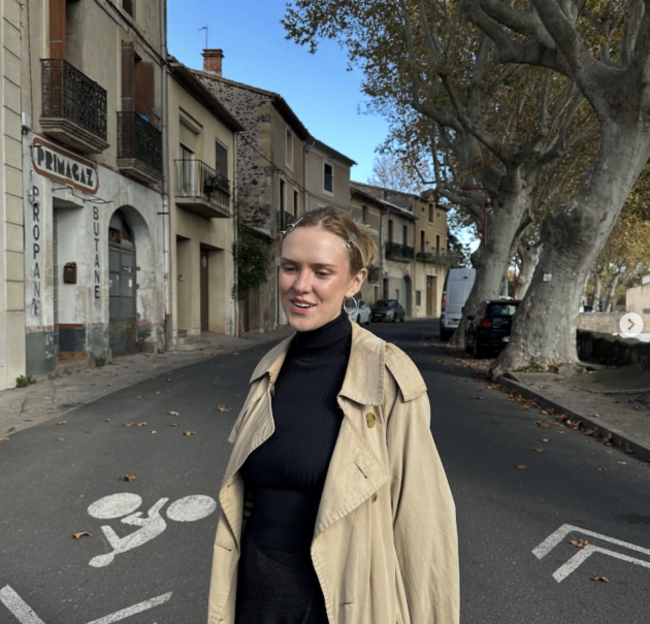
I moved to France about five months ago, and there has been a noticeable difference in the amount of cosmetic work done that is expected here in comparison to Ireland or the UK.

It is not shameful to show signs of ageing, so there is no great pressure felt to follow suit with what’s expected of me back home or on the internet. I see beautiful, glamorous women here every day, with expressive faces and lines like the ones inside a tree trunk, one for every year.

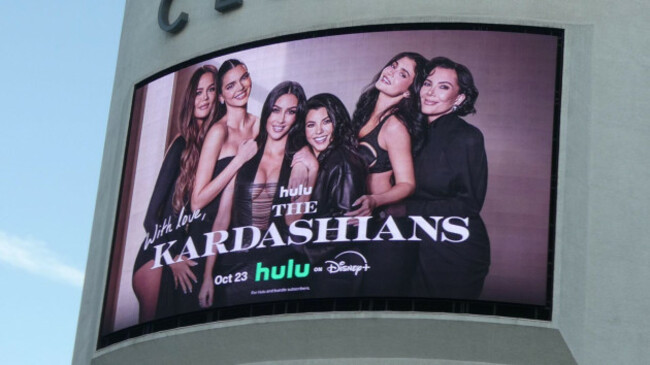
los-angeles-california-usa-19th-october-2025-kardashians-billboard-on-october-19-2025-in-los-angeles-california-usa-photo-by-barry-kingalamy-stock-photo Alamy Stock Photo Alamy Stock Photo

As a content creator, I believe we have an obligation to consider our followers and the impact our content can have on them. I don’t want to alter my face, but if I did, what impact would that have on those who enjoy my feed? Not everyone can afford these expensive treatments. It may not be the healthiest emotional pursuit for people, either. 

What I’ve found most interesting in France is that there is more regulation around influencing. As of 2023, the promotion of certain practices here, such as cosmetic surgery and therapeutic intervention, is now prohibited.

Also, promotional images, for example, those used to push cosmetics, must disclose whether they have been retouched or if a filter has been used. Influencers and companies that violate the law could face up to two years in prison and €300,000 in fines.

As the influencer industry expands, I was hoping to see a change in regulation surrounding the landscape evolve to protect viewers in other European countries, but Ireland has not yet caught up.

Screenshot 2026-01-22 at 15.07.36 Keelin has moved to France and is enjoying life as a content creator there. instagram.com / kee_mon instagram.com / kee_mon / kee_mon

This could be because the social conversion in Ireland surrounding influencers is largely based on it “not being a real job”, which then slows down the urgency to introduce proper regulation. Until then, without any real guidance, there is a big grey area around what is considered transparency and what might be considered harmful.

The pressure to succumb to these ever-changing beauty standards is not only painful both physically and financially, but the freezing of these emotive responses is also having real-life effects on how we interact with each other, particularly the mother-child relationship.

If one generation sets an impossible beauty standard, the next is expected to meet it, or go beyond. If the adults in the room are groomed, filled and injected to perfection, then a child absorbs this. Various studies have examined the effects of increased Botox use and emotional processing and have found that Botox can affect emotional experiences. Children need emotional connections from Day 1, so if a whole generation emerges with puffy cheeks and faces frozen, what next?

Some of this emerging research suggests that blocking facial muscles with Botox can reduce the strength of emotional experience and alter neural responses to emotional faces. This supports the idea that facial movement contributes to how we feel and process emotion in others. Original studies of the “Still-Face paradigm” show that even infants become visibly distressed when a parent or caregiver suddenly adopts a neutral, unresponsive face, highlighting the importance of facial emotional feedback in social interaction.

Changing attitudes

I’ve been legally an adult for the past 10 years, and over the last decade, I’ve witnessed body types and the archetype of perpetual beauty change constantly, with an echo of “love yourself” encouragements in the aftermath of it all.

We embraced the Body Positivity moment, but it now seems like, with the pushing of cosmetic procedures and drugs like Ozempic, we’ve regressed to extreme youth and thinness. And that shift is being driven by profits for some quarters. 

But the one thing that has been consistent throughout all of this is that we will never truly reach this unattainable standard; we will never be satisfied, how could we, when the rules are constantly changing? When are we ever enough?

face-filler Cosmetic fillers. Alamy Stock Photo Alamy Stock Photo

There is no reward at the end of this pursuit. It makes me sad that refusing to take part in this youth and beauty game is seen as an act of protest; to age normally, for my body to change size as I birth my babies and heal, to grow hair and have the odd spot.

It does not feel like an act of protest. It feels like a life lived. I very often look in the mirror and do not like what I see, but I hope my refusal to rid my face of movement is felt as an act of solidarity.

It means that my children can grow up and see a mother who laughs with her head thrown back, her eyebrows raised in concern if they fall and whose smile lines deepen at the sight of them.

I don’t want them to inherit a world where all emotion is smoothed away. After all, life leaves lines; that’s how we know we’ve been here.

Keelin Moncrieff is an Irish content creator and freelance journalist living in France.

Readers like you are keeping these stories free for everyone...
A mix of advertising and supporting contributions helps keep paywalls away from valuable information like this article. Over 5,000 readers like you have already stepped up and support us with a monthly payment or a once-off donation.

Close
14 Comments
This is YOUR comments community. Stay civil, stay constructive, stay on topic. Please familiarise yourself with our comments policy here before taking part.
Leave a Comment
    Submit a report
    Please help us understand how this comment violates our community guidelines.
    Thank you for the feedback
    Your feedback has been sent to our team for review.

    Leave a commentcancel

     
    JournalTv
    News in 60 seconds