Sign in. It’s quick, free and it’s up to you.
An account is an optional way to support the work we do. Find out more.
Sign in. It’s quick, free and it’s up to you.
An account is an optional way to support the work we do. Find out more.

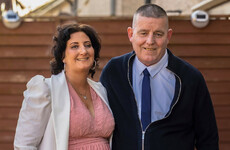
WHEN I WAS diagnosed with prostate cancer in May last year at 53 years old, I was quite pragmatic about. My diagnosis came totally out of the blue after a routine blood test, but it seemed straightforward – I thought I’d have surgery to remove my prostate, and the cancer would be gone.
A few months after surgery to remove the tumour and some radiotherapy, I started to develop pain in my hip. I had an MRI in December to try to figure out the cause. My wife, Karen, came with me to get the results, there and then they told us that the cancer had spread significantly. Hearing those three words, ‘it’s stage four’, knocked us sideways. We couldn’t’ believe it.
I had chemotherapy after I was told the cancer had spread, but it didn’t really work in my case. Now I take hormone treatment via injections and oral tablets which seem to have things under control for the moment, but I’ll be on treatment for the rest of my life.
What I didn’t realise was that along with undergoing a tough treatment plan, I’d also be crushed by the cost of cancer and forced to grapple with the financial stress that my diagnosis brought about.
The hardest part of having cancer has been the emotional and financial cost to my family over the past 18 months. My wife and I have four children ranging from 15 to 25 years old. The impact on them has been significant, both financially and personally. I recently broke my wrist and had to have surgery arising from a minor fall playing tennis with my daughter, because my bones are much weaker due to the treatment I am receiving.
I am a self-employed pharmacist, but due to the nature of my work I have to pay someone to fill my role for every day I take off work. Currently, I attend oncology once a month. I may have scans on other days of the month, but it can be on an ad-hoc basis.
The cost of having to hire someone to fill my role on the days I have to take off due to hospital visits, scans and illness has been significant on my business. This year, it has cost at least €2,000 a month to get someone to cover for me. Due to fatigue from my treatment, I am unable to work eight-to-ten-hour days, five days a week, as would have been my normal.
On top of this, I’ve had to pay out of pocket for so many things. The costs have really taken a toll.
After my surgery I had to switch hospitals and consultants due to the level of my health cover. My cancer had spread further so this meant new consultants, some of whom required hefty fees for first-time consultations.
The very nature of cancer treatment often leads me to visit various different doctors and consultants as my treatments become more complex. Each visit requires a fee which, over the year, amounts to lot of money.
If you’re referred from one consultant to another consultant, you have to pay €200 or €300. Because I had a reaction to a medication for my cancer treatment, I had to get a referral to a gastroenterologist and that cost another €250.
Stage Four
I am told my cancer is at stage four and I will be on medication for the rest of my, costing at least €80 per month, as not all my medications are covered on the Drug Payments Scheme.
I strongly believe that every cancer patient should be automatically entitled to a medical card at the point of diagnosis, to protect them from the financial toll of a cancer diagnosis. This is something that the Irish Cancer Society is calling on the next Government to implement, and I support it.
It’s crucial that everyone going through cancer treatment can have access to the care they need, without worrying about how they will pay for it.
One in two of us will get a cancer diagnosis in our lifetimes. On top of dealing with the fear and stress of a cancer diagnosis – going through treatment and managing side effects, cancer patients, like me, are facing crippling costs and a loss of income and are struggling to make ends meet.
Having cancer is hard enough, patients shouldn’t be focused on mounting bills.
The next Government needs to deliver the cancer care that Ireland deserves, to ensure that cancer patients and their families can focus solely on their treatment and getting better, without having to worry about how they’ll make ends meet due to the burden of healthcare costs at an already stressful time. Going through cancer takes an enormous toll on your body and, until things change, your pocket, too.
Mark McCormick is a cancer patient and pharmacy technician.
To embed this post, copy the code below on your site













have your say