Sign in. It’s quick, free and it’s up to you.
An account is an optional way to support the work we do. Find out more.
Sign in. It’s quick, free and it’s up to you.
An account is an optional way to support the work we do. Find out more.
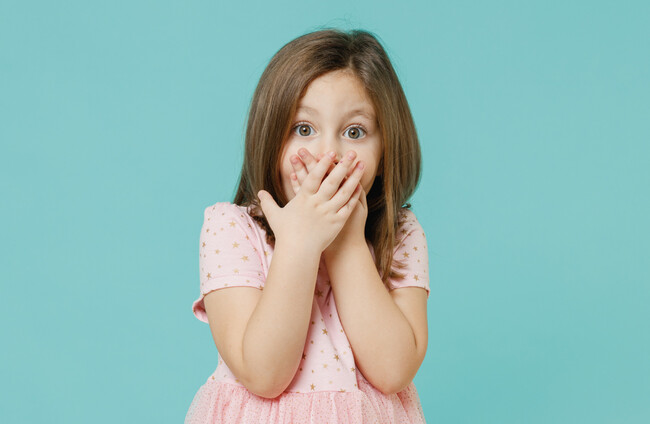

WHEN MY YOUNGER daughter was in Senior Infants, she came home one day with a note in her homework journal. This wasn’t like her. It was much more on brand for her older sister, who likely drove many of her teachers out of the profession entirely during her time in the local school, but it wasn’t like her. What could she have done?
Intrigued, I flipped to the right page and read the note. ‘Using swear words in class’. I was baffled, looking between her innocent little face and the note. Surely there was a mistake? She looked up at me with her big eyes and a very serious expression, and confessed: “I said the ‘sh’ word.”
I actually gasped in shock. “Oh my God! You said shit in school?”
She was confused. “No! I said sugar… what does shit mean?”
The combination of the utter relief I felt, combined with the horror of teaching her a new word, and the thoughts of her spilling a little glob of paint on her picture and then immediately turning into a tiny sailor with light-up shoes left me nothing short of hysterical for the next 10 minutes.
She was worried that she was going to be in a mountain of trouble with all of the main adults in her life, and unbeknownst to both of us, she was already committing her new word to memory (ironically, unlike the word ‘library’, which is still stored in her brain as ‘lie-berry’).
One person who wasn’t laughing however, was my partner. He is a man of morals and principles. He values manners and respect, and still gives out to our teens if they let the odd curse word slip. And he isn’t alone. There are many people out there who will keel over and clutch their pearls if they hear any kind of swear word, especially from a child, but I just can’t agree. In fact, I would even argue that there are very few things in life funnier than hearing a toddler curse.
Not in an aggressive or disrespectful to others kind of way, of course. I am not out here encouraging pint-sized Gordon Ramsays to hurl insults at our local Tesco employees, but a well-timed and appropriately used curse word when a drink is spilled or a toe stubbed? That’s comedy gold and you will never convince me otherwise.
My partner thinks that swearing should only be for adults, and that any use of profanity under the age of 18 will guarantee a life of loose morals, crime and maybe even a season on Love Island. This makes no sense to me. Cursing is cathartic, and releasing painful emotions is healthy. There is nothing like the satisfaction of a well-timed expletive drop. Sometimes ‘oh dear’ just doesn’t cut the mustard, and honestly, there are very few things as therapeutic as releasing a particular four-letter word into the world when life smacks you with pain, betrayal, or a rogue Lego under the foot.
Swear words are like emotional punctuation: they help to really hammer a point in. Teens and tweens are notoriously dramatic, so of course they can’t just say that they hate their homework, or that they are quite displeased with the actions of a close friend, or that they do hope it isn’t salmon for dinner tonight. They need to spice it up with a large F-bomb. But this is just a means of communicating that feels authentic to them, and isn’t that what we want? Learning when, and how, to express big feelings is all part of growing up. Plus, if we just punish the language, we ignore the underlying emotion.
Punishing language seems a little silly anyway. They are just words. Who even decided that these words were going to be off limits forever? Do they understand what forbidding things does, and that the vast majority of people will want to do it even more now? Should we continue giving these words power, when they are just words?
Now, I’m not saying that cursing is good, or right. I’m not saying that it’s ok to swear in school, or at the family Sunday dinner. I’m not teaching my kids to swear. We don’t sit down with flashcards in the evening and learn the subtle art of combining expletives for emotional impact.
But I am realistic, they hear these words (admittedly, sometimes from me when I am driving), they know the words are forbidden, and therefore will go out of their way to say the words. That’s just human nature. It’s low stakes rebellion. And of course I try to model more acceptable language in public, even when the delightful gentleman in front takes two turns of the lights to get his van moving.
I know it’s not textbook parenting, but I’m not trying to raise perfect people. I am trying to raise kids who express themselves, understand nuance, and can laugh at their own misfortune. I’m also trying to raise kids who aren’t Tony Soprano. It’s a delicate balance.
I will correct them if they go overboard, or use the language inappropriately. I have also told them both that if they let one slip in front of a teacher, a priest or their dad, they are on their own, and I will act completely shocked and appalled.
So, is it actually ok for kids to swear? Maybe? Under the right circumstances and in the right setting? With a warning label? I don’t know. What I do know, is that parenting, like language, is messy. It is driven by context, evolving norms and constantly shifting goalposts.
We have to pick our battles. Swearing, in an appropriate moment, is an expression of their human experience, and is much cheaper than counselling. So maybe if they do follow all of the rules and use the word in the right setting, maybe we don’t have to make out like they are breaking the law? Even if they do use the ‘sh’ word and mean sugar.
Actually, especially then.
Margaret Lynch is a mother of two and is parenting columnist with The Journal.
To embed this post, copy the code below on your site












have your say