Sign in. It’s quick, free and it’s up to you.
An account is an optional way to support the work we do. Find out more.
Sign in. It’s quick, free and it’s up to you.
An account is an optional way to support the work we do. Find out more.
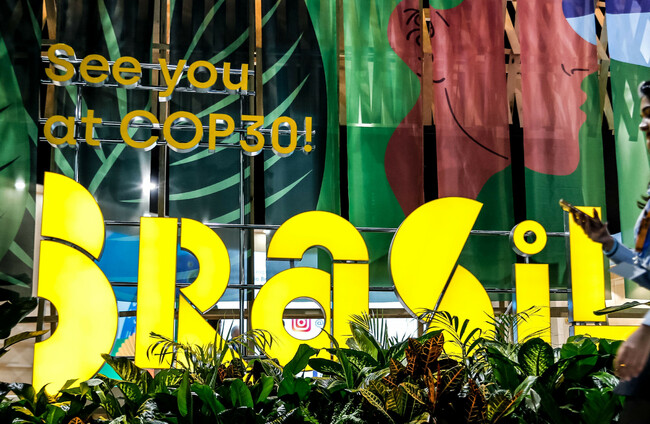

FOR THE FIRST time in years, the UN’s annual climate summit will be held in a country that is both a democracy and is on the frontline of the climate and biodiversity crises.
After years of hosts with dismal human rights records, COP30 in Brazil offers – at least on paper – a chance for much needed climate leadership. Yet the mood music heading into the summit in the Amazonian city of Belém is deeply troubling and underscores the need for real, urgent leadership.
Last month, scientists warned that the planet may have crossed its first catastrophic tipping point, with warm water coral reefs facing terminal decline, while last week hundreds of thousands of people were evacuated in Cuba and Jamaica as Hurricane Melissa has ripped a path of destruction across the Caribbean.
Politically, we are also witnessing an alarming resurgence of climate denialism. The US has once again withdrawn from the Paris Agreement, with its President decrying climate change as the greatest “con job” in the world. In Brazil, the government’s decision to greenlight new licensing for oil exploration has already undermined its climate credentials mere weeks before the start of the summit.
Even the European Union, once seen as a global leader on climate policy, has shown a willingness to retreat on climate pledges, if the political winds change. Under a false guise of competitiveness at all costs, the EU’s green agenda is under serious threat with many EU leaders openly calling for the dismantling of key environmental and climate laws.
Amid this maelstrom of climate breakdown and political backsliding, COP30 in Brazil still offers a rare sliver of hope and a chance to course correct before it’s too late.
A central focus of the summit in Belém will be on taking stock of each country’s national emissions reductions plans – known as Nationally Determined Contributions (NDCs) – a decade on from the adoption of the historic 2015 Paris Agreement.
These plans are crucial to determining whether the world is on track to limit global temperature rise to 1.5C of warming. However, just days out from the summit less than a third of the world’s countries have submitted updated commitments, and the UN Secretary General and experts have warned that the key 1.5C target will inevitably be breached, at least temporarily.
Urgent emissions reductions are required to change course, and there is no time for despair or fatalism – every single degree of warming matters in terms of limiting catastrophic impacts on people and planet.
Finance remains the major sticking point in the negotiations and a key reason why many countries have delayed bringing forward new climate plans. A key justice pillar of the Paris Agreement was based on the ‘polluter pays’ principle – the idea that the wealthy, high-emitting countries who overwhelmingly caused the crisis would provide the resources needed to fix it.
However, despite a new global finance goal being agreed at COP29 in Baku, long-pledged money is still not flowing to developing countries at the scale and speed required to drive meaningful climate action.
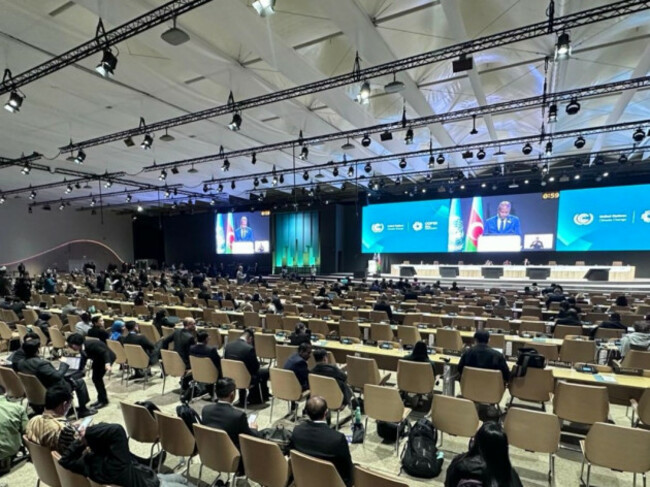
At the same time, we are witnessing a dramatic increase in climate disasters around the world, with the poorest countries and communities – who have done least to cause the crisis – paying the highest price. This is climate injustice in its rawest form.
Three things need to happen at COP30 to address this injustice and put the world back on track to meeting the goals of the Paris Agreement.
First, all countries must submit new and ambitious national climate plans so that we can begin to reverse the current global emissions curve.
For Ireland, this means not only rapidly cutting emissions in line with the legally binding national climate law, but also radically increasing the ambition of our current emissions reductions targets into the future.
This will require deep and challenging changes to the way we live, but the long-term costs of inaction will be far, far greater than the necessary investments now.
Second, the world’s wealthiest countries must set out a clear roadmap for how climate finance will be urgently scaled up and provided to developing countries from 2025 onwards. This will need a detailed plan, with clear timelines to both raise and distribute the money needed to fund a real, effective global transition.
As organisations working on the frontlines of the climate crisis, Christian Aid Ireland & Trócaire have jointly set out detailed proposals on how additional revenue could be raised at both national and international levels, including fairer taxes on corporate profits, extreme wealth and fossil fuel production.
Third, Ireland and other wealthy, high-emitting countries must urgently deliver on existing climate finance pledges, painstakingly negotiated at previous COPs and clarified as legally binding obligations by the International Court of Justice earlier this year.
This means Ireland must scale up our international climate finance to at least €500 million per year by 2025, as well as developing a pathway for reaching our fair share of the new global $300 billion target agreed in Baku last November, and contributions to the fledgling ‘Loss & Damage’ fund.
Given the billions required by the end of this decade – both to fund emissions reductions, help communities on the frontlines adapt, and rebuild when disaster strikes – governments must be bold in pushing new measures to raise revenue, with a focus on the super-rich and high-polluters.
While the money needed is significant, it’s important to remember over $7 trillion of public money was poured into subsidies for the fossil fuel industry in 2022 alone.
COP30 is the first since the formation of the current government and represents a major test for Ireland’s international climate policy.
Ireland can play a small but meaningful role in Brazil, but this will require much more ambitious action and political courage than we have seen to date.
Unless wealthy countries like Ireland put their money where their mouth is, climate justice risks becoming another empty political slogan.
Ross Fitzpatrick is Policy & Advocacy Officer with Christian Aid Ireland.
To embed this post, copy the code below on your site















have your say