We need your help now

Support from readers like you keeps The Journal open.

You are visiting us because we have something you value. Independent, unbiased news that tells the truth. Advertising revenue goes some way to support our mission, but this year it has not been enough.

If you've seen value in our reporting, please contribute what you can, so we can continue to produce accurate and meaningful journalism. For everyone who needs it.

Over 7,000 Palestinians missing as families search for those buried or detained

Across much of Gaza, entire neighbourhoods lie flattened. Beneath them, thousands are still unaccounted for.

MORE THAN 7,000 Palestinians have been reported missing in Gaza since the start of the war in October 2023.

Thousands are believed to be buried beneath an estimated 50 million tonnes of rubble—debris the United Nations says could take more than 15 years to remove—while others are thought to be in Israeli detention without information on their whereabouts.

The Palestinian Centre for Missing and Forcibly Disappeared says roughly half of the missing are women and has called for urgent international action to determine their fate. This includes granting recovery teams access to destroyed areas and enabling DNA testing to identify victims. 

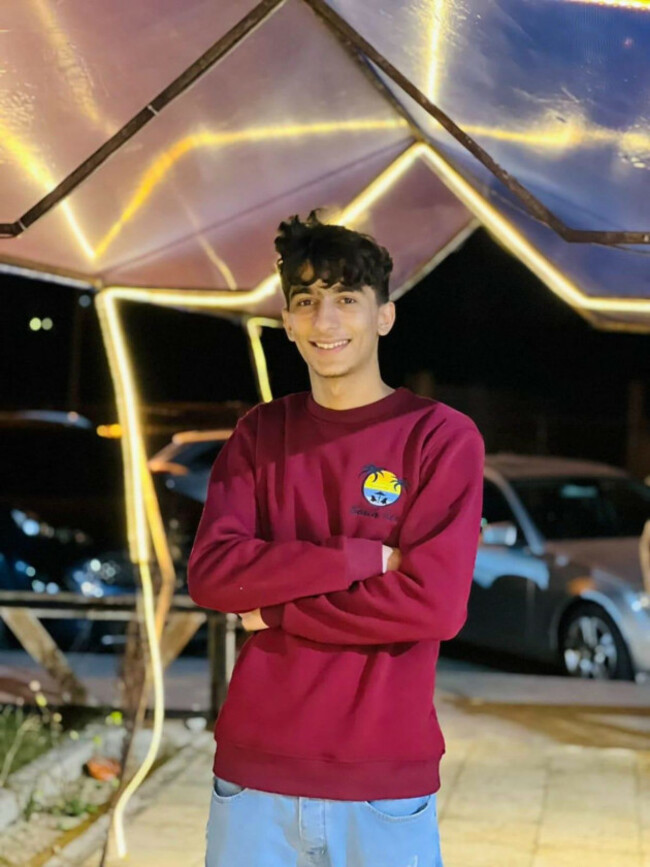
On the morning of 7 October 2023, as a surprise assault unfolded along the Gaza-Israel border, 19-year-old Wassim Al-Za’noon stepped out to run a simple errand. He bought bread and cigarettes for his father. After hearing that Gazans were infiltrating the borders, he then went to check out what was happening. 

Wassim_PHOTO-2024-02-20-14-51-58 Wassim was among a group who crossed into Israel on 7 October 2023 and disappeared.

Within hours, the border—long one of the most tightly controlled in the world—had been breached. Armed fighters crossed into Israeli territory, and confusion spread rapidly across Gaza. For a brief and chaotic moment, the boundary that had defined daily life for years appeared, if not open, then suddenly permeable.

People began moving towards it: some out of curiosity, others drawn by the rare possibility of crossing, however uncertain.

Wassim was among them. 

He did not return.

By late afternoon, the situation had shifted. Israeli airstrikes intensified inside the border, and forces moved into the area to kill and arrest anyone who infiltrated from Gaza.

At around 6pm, a friend called Wassim’s family to say they were together inside Israel surrounded by soldiers in the area but unable to get back to Gaza. They had been walking for kilometres, disoriented and under bombardment, unsure which direction offered safety.

Despite the uncertainty, they had a dream of a different future in an Israeli city with jobs and a full life. 

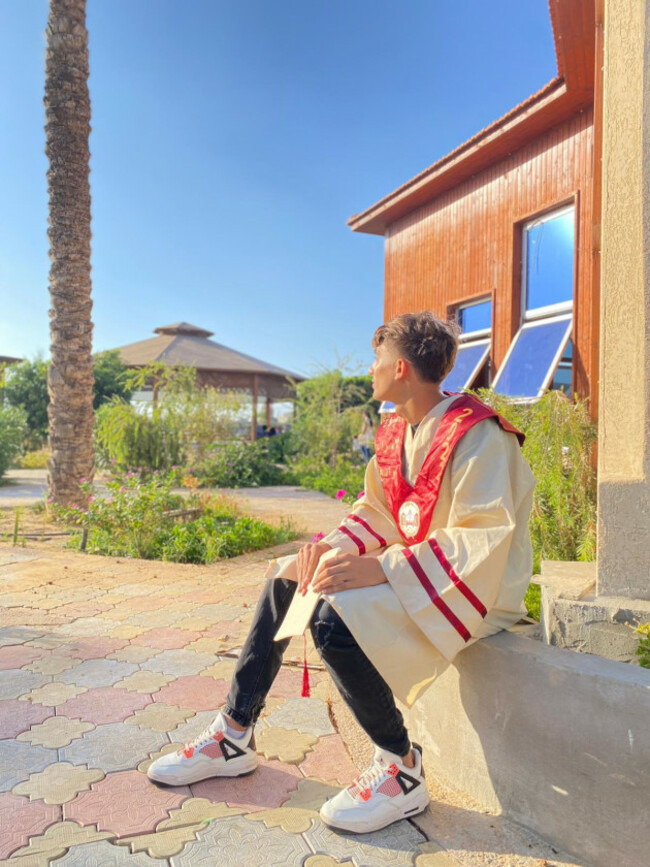
Wassim Nurse Pictured on his nursing diploma graduation day. His family say he had hoped to build a future beyond Gaza’s limited opportunities.

That was the last time they heard from them. No one in Gaza knows what happened to Wassim and his friend.

Wassim disappeared in the space between those first chaotic hours of 7 October 2023 and the reimposition of control. His family has received no official information. They do not know whether he was killed or detained.

His father, Hamed Al-Za’noon, has been searching ever since. Officials and human rights organisations tried but failed to get information from the Israeli government on his fate.

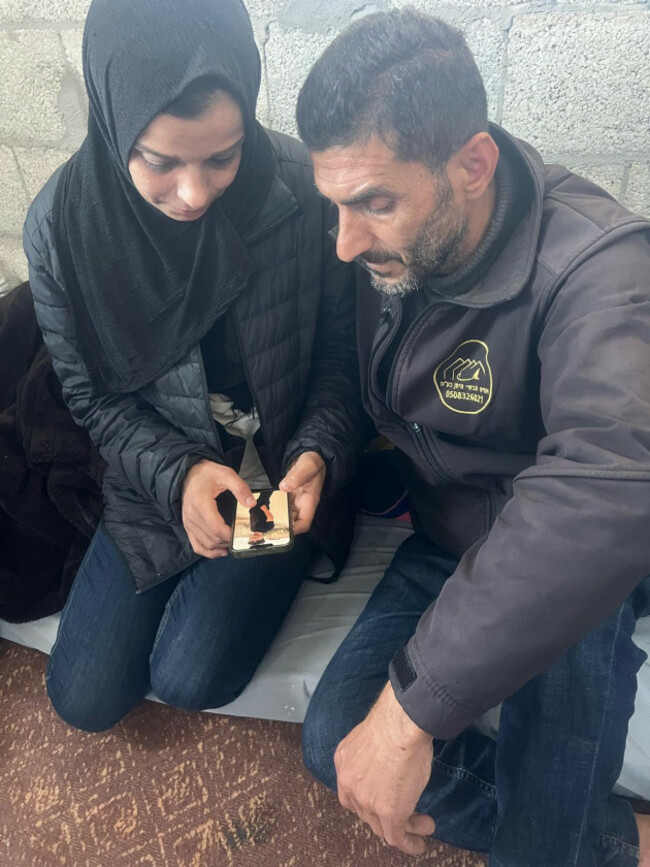
Wassim parents Wassim’s mother looks at images of her son on her phone.

Hamed and seven members of his family were displaced repeatedly in the weeks that followed. He carried his son’s photograph from one place of shelter to another—from Khan Younis to Rafah—checking hospitals, mass burial sites and aid agencies. When detainees are released, he travels to the crossings, asking each one the same question: has anyone seen Wassim?

No one has.

“He wasn’t a fighter,” his father says quietly. “He was a young man looking for work.”

A video shows the small group of young men in the early morning of 7 October, making clear they weren’t involved in the terror attack.

The Journal / YouTube

Palestinian detainees

In the early days of the war, Israeli forces detained a number of Palestinians from Gaza, including individuals who had entered the border area on 7 October. Families say some of those civilians have since been treated in the same way as militants, with little or no information disclosed about their fate.

Israeli authorities have not provided any public, detailed information on the whereabouts of detainees – either civilians or militants – from Gaza on 7 October.

There are also thousands missing on the Gazan side of the border, presumed buried under rubble. But for some families, they don’t know which fate has befallen their loved ones. 

According to the Palestinian Center for Missing and Forcibly Disappeared in Gaza, efforts to recover bodies have been severely hindered by the lack of heavy equipment and the destruction of infrastructure, leaving large areas of debris inaccessible and thousands of families waiting without answers.

At the same time, the centre has raised concerns that some of the missing may be held in Israeli detention, with limited or no information about their whereabouts. It warns that the continued withholding of such information deepens the uncertainty surrounding the missing and may amount to enforced disappearance under international law. The centre has called for urgent international action, including enabling recovery teams to access destroyed sites and use DNA testing to help identify victims.

Others under the rubble

While families like Wassim’s look for answers in prisons, others are still searching beneath the rubble.

Mahmoud Bassal, spokesperson for Gaza’s Civil Defence, says recovery efforts have intensified since last December, but remain severely constrained by the absence of heavy machinery which is not allowed to enter Gaza. Teams are often left to work with basic tools, unable to reach large sections of collapsed buildings.

In February, Palestinian Civil Defence teams launched a new initiative to recover bodies from beneath the rubble, in coordination with the International Committee of the Red Cross. The campaign, titled “Honouring the Martyrs” (Ikram al-Shuhada), began in Beit Lahia in northern Gaza, where crews retrieved the remains of members of the Abu Nasser family who had been buried under their home since it was struck in an Israeli air attack on 29 October 2024. At the time, the house had been sheltering around 200 people, including relatives and displaced civilians.

Civil Defence workers say recovery operations continue to take place in extremely hazardous conditions, with decomposing bodies exposed in open areas and a severe lack of protective equipment and biological testing tools. Restrictions on the entry of essential medical supplies have further complicated their work, leaving teams at risk of disease and infection as they carry out recovery and identification efforts.

Across much of Gaza, entire neighbourhoods lie flattened. Beneath them, thousands are still unaccounted for. Officials warn that recovering the remains of those buried in the debris could take years—prolonging a state of uncertainty in which, for many families, the distinction between the missing and the dead remains unresolved.

Readers like you are keeping these stories free for everyone...
A mix of advertising and supporting contributions helps keep paywalls away from valuable information like this article. Over 5,000 readers like you have already stepped up and support us with a monthly payment or a once-off donation.

View 62 comments
Close
62 Comments
This is YOUR comments community. Stay civil, stay constructive, stay on topic. Please familiarise yourself with our comments policy here before taking part.
Leave a Comment
    Submit a report
    Please help us understand how this comment violates our community guidelines.
    Thank you for the feedback
    Your feedback has been sent to our team for review.

    Leave a commentcancel

     
    JournalTv
    News in 60 seconds