Sign in. It’s quick, free and it’s up to you.
An account is an optional way to support the work we do. Find out more.
Sign in. It’s quick, free and it’s up to you.
An account is an optional way to support the work we do. Find out more.
EU LAWMAKERS AND member states reached a deal in the early hours of Wednesday to implement the bloc’s nearly year-old trade pact with the US, with president Donald Trump threatening new tariffs unless it is done by 4 July.
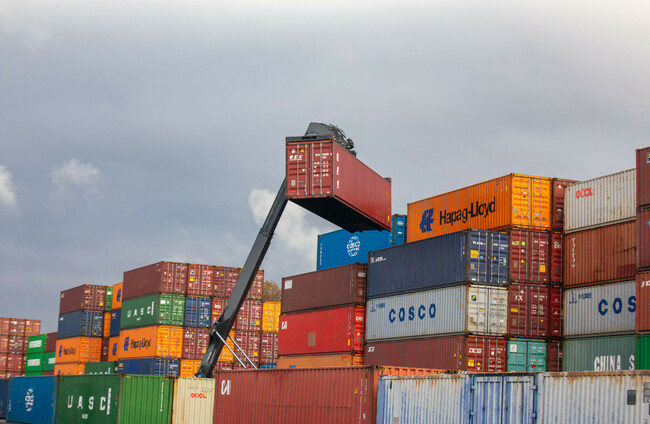
The deal, agreed last July, will mean a majority of European goods exported to the US will have tariffs of 15% imposed, and levies on most US imports will be scrapped in return.
Negotiators from the EU’s parliament and capitals wrangled late into the night, finally emerging several hours after midnight with news of a hard-fought agreement to move forward.
EU chief Ursula von der Leyen welcomed the agreement, hoping it would close a tumultuous chapter in transatlantic relations.
“This means we will soon deliver on our part of the EU-US joint statement, as promised. I now call on the co-legislators to move swiftly and finalise the process. Together, we can ensure stable, predictable, balanced, and mutually beneficial transatlantic trade,” she said in a social media post.
The EU agreement puts the bloc on track to meet Trump’s deadline for ratification of the deal sealed in Turnberry, Scotland between Trump and von der Leyen, and hopefully turn the page on more than a year of transatlantic trade battles.
Short of that, Trump had warned the European Union should expect “much higher” tariffs – and had already vowed to raise duties on European cars and trucks from 15 to 25%.
The tariff blitz unleashed by Trump before the Turnberry accord, including hefty levies on steel, aluminium and car parts, has jolted the bloc into cultivating trade ties around the world.
But the EU cannot afford to neglect the €€1.6 trillion relationship with the United States, its largest trade partner.
The EU parliament gave the deal a conditional green light in March, after months of delay caused by Trump’s designs on Greenland and a US Supreme Court ruling striking down many of the president’s tariffs.
Lawmakers were under pressure to renege on several amendments that the Americans considered unacceptable, including a suspension clause that would scrap favourable tariff conditions for US exporters should the United States breach the deal.
The final text empowers the European Commission to trigger the suspension mechanism if the United States fails to meet its commitments or disrupts trade and investment with the EU, including by “discriminating against or targeting EU economic operators”.
It also gives the EU means to address spikes in US imports “that cause or threaten to cause serious injury to domestic producers”, with suspension again a possible outcome.
But parliament also agreed to scale back some demands – and the final text notably gave the United States until the end of the year to drop surtaxes above 15% on steel components, rather than insisting on it as a precondition.
Another fight was over so-called “sunrise” and “sunset” clauses under which the EU side of the accord would kick in once the United States makes fully good on its pledges, and would expire unless renewed in 2028.
The sunrise clause was removed altogether, while the sunset was pushed back to the end of 2029, according to a parliament statement.
The head of parliament’s trade committee, Bernd Lange, faced the challenge of hammering out a common stance between different factions which haggled until the last moment.
Lange played down the concessions extracted from lawmakers, declaring after the deal was announced that “parliament has prevailed with its demands for a comprehensive safety net.”
But Anna Cavazzini of the EU’s Greens was less effusive, saying the “deal puts the EU at a disadvantage” while conceding “it can secure a certain degree of economic stability.”
“One can only hope that the agreement on the tariff deal will now calm the situation, so that other major issues in the EU-US relationship can be addressed,” she said.
With additional reporting from AFP

To embed this post, copy the code below on your site












have your say