We need your help now

Support from readers like you keeps The Journal open.

You are visiting us because we have something you value. Independent, unbiased news that tells the truth. Advertising revenue goes some way to support our mission, but this year it has not been enough.

If you've seen value in our reporting, please contribute what you can, so we can continue to produce accurate and meaningful journalism. For everyone who needs it.

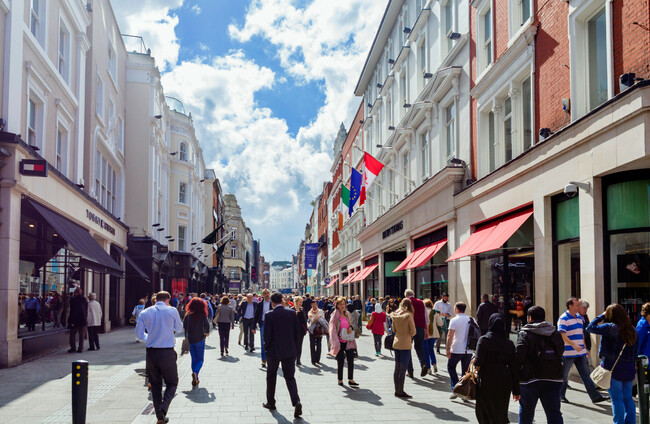
Consumers are expected to be a little more cautious in their purchases in 2026. Alamy Stock Photo

Analysis Over half of Irish adults surveyed expect Ireland to face recession this year

Finian Murphy says new research also shows that the rising cost of living remains a concern for people in Ireland in 2026.

AT THIS TIME of year, predictions are often offered by economists, political commentators, content creators and self-proclaimed “taste makers.”

Rather than joining this chorus, it is more instructive to turn to the crowd. Prediction markets apply the “wisdom of crowds” theory, which suggests that the collective judgement of a large, diverse group is often more accurate than individual expert opinion. 

These open markets enable forecasts through financial incentives — effectively gambling on real-world events. In 2025, an estimated $44 billion was invested in prediction markets, spanning ‘who will win the 2026 World Cup’ (currently Spain), or ‘who may succeed Trump as US President in 2028′ (currently JD Vance).

Guided by this same principle, Core Research has published its PREDICT report for several years. As before, these are not predictions made by a few but the stated expectations of a nationally representative sample of 1,000 adults in Ireland. Each year, this crowd anticipates both major events — such as political and economic outcomes — and everyday behaviours, including spending, socialising and digital habits.

From this analysis, three key themes emerge for the year ahead: Aspirational Affordability, Gaeilge Go Leor and Tech Tonics:

Aspirational Affordability

Cost of living remains the defining concern for 2026. 74% of people do not expect it to ease, and a similar proportion (71%) say affordability is personally significant, making it the single biggest issue shaping public outlook.

This pessimism is already translating into behaviour. 68% of adults say they will delay purchases until sales or price drops, while 57% believe others will do the same. Two-thirds plan to research online before buying, and among those under 40, half say they and people they know expect to buy second-hand clothing through online platforms.

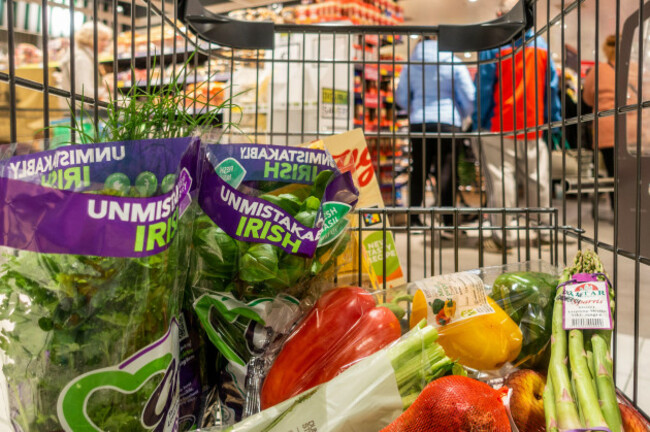
shopping-trolley-filled-with-goods-in-an-irish-supermarket Figures show the increasing cost of living i still a major concern for consumers. Alamy Stock Photo Alamy Stock Photo

Concerns about affordability extend well beyond day-to-day spending. With 72% unconvinced that housing affordability will improve, and ongoing unease around geopolitics and the wider economy, 52% of adults now expect Ireland to face a recession in 2026, rising to a clear majority among those aged 25–44 years old.

Despite economists pointing to steadier growth with cautious tax receipts, I’m predicting something different at street level. In Ireland, the mood has shifted. What began as a vibecession has hardened into an expectation of recession, and belief alone will shape behaviour.

Anyone walking down Grafton Street in Dublin or St Patrick’s Street in Cork this December might assume confidence was rising, as busy streets and full shopping bags suggested a strong consumer mood. Yet IBEC’s Retail Ireland research paints a flatter picture, with average household spend of €1,600 over December – a 3% increase, broadly in line with inflation. More tellingly, the Competition and Consumer Protection Commission reports that one in five shoppers funded Christmas spending through credit, suggesting that for many, consumption is being sustained through borrowing rather than confidence.

People this year, I predict, won’t retreat from living their lives, but they will edit them. Spending becomes more deliberate, not more joyless. Treating doesn’t disappear; it becomes intentional — one great meal, one premium item, one “worth it” moment — signalling self-control and taste rather than excess.

excited-female-shoppers-with-sale-bags-in-mall Smarter shoppers - the rising cost of living may prompt shoppers to be more focused on sales and purchasing fewer goods. Alamy Stock Photo Alamy Stock Photo

Price will matter more, but so will how saving is seen. People will trade down without trading out, choosing own-brand products that still feel premium and reframing second-hand as smart and sustainable. Experiences will continue to win over accumulation, with short breaks, day festivals and simple outdoor walks prioritised over big-ticket purchases. Running through all of this is a distinctly modern form of frugality — styled, conscious and confident — where money is watched closely, but life is still clearly being lived.

Gaeilge Go Leor

44% surveyed believe there will be a continued revival of Irish art, language and culture. Irish talent has increasingly dominated music, art, fashion and film, with 2026 marking a shift from niche engagement (20-25% in previous years) into the mainstream.

santa-monica-usa-04th-jan-2026-jessie-buckley-arriving-to-the-31st-annual-critics-choice-awards-held-at-barker-hanger-on-january-4-2026-in-santa-monica-ca-starbuck-credit-affalamy-liv Irish talent competing on the world stage - Kerry's Jessie Buckley won the Best Actress prize at the Critics Choice Awards in Santa Monica for her role in Hamnet this week. Alamy Stock Photo Alamy Stock Photo

One-third of adults plan to listen to more Irish-based music, while 40% intend to engage with Irish stories or podcasts, rising to 48% among under-40s. Within this cohort, 42% plan to speak more Irish and 39% will wear more Irish fashion brands, from Pellador and Emporium to Bohs jerseys.

In 2026, a new generation is confidently shaping a modern Irish identity — rooted in heritage but remixed through global influences across music, fashion and film. From Paul Mescal and Jessie Buckley’s Hamnet Oscar buzz, to Jonathan Anderson leading Dior, to CMAT, Kneecap and Fontaines DC headlining major festivals this summer, Irish culture is both locally grounded and internationally fluent.

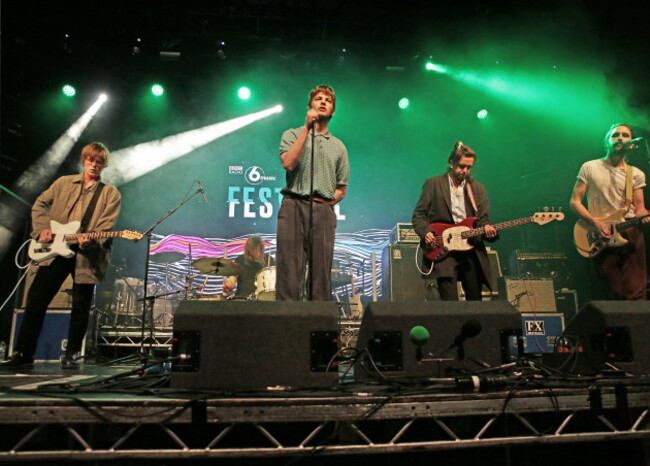
fontaines-dc-performing-at-liverpool-guild-of-students-as-part-of-the-bbc-6-music-festival-featuring-fontaines-dc-where-liverpool-united-kingdom-when-31-mar-2019-credit-sakurawenn-com Fontaines DC performing at Liverpool Guild of Students as part of the BBC 6 Music Festival. Alamy Stock Photo Alamy Stock Photo

While Gaeilge Go Leor suggests abundance, for some it risks signalling “enough.” Two in five people (43%) believe conservative Irish traditions will become more valued, and the rise of far-right nationalism introduces caution around cultural ownership.

There is also growing scepticism about over-hype. Yet, with sustained originality and genuine talent emerging, Gaeilge Go Leor is set to deepen and grow further in 2026. We will see further interest in Irish-based podcasts, books, music, films, fashion and the language.

Tech Tonics

As concerns about digital life intensify, public expectations and behaviours are beginning to diverge sharply. While 55% of people surveyed want stronger regulation of social media, only 42% believe it will actually happen.

Trust is also fragile: 40% expect to be exposed to misinformation, and although 60% want media to be more fact-based, 74% believe it will become increasingly opinion-led. With 57% predicting that news will be shaped by GenAI, vigilance is rising — 55% say they will fact-check information shared in group chats or online, even as fewer people (38%) believe others will do the same.

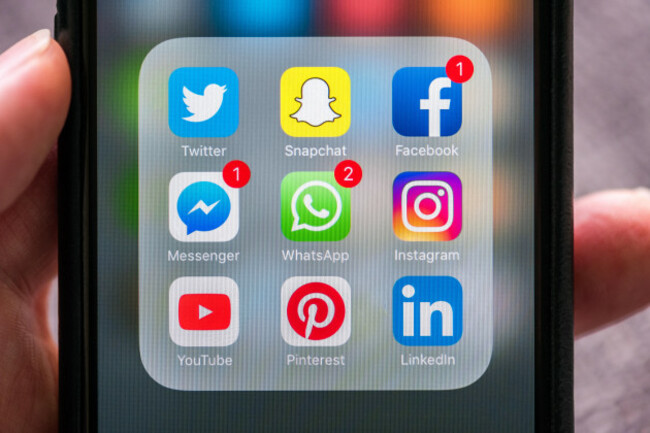
social-media-app-icons-displayed-on-apple-iphone Social media regulation is a concern. Alamy Stock Photo Alamy Stock Photo

This scepticism is matched by growing intent to step back from platforms altogether. Nearly half of adults (48%) say they plan to reduce their social media use in 2026, compared to just 36% who think others will follow suit. Younger adults are the most determined, with 55% intending to cut back.

I have written before about how AI slop is starting to fill our social media feeds, while in recent weeks, public concerns have focused on X and Grok’s ability to create deepfake images of women and children.

It is at this moment that 2026 looks set to be the moment when concern and intent turns into action. From the DeleteMe movement emerging in New York, to heightened concern about adolescent smartphone use, to the paradoxical rise of viral trends like “raw-dogging boredom,” there is a clear push to genuinely switch off from social and digital services. But disconnection creates its own cravings. These “TechTonics” are less about screens and more about human connection – attention, presence and shared experience.

What follows the switch-off remains open. It may not mean landlines or total withdrawal, but it will fuel a renewed focus on rebuilding attention, minimising distraction and reconnecting in real life. As a result, we will see growth in calmer, more intentional spaces and experiences – designed to bring people together, stimulate less, and still, somewhat ironically, look good enough to capture and share.

Finian Murphy is a researcher and strategist focused on public sentiment, culture and communities. 

Readers like you are keeping these stories free for everyone...
A mix of advertising and supporting contributions helps keep paywalls away from valuable information like this article. Over 5,000 readers like you have already stepped up and support us with a monthly payment or a once-off donation.

View 32 comments
Close
32 Comments
This is YOUR comments community. Stay civil, stay constructive, stay on topic. Please familiarise yourself with our comments policy here before taking part.
Leave a Comment
    Submit a report
    Please help us understand how this comment violates our community guidelines.
    Thank you for the feedback
    Your feedback has been sent to our team for review.

    Leave a commentcancel

     
    JournalTv
    News in 60 seconds