We need your help now

Support from readers like you keeps The Journal open.

You are visiting us because we have something you value. Independent, unbiased news that tells the truth. Advertising revenue goes some way to support our mission, but this year it has not been enough.

If you've seen value in our reporting, please contribute what you can, so we can continue to produce accurate and meaningful journalism. For everyone who needs it.

Shutterstock

Q&A "In the Wild West early days of social media, we had zero chill"

Author Tanya Sweeney’s new novel deftly depicts the early Noughties frenzy, fun and naivety of collecting online ‘friends’.

“BETWEEN PLATFORMS THAT enable its users to digitally undress others to sites that stoke culture wars, it’s almost hard to believe that social media was once a pleasant and harmless enough pocket of the Internet.”

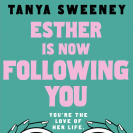
So says Tanya Sweeney, author of new novel Esther Is Now Following You, a bestselling debut which takes on the heady early days of social media. Her book is set in the early 2010s, where Facebook and MySpace are the new hotspots to hang out, be seen and create shiny online versions of your IRL self.

Esther, the protagonist in Sweeney’s novel, has been going through a tough time. As her personal life falls apart, she pours herself instead into her parasocial relationships, obsessing over the newly-discoverable details of her celebrity crush. 

Sweeney, a journalist and columnist of over two decades’ standing, has been well placed to observe the rise and rise of living online – and its fallout. Here she charts those heady early days with fellow early adopter Susan Daly, managing editor of Journal Media. 

Q: You were there when we started to move into the social space online in our droves? Did we know what we were letting ourselves into?

Tanya Sweeney: Fifteen or 20 years ago, we had scant idea of what was in store as we carefully arranged our friend groups on MySpace, logged onto Bebo or ‘poked’ someone on Facebook. To say they were different times is very much understating it. In the mid-Noughties, friends began to speak of a great new way to ‘stay connected’ online.

I wasn’t buying it: I reckoned that MySpace looked like a waste of time, and the likes of Bebo and Blogspot were for narcissists. “Why would I want to put my every waking thought out there for everyone else to see?” I remember thinking.

Reluctantly, I pulled together a Facebook profile. “Put up a pic now!” someone posted to The Wall. I did, and I watched as the friend requests from people I knew started to pile up. Within days I was fully hooked.

Q: How did people behave once they started building these new social networks and connecting?

TS: In those heady, Wild-West days of social media, we were carrying on without precedent. Truly, we had less than zero chill. It all looks a bit mortifying in the rearview mirror, but at the time, the opportunity to ‘connect you with the people that surround you’ was too good to pass up.

We hadn’t really grasped that friending non-friends was distinctly creepy behaviour: we were too busy collecting Facebook ‘friends’ in a frenzy and building our tiny online communities.

Soon, I had my ‘real’ friends, and my growing network of ‘Facebook’ friends. People I might have known or admired professionally, or encountered in a social setting once or twice. Friends of friends. The odd randomer. We would blather at each other all over Facebook, thinking ourselves fiercely witty and clever, while being only slightly awkward around them if ever they showed up in real life.

Q: But we all partied, right?

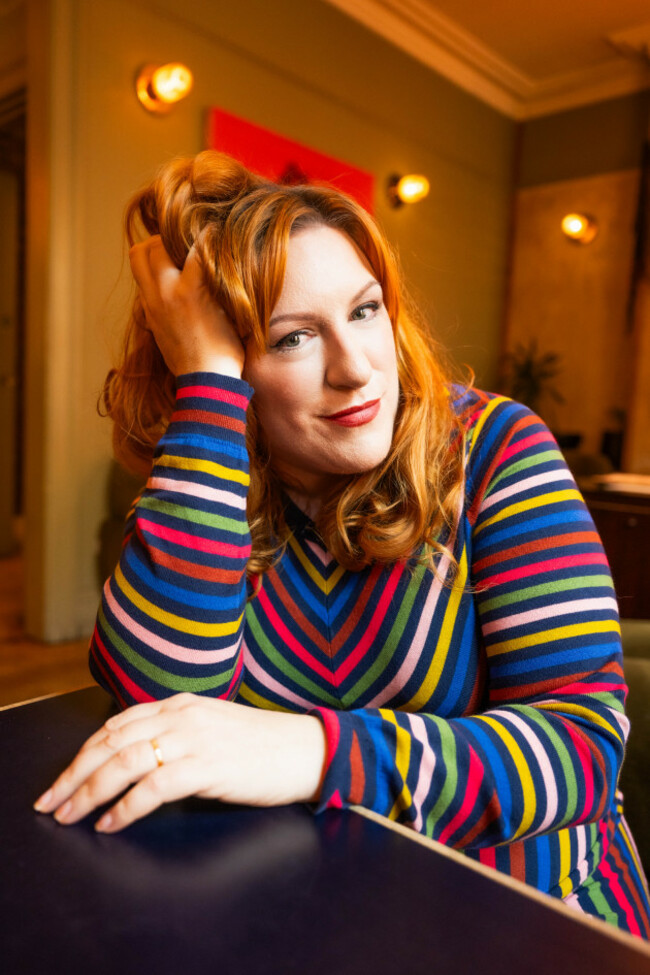
TanyaSweeney-byRuthMedjber-@ruthlessimagery--4 Tanya Sweeney, author of Esther Is Now Following You. Ruth Medjber Ruth Medjber

TS: Even now, I can fully see the appeal of those early salad days. This was the first time ever we were offered the opportunity to really curate ourselves from the ground up; to build the sort of person you would be if you didn’t have to come up with interesting things to say in real time. We were entranced by the opportunity to catch people’s eye with our digital storefronts. I was certainly a much more colourful and interesting person on social media than I was in real life. We posted clips of music we liked and films and TV shows we were watching.

In a move that seems almost inconceivable now, we would upload photo albums, dozens and dozens of bleary-eyed photos, from great nights out. It wasn’t unusual to meet a new person at 2am in a nightclub toilet, like the cut of their proverbial jib, and instruct them then and there to ‘Facebook me!’. On social media, you could be as cultured, urbane, successful and as popular as you ever wanted to be. Sure, it was partly fiction, but everyone was at it.

Q: Your experience of this fairly carefree (careless?) time in the first flush of social platform networking is a key influence on your book; how do you explore that world in it?

TS: I set Esther Is Now Following You in those crazy days at the dawn of social media. In this book, my character Esther, following a personal tragedy, develops a distracting, harmless crush on a Canadian TV actor, Ted. As her depression grows and blooms, she retreats further into this imaginary relationship with Ted, and the line between reality and fantasy start to blur.

Where do the early days of Facebook and Twitter fit in? For a start, no-one was having any meaningful conversation around parasocial relationships and stalking back in 2010. Now, we understand that stalking is unconsented interaction at the very least, and criminal behaviour at worst.

There was scant regard for online safety or privacy back then. We posted our personal details, our whereabouts and our front doors online without thinking twice. This culture provided fertile ground for Esther’s obsession to really take flight, and she starts to approach those in Ted’s social circle, eventually penetrating it with startling efficiency.

It’s a move that strains plausibility in the year 2026, but certainly didn’t 15 years ago.

Q: Has our whole understanding of the intersection of sharing online and the privacy implications changed all that much in the intervening period?

TS: Esther Is Now Following You is partly a nostalgic love letter to that intoxicating slice of time, but also, I think, a warning. We have certainly hardened up a lot since those days of innocence. Nowadays, a friend request on Facebook (if our profiles are still even active) elicits suspicion. A poke would probably give us the ick. Our friends are no longer posting ‘hot dogs or legs’ pictures from their holidays. On Facebook at least, the humblebragging, the vaguebooking, the HMUing and the virtual signalling have all died down from their wild, joyous crescendo.

Some days, I miss what sometimes felt like one long online slumber party. Other times, I wonder whatever possessed us to be the way we were in the very first place.

  • Esther Is Now Following You is out now in all good bookshops, online and IRL (Bantam Press, €14.99).

Readers like you are keeping these stories free for everyone...
A mix of advertising and supporting contributions helps keep paywalls away from valuable information like this article. Over 5,000 readers like you have already stepped up and support us with a monthly payment or a once-off donation.

Close
8 Comments
This is YOUR comments community. Stay civil, stay constructive, stay on topic. Please familiarise yourself with our comments policy here before taking part.
Leave a Comment
    Submit a report
    Please help us understand how this comment violates our community guidelines.
    Thank you for the feedback
    Your feedback has been sent to our team for review.

    Leave a commentcancel

     
    JournalTv
    News in 60 seconds