Sign in. It’s quick, free and it’s up to you.
An account is an optional way to support the work we do. Find out more.
Sign in. It’s quick, free and it’s up to you.
An account is an optional way to support the work we do. Find out more.

I’VE WRITTEN MANY times over the years about how useful celeriac is. I look on it as a more storable, less perishable, hardier version of celery. Though I love to eat celery, I find it frustrating to grow.
By the time it’s ready for eating I find that slugs have started gnawing through the stalks. To cap it off, this year the plants bolted prematurely on me (it’s a water-loving crop so it won’t have appreciated the very dry weather we had from mid September on).
Celeriac on the other hand is tough as old boots and will stand quite happily in the ground until you need it. (Frosts won’t affect celeriac, but you might want to mulch with straw to stop the ground from freezing). I grew about two-dozen of them this year, so we should be enjoying their mild celery flavour in many a dish between now and Christmas.
Like celery, celeriac is a moisture-loving plant that needs a good fertile soil, so about six weeks ago I gave the plants a good mulch with well rotted compost. This has a triple benefit of keeping down weeds, retaining moisture and fertilising the crop.
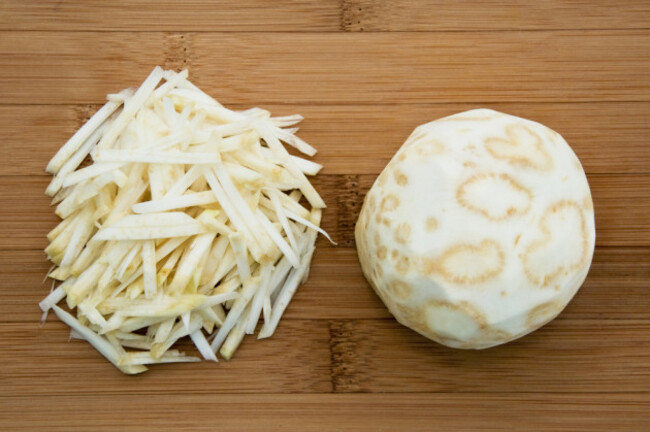
This year I also remembered to remove the outer leaves on each plant to expose the crown and allow it to swell. All of this attention has resulted in a good crop of decent sized celeriac, which I started harvesting this week.
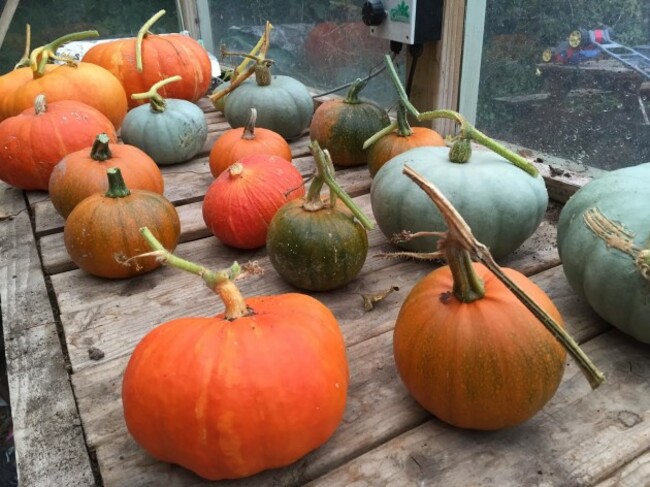
I also lifted my squashes and pumpkins – it’s important to do so as we are now getting the first frosts of the year which would cause havoc with the fruits. I don’t have quite as many as in previous years and the ones I do have are a little on the small side (particularly my favourite squash ‘Crown Prince’).
I got about twenty in total, which is not a bad haul. I will leave them in the potting shed for a few weeks to cure and will then bring them into the house for winter storage.
As flagged in this column last week, this week I also did the first sowings of the 2016 growing season – garlic, onions and broad beans. I love how sowing at this time of the year prompts a sudden and quite extraordinary pivot away from the highs and lows of the current year’s growing and towards the incredible potential of the year to come.
Most GIYers sow garlic in early winter (Oct-Dec, but before the shortest day of the year – Dec 21st) as the bulbs benefit from a cold snap. Some varieties can be sown in spring but they won’t grow as big.
Pick a sunny site, with good fertile, free-draining soil. Apply an organic fertiliser before sowing.
Sow each clove just below the surface, about 4-5 inches apart, in rows 12 inches apart. If soil is very wet, sow in module trays and transplant when sprouted. A fleece cover will help to keep birds from picking at the cloves, and help them to take root in peace.
There will be plenty of time for warming recipes involving root crops later in the winter. For now, I’m enjoying fresh celeriac raw in salads instead.
Ingredients
Directions
Finely shred the carrot, beetroot and celeriac either using a mandolin or grater. Combine in a bowl, add the mint and chilli and mix well. Add the lemon juice and a good splash of olive oil.
Season really well with sea salt and black pepper. Serve immediately.
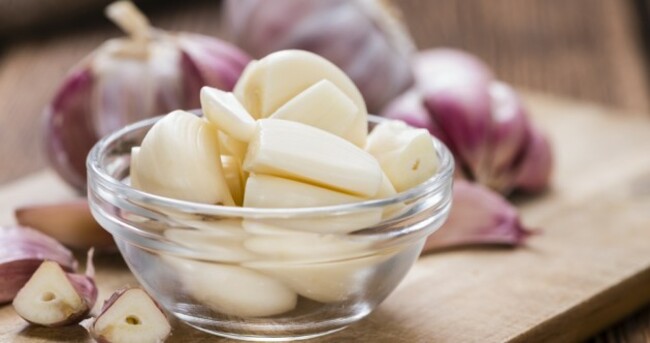
We may think that we wrote the book on so-called ‘superfoods’ but our ancient ancestors knew about the health benefits of garlic, the ‘stinking rose’, 5,000 years before the ridiculous term superfood was even invented (it’s ridiculous because of course all natural foods are super foods).
A recently discovered Egyptian scroll dating back 3,500 years shows that even then they believed that garlic could prevent cancer. It was consumed regularly by the populace when the plague ravaged Europe and given what we now know about its anti-bacterial qualities it may well have worked too.
In 1858, Louis Pasteur stuck some garlic in a petri dish and found that one milligram of the stuff was as effective at killing germs and bacteria as 60 milligrams of penicillin. In fact, it was known as the “Russian Penicillin” during World War II because those canny Rooskies used it to disinfect open wounds when their stock of real penicillin ran out.
We now know that its healing powers come from sulfur compounds which are found in the vegetable. One of these in particular, allicin can kill 23 types of bacteria, including salmonella and staphylococcus.
Incidentally, when it comes to the health benefits of garlic, most experts agree that fresh garlic is far better for you than supplements. Garlic is believed to reduce bad cholesterol (HDL) levels by up to 15% and systolic pressure in people with hypertension (high blood pressure) by 20-30 mmHg.
It is thought to be as effective an anti-clotting, heart attack preventer as aspirin. Garlic is rich in vitamins A, B, and C which have been shown to be helpful in the fight against cancer and help the body to fight carcinogens and get rid of toxins. The sulphur compound in garlic stimulates the nervous system and blood circulation, regulates blood sugar metabolism and detoxifies the liver.
In many cultures, it is also considered a powerful alternative to Viagra, if you catch my drift. So if you’ve been avoiding it because it gives you bad breath our advice is – get over it!
Michael Kelly is a freelance journalist, author and founder of GIY.
To embed this post, copy the code below on your site
















have your say