Sign in. It’s quick, free and it’s up to you.
An account is an optional way to support the work we do. Find out more.
Sign in. It’s quick, free and it’s up to you.
An account is an optional way to support the work we do. Find out more.

LAST UPDATE | 11 May 2025
As someone who identifies herself as Jewish, half-Israeli and Irish, Ria Czerniak-LeBov has long felt that non-Zionists among the Irish Jewish community have not been represented publicly to any significant degree — not only since 7 October but throughout her whole life.
Here, she explores the various aspects of Irish-Jewish-Israeli identity in a time of war, warning about the dangers of conflating Judaism and Zionism. She says that while she is extremely proud of her Jewish heritage, as an academic, she has informed herself of the complexities and history of the issues in the region.
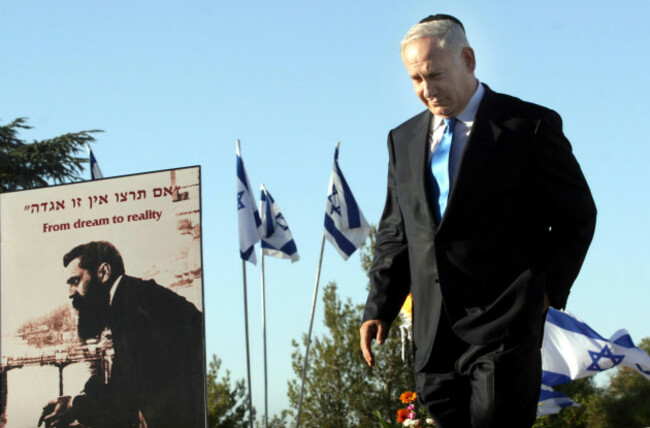
She is now critical of Israel and the role of the Netanyahu government as a conduit for Zionism and its brutal war on Gaza’s civilians in the past 19 months. As an Irish Jewish Israeli woman, Ria finds that there is such a pervasive fear of being perceived as anti-Semitic that organisations censor, dilute or avoid any anti-Israel commentary, even by Jewish artists and writers…
LAST MONTH, 36 members of the Board of Deputies of British Jews issued a public letter in which they criticised Israel’s continued bombardment of Gaza, highlighting the Israeli government’s increasingly extreme policies and the threat they pose to its democracy. Later that week, the Board suspended the vice-chairwoman of its international division, Harriett Goldenberg, one of the letter’s signatories.
I would love to say I was shocked, but this appears to be par for the course these days. I can no longer count the number of Jews who have been ostracised, cancelled or reprimanded for criticising the Israeli government. Instead, I stared at my phone and felt numb, a numbness that has settled in my bones after 19 months of horror.
I will never forget the thoughts that rushed through my mind after 7th October 2023. I cried as I read report after report, watched video after video, until I didn’t have any more tears to cry. Even then, as I checked in with my relatives in Israel, I felt a familiar knot form in the pit of my stomach, knowing that the fate of Palestinians was sealed.
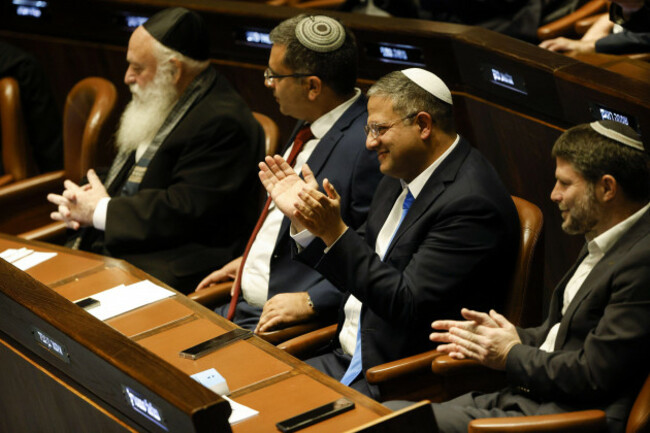
From the moment in November 2022, when Itamar Ben-Gvir, Bezalel Smotrich and their far-right, ultra-Zionist parties entered the current Israeli coalition, this feeling has been eating away inside me. However awful I felt things were, I was certain they were about to get far worse.
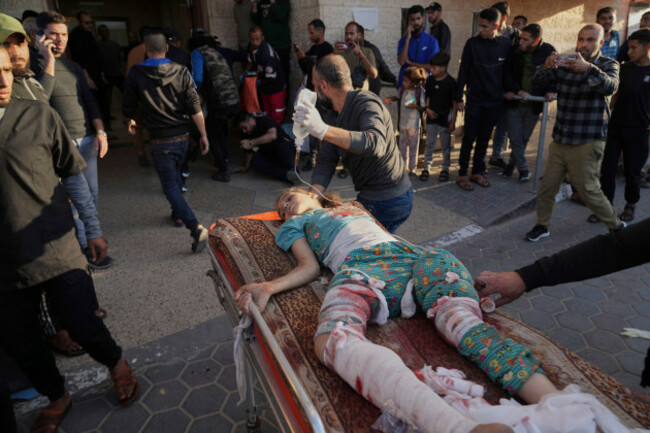
Even so, the reality of the last few years has surpassed my worst imaginings. I cannot count the nights I have spent, unable to look away as nightmarish imagery flooded my news stream, the sounds of bombs and the cries of children ringing in my ears.
By now, even those whose sympathies would usually lie with Israel can plainly see a humanitarian crisis unfold, blocking of essential aid, oppressive occupation and the targeting of civilians, medical workers and journalists. So, why has it taken so long for prominent Jewish voices to acknowledge Israel’s barbaric assault on Palestine? I shouldn’t need to ask. After all, it took me decades to fully untangle my own Jewishness from Zionism, an ideology I could no longer stand behind.
And even when I felt great certainty in my political convictions, I continued to speak in hushed tones, knowing a large part of my community would reject me if I hollered my disdain from the rooftops. Over the last 19 months, however, the silence became so unbearable that I could no longer sit in quiet opposition.
Instead, I marched. I sat at my kitchen table with my daughter and made a sign: Not in My Name. I joined the tiny cohort of Jews for Palestine Ireland, making our way through the city towards the Dáil, between health workers and teachers, peace activists and unions. As the march ended, I posted on social media. I wanted to show my Jewish peers that being Jewish and being Zionist are predicated on two entirely separate belief systems, that it is OK to speak truth to power without being ashamed of your identity and heritage.
I hoped some other ‘Not in My Name’ Jews would reach out to me, some other isolated ‘Self-Hating Jews’ in need of connection. My leftie, artsy non-Jewish friends were predictably supportive, while a small number of Jewish friends ‘liked’ my post, but said nothing, allowing any chance of dialogue, whether public or private, to evaporate into the Meta-verse.
Of course, not everyone quietly approved or ignored my dissent. Others told me in no uncertain terms that by protesting I was supporting Hamas, that I should be ashamed of myself, that I was somehow fuelling anti-Semitism. I was patronised and berated for having been ‘brainwashed’ by anti-Israel propaganda, for simply demanding a ceasefire.
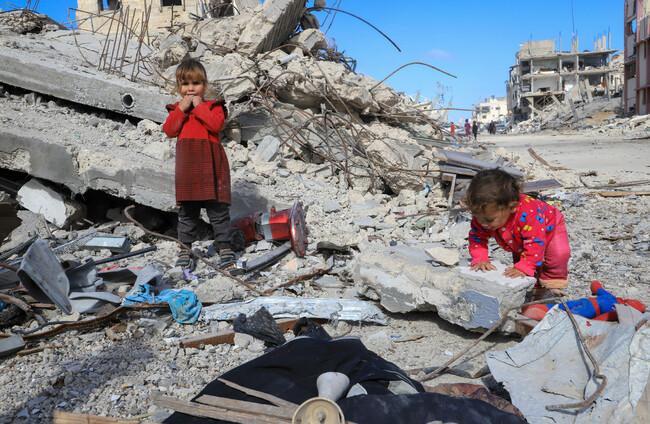
Whether or not we can bring ourselves to call this genocide by its proper name, the facts speak for themselves. Since Israel’s brutal and relentless response to the October 7th attacks, thousands upon thousands of Palestinians have been killed, detained, tortured, displaced, dismembered and remain buried under rubble. And yet, outright condemnation of Israel’s systemic oppression is still considered controversial.
Considering the reactions I have faced from my own extended family and community, it isn’t hard to understand why many Jews cannot bring themselves to boldly oppose Israel’s bombardment of Gaza and stranglehold over the West Bank.
Criticise Israel and you are ‘pro-Hamas’, state facts and figures, and you are told your sources are biased, speak in defence of civilians and you are told that only terrorists are targeted, fail to focus solely on October 7th and the ongoing hostage crisis, and you are disloyal.
No amount of condemnation for Hamas (and trust me, I have wholeheartedly condemned them), can justify the scale of Israel’s retaliation. No amount of linguistic pedantry alters the truth. Yet here we are in the diaspora, tied up in knots by language, so afraid to say the wrong thing that often we say nothing at all.
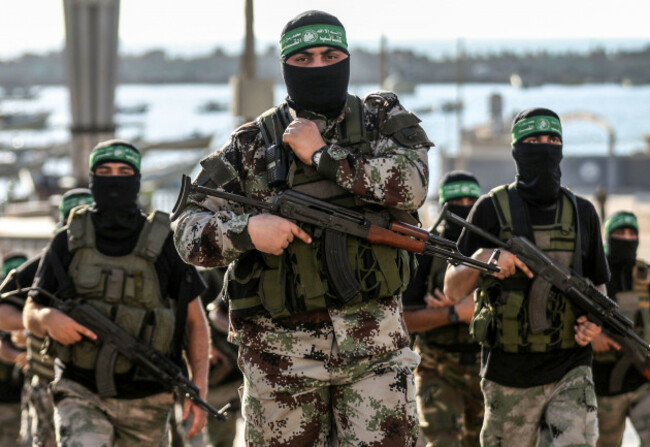
I know I am not alone. I am part of a growing number of Jews across the globe who are speaking up, outraged that Israel continues to claim that this war is an act of self-defence to keep Jews ‘safe’.
Most Jews I know have never felt less safe, whether they live in Israel or the diaspora. It would be dishonest of me to deny the current and alarming rise of anti-Semitism. It is real and grotesque, whether online or in-person, however, it is clearly part of a far broader rise of xenophobia and racism.
Rather than sending us into the arms of Zionism, conservatism and ethnic supremacy, this dark period has given many of us the impetus to build bridges between disparate minority communities and people of conscience. It is only through the opening of such dialogues that we begin to heal, and allow ourselves to imagine a future defined by trust, respect and peace.
Ria Czerniak-LeBov is a visual artist, writer and musician living in Dublin.
To embed this post, copy the code below on your site











have your say