We need your help now

Support from readers like you keeps The Journal open.

You are visiting us because we have something you value. Independent, unbiased news that tells the truth. Advertising revenue goes some way to support our mission, but this year it has not been enough.

If you've seen value in our reporting, please contribute what you can, so we can continue to produce accurate and meaningful journalism. For everyone who needs it.

Alamy Stock Photo

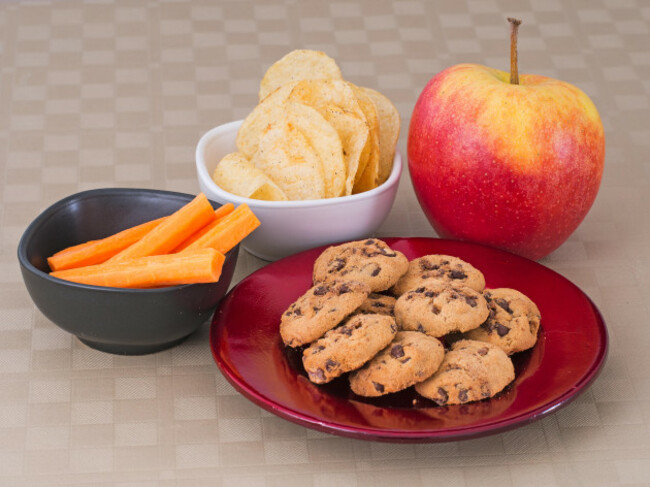
Nutrition expert Are ultra-processed foods as bad for us as we've been led to believe?

Read an extract from In Defence of Bread, the new posthumously published book by food scientist Professor Mike Gibney.

This is an extract from In Defence of Bread by nutrition expert Professor Mike Gibney, who passed away in 2024. The new posthumously published book is about ultra-processed foods and inconsistent public health advice about their role in our diets.

THERE IS NO food in existence on this planet, and no food that will ever be invented, that might be described as “hyper-palatable”. Quite simply, palatability is not an integral or universal property of a food, like the calorie content, or amount of fat. It is the property of the relationship between the food and the eater. Furthermore, if palatability is a measure of the interaction of the eater and the eaten, when does a food or diet switch from being merely palatable to hyper-palatable? What defines this change?

Let’s conjecture a little on the term “hyper-palatability”. Does it make the eater eat more and, if so, how? When eating hyper-palatable foods, do consumers continue eating to a level and rate beyond normal, making the food hyper-palatable for that eater? Do they eat the food at a normal rate and level but do so more frequently throughout the day in the form of snacking? Does it mean constant nibbling leading to over-consumption?

At what point do all these routes of excess intake end, and are these cessation points universally governed by a single mechanism or by diverse control mechanisms? How does this excess consumption stop and why? Does a hyper-palatable food override normal regulation of food intake and what part of the complex regulation of food intake does it disrupt most?

Palatability is, in itself, a psychological construct as I have learned to understand that, for example, the term “handsome” is also such a construct. We get it: Bruce Springsteen would generally be considered more handsome than Donald Trump. But how would you start to measure that? Is there a universal preference for Springsteen’s ears compared to Trump’s? No, beauty is in the eyes of the beholder.

Likewise, palatability is in the mouth of the eater.

However, NOVA [a method of food classification] would have us believe that so-called hyper-palatable foods drive excess consumption and lead to obesity. Where is the evidence? Of course, we cannot answer any of these questions since the entire concept of hyper-palatability is mere populist science and cannot be defined, although, as we will see, some have attempted to do so. Hyper-glycaemia, hyper-inflation, hyper-activity, and hyper-tension are all measurable, understandable, and defined terms of science and economics and have nothing to do with populist science.

The everyday discipline of eating

“Animals eat, humans dine”, so wrote Isabella Beeton, the famed Victorian food journalist, editor, and writer. In answer to the question “Why do we start to eat?”, many might say: “We eat because we are hungry”. For certain, if we don’t eat we will be hungry but hunger alone does not drive appetite.

Humans, unlike all other animal species, have a unique relationship with food.

We alone share food with complete strangers. We alone exercise table manners. We alone eat meals where different foods are served as a single dish and where meals frequently contain multiple dishes. We alone also snack.

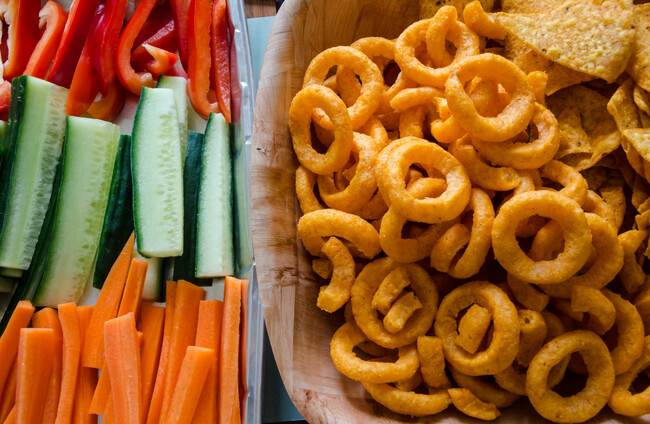
healthy-versus-unhealthy-food-options-concept Alamy Stock Photo Alamy Stock Photo

All across the world, from one end of the year to another, people generally dine together as friends, couples, families, or groups of one form of another and indeed many dine alone, some out of choice and some out of necessity. All have, over time, amassed certain expectations of their meals, expectations for themselves and those around them. If it’s a beef stew with potatoes, it will be the same as all previous servings of this favourite family treat.

There are rarely surprises at such communal meals.

The topic for discussion during these meals will be regarding everyday events, gossip, things new, entertainment, fashion, hopes, and worries. Outside of this global norm lie those for whom the availability of everyday food is by no means secure. The war-torn, the flooded, those who live with parched land and drought, and the poorest of the poor go hungry with all its dire physical and psychological consequences. And in another layer of eating are those eating food in very fine restaurants, seeking the exotic, the highest level of gastronomy.

But irrespective of where one lies on this spectrum, everyone experiences hunger. Hunger is the greatest sauce. To a truly hungry person, it doesn’t matter if the soup isn’t hot, the bread stale, the meat tough or the vegetables raw. It is about filling the belly with nutrients. At other levels of dining, a different layer of factors matter; the taste, the smell, and their merger into flavour, the mouthfeel, and the look. These are the pleasurable or hedonic aspects of food.

For hungry humans the feeling which dominates the attitude to food is “wanting food” and the net end is absolute satiety or fullness. In contrast, for those who dine without the stress of food insecurity, the human feeling is “liking the food” and the outcome is food rewarded with a lovely meal. It is only within this latter context that so-called hyper-palatability can operate. But does it operate? Several studies have been published which probe, directly or indirectly, the possible concept of hyper-palatability of ultra-processed foods. One example is a recent study on snacking in the UK, involving just over 1,000 participants who, as part of a bigger study, recorded data on snacks (eaten between main meals). 

What we learned about snacking

Does increasing the frequency of snacking influence the nutritional value of the day’s full food intake? The answer is no – there was no statistically significant link between snacking frequency and overall diet quality. Snacking frequency was not related to measures of cardiometabolic health nor was it related to height, weight, body mass index, or waist-to-hip ratio. The same was true when these variables were related to increasing caloric intake from snacks.

Almost half of the participants were discordant for meal and snack quality, meaning that 18% had good snack quality and poor meal nutritional quality and 26% had the opposite trend [falling into top quartiles of snack quality (Q3 and Q4) and bottom of quartiles for main meal quality (Q1 and Q2)]. In this large study, there was a variety of different types of snacks, packaged and not packaged. There was a similar reported frequency of consumption of different types of snacks e.g. ‘cookies and brownies’ and ‘nuts and seeds’, same for ‘crisps’ and ‘breads’.

There was no clear trend that any given particular hyper-palatable snack was linked to high consumption, and resulting weight gain.

BMI was not influenced by either snacking frequency or snacking quality. When snacks were classified into those of highest and lowest nutritional quality, significant differences began to appear. Those consuming better quality snacks had better body weight metrics. Finally, snacking patterns did not affect the participants’ microbiome.

So we now know that snacking contributes about a quarter of daily caloric intake in the UK, that the degree of snacking is not related to adverse health outcomes, and that for half the population the nutritional value of main meals and snacks goes in the opposite direction and finally that when snacks are associated with better nutritional qualities, overall cardiometabolic health is optimised. These data would not support NOVA’s advice that “packaged snacks” are to be avoided because of their hyper-palatability.

Professor Michael Gibney was the founding director of the UCD Institute of Food and Health. He was Professor Emeritus of Food and Health at UCD and previously held posts at the University of Sydney Veterinary School and the medical schools of  Trinity College Dublin and Southampton University.

Readers like you are keeping these stories free for everyone...
A mix of advertising and supporting contributions helps keep paywalls away from valuable information like this article. Over 5,000 readers like you have already stepped up and support us with a monthly payment or a once-off donation.

View 20 comments
Close
20 Comments
This is YOUR comments community. Stay civil, stay constructive, stay on topic. Please familiarise yourself with our comments policy here before taking part.
Leave a Comment
    Submit a report
    Please help us understand how this comment violates our community guidelines.
    Thank you for the feedback
    Your feedback has been sent to our team for review.

    Leave a commentcancel

     
    JournalTv
    News in 60 seconds