We need your help now

Support from readers like you keeps The Journal open.

You are visiting us because we have something you value. Independent, unbiased news that tells the truth. Advertising revenue goes some way to support our mission, but this year it has not been enough.

If you've seen value in our reporting, please contribute what you can, so we can continue to produce accurate and meaningful journalism. For everyone who needs it.

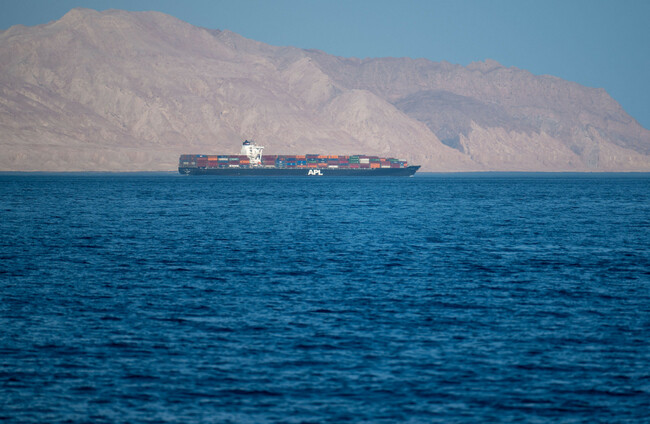
Iran has a stranglehold on the Strait of Hormuz, using the shipping lane vulnerability against Donald Trump. Alamy Stock Photo

Petrol and diesel hikes Government pushes the same old fix in a worsening climate crisis

As prices rise at the pumps, the Government should be changing course on fossil fuel use to secure our future, but instead it’s doubling down with subsidies.

LAST WEEK, THE government responded to rising fuel prices by making it cheaper to drive.

Not to move differently, not to reduce dependence on fossil fuels, but to double down on it. Maintain business as usual at all costs.

This is not new. In fact, it is the standard political response. Crises like these are treated as temporary shocks that will pass, anomalies, rather than warnings of what is to come. Instead of preparing for the future, we reinforce the systems that caused the problem in the first place.

More of the same

The result is a society that remains exposed to the volatility and harms of fossil fuels. This deepens energy and food insecurity, increases transport poverty, worsens inequality, damages public health and delays meaningful climate action.

The human and planetary cost is already clear. Transport emissions in Ireland account for over 20 per cent of the total and have barely declined in recent years. Air pollution causes around 1,700 premature deaths each year in Ireland alone.

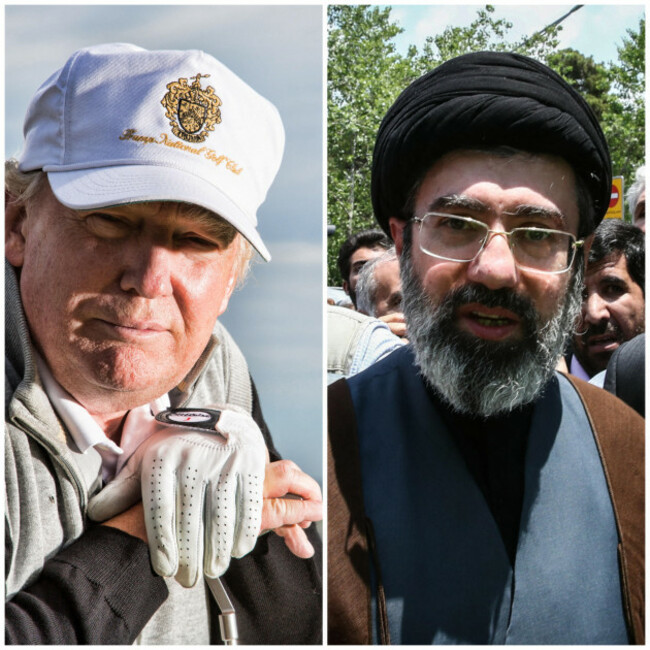
MixCollage-31-Mar-2026-12-49-PM-563 Donald Trump and the newly appointed supreme leader in Iran, Ayatollah Mojtaba Khamenei. Alamy Alamy

The primary driver is our continued reliance on fossil fuels. Every euro spent on further fossil fuel subsidies, regardless of the justification, drives further mortality and morbidity, not just here, but globally, as a consequence of accelerating climate change and biodiversity loss.

These subsidies are also expensive. This latest package costs 235 million euro. While some support for pensioners, carers and people with disabilities is necessary, much of this money could be used far more effectively. Instead of investing in structural change, resources are once again being funnelled back into fossil fuel dependence. We continue to pour money into the beast.

A better way

There are immediate alternatives that could reduce pressure on households while accelerating long-term change. Temporary cycle lanes could be rolled out within days using low-cost materials, particularly where plans already exist but remain unimplemented.

Much of the design work is already done, yet delivery continues to stall. These routes could be installed quickly and then made permanent over time, making active travel a realistic option for far more people, not in years, but tomorrow.

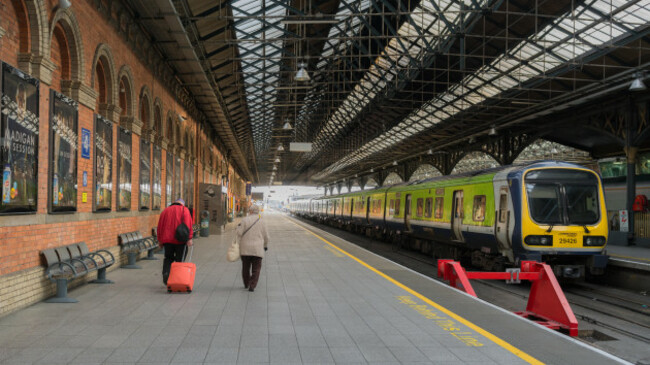
elderly-couple-walking-along-platform-at-connolly-station-dublin-ireland Alamy Stock Photo Alamy Stock Photo

Free public transport for a defined emergency period could reduce costs for commuters. Just look at Australia, where public transport will be free in Victoria for a month and in Tasmania until July. It would also encourage a shift away from car use. Service frequency on buses and trains could be increased straight away by reallocating funding and prioritising the busiest routes.

We could introduce car-free days in urban areas, not because we have to, but because we choose to slow down, reject fossil fuels and give our streets back to people. Not only could this be implemented immediately, but it could give people a clear sense of what a different system could look like.

Encouraging remote work can play a role in reducing unnecessary journeys, but it is not a solution in itself. However, one thing Covid did offer us was a chance to truly transform the way we work in a modern world. Not everyone can work remotely, but those who can have a chance to live and work in a better, more sustainable way. Why can’t we grasp the nettle on the value that remote offers us in terms of employee retention, community development in rural areas, in particular and fewer people stuck in the daily commute?

man-working-at-home-or-at-office-on-a-laptop-computer-and-writing-at-the-desk-making-notes Alamy Stock Photo Alamy Stock Photo

However, we cannot build a fair or functional transport system on the assumption that people will simply stay at home. Every worker in Ireland should be able to access safe, affordable and reliable multimodal transport that does not depend on a private car. That is the standard we should be working towards.

Further immediate measures are available. A default 30 kilometre per hour speed limit in urban areas could be introduced immediately, reducing fuel consumption and making streets safer. Parking spaces in city centres could be reallocated to wider footpaths and protected cycle lanes, shifting priority away from cars and towards people.

Restrictions on SUVs in urban areas could further reduce fuel consumption and emissions, and improve safety, while congestion charges could be introduced with revenue reinvested into public transport and active travel.

Change must happen now

On their own, none of these measures will deliver the full transformation required. But taken together, they would signal a decisive shift. They stand in contrast to the longer-term investments that are also needed, such as expanding rail networks, delivering new tram lines and decarbonising the energy grid. Those projects will take years, even if accelerated. Emergency measures can begin now.

This crisis might feel like a shock, but it is not. It is the inevitable outcome of a system built around fossil fuels and private cars. The Strait of Hormuz crisis is the sixth worldwide fossil fuel crisis in under 60 years, all of them sparked by warmongering leadership and fuelled by capitalism.

Other countries did learn from these crises and made changes to their transport and energy systems. Ireland did not. Instead of implementing policies that create choices, providing people with the freedom to move, the government continues to subsidise fossil fuels again and again. They undermine their own transport strategies, contradicting any claim to support systems change. In the face of a crisis, long-term commitments are quickly abandoned in favour of short-term band aids.

It is easy to succumb to inertia. However, refusal to implement long-term strategies chains us ever more to fossil dependency. This crisis could serve as the tipping point we need to create a fairer, greener, and healthier Ireland for all, but that must mean addressing the root of the problem, not just managing yet another crisis.

So the question remains, how many more times will we have to pay the price — with our planet and our health?

Dr Ola Løkken Nordrum is a Committee Member of Irish Doctors for the Environment. 

Readers like you are keeping these stories free for everyone...
A mix of advertising and supporting contributions helps keep paywalls away from valuable information like this article. Over 5,000 readers like you have already stepped up and support us with a monthly payment or a once-off donation.

Close
67 Comments
This is YOUR comments community. Stay civil, stay constructive, stay on topic. Please familiarise yourself with our comments policy here before taking part.
Leave a Comment
    Submit a report
    Please help us understand how this comment violates our community guidelines.
    Thank you for the feedback
    Your feedback has been sent to our team for review.

    Leave a commentcancel

     
    JournalTv
    News in 60 seconds