We need your help now

Support from readers like you keeps The Journal open.

You are visiting us because we have something you value. Independent, unbiased news that tells the truth. Advertising revenue goes some way to support our mission, but this year it has not been enough.

If you've seen value in our reporting, please contribute what you can, so we can continue to produce accurate and meaningful journalism. For everyone who needs it.

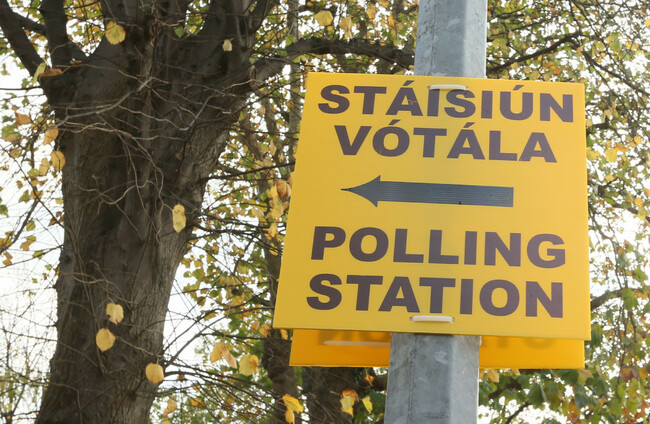
Ireland elected a new president last weekend - but not everyone had their say. Alamy Stock Photo

Opinion When it comes to making voting easy, Ireland is way behind others in Europe

Ireland’s electoral system is outdated and needs to be brought into the modern world, writes Emma DeSouza.

OVER THE PAST two years, voters have directly elected their president in Poland, Finland, Cyprus, Czech Republic, Romania, Croatia, Slovakia, and Lithuania with turnouts averaging over 60%.

In Cyprus, Czech Republic and Poland over 70% of the electorate performed their civic duty.

In Ireland, around half the voting public chose to stay home last week in our presidential election, which saw independent Catherine Connolly elected Ireland’s tenth president. Of those who did vote, one in ten spoiled their ballots.

What we have in Ireland is a weakening democracy falling further out of step with our European counterparts. 

All of the aforementioned countries also enfranchise their citizens living outside the state, while Ireland continues to exclude its citizens in the North and abroad from any form of democratic participation.

While countries across the world expand voting rights and advance modern and accessible voting mechanisms, Ireland’s electoral system has been frozen in time.

There has only been piecemeal change since the 1923 Electoral Act. The changes brought forward in the Electoral Act 2022 had little impact in increasing voting accessibility or overhauling the system.

The most significant change beyond the creation of the Electoral Commission was increasing accessibility to postal voting to those with mental health difficulties, a limited and minor change at best. Meanwhile postal votes have been available to all citizens in Germany since 1957. Who benefits from restricting postal voting?

Streets ahead

Estonia introduced internet voting in 2005. Citizens can cast their ballot online up to six days before the election with the option to even change their vote before the polls close. Denmark, Sweden, Latvia, Finland and several other European Union countries offer advance voting. Austria, Belgium, and Germany all lowered the voting age to 16.

These measures are all intended to make it easier for citizens to participate in the democratic process, while Ireland places outdated barriers on participation that suppresses the turnout.

There are any number of modern systems and practices for Ireland to learn from.

Automatic enrolment, universal postal voting, advance voting and extending the presidential franchise would be transformative in Ireland but there are also examples of more inclusive processes to balance representation.

In Croatia, there is a Minorities district which guarantees up to eight seats for ethnic minorities and a Diaspora district to ensure citizens abroad are directly represented. Slovenia has reserved seats for linguistic minorities. France has a 50% gender quota for all elections.

By contrast to many of our European neighbours Ireland has a weak democracy, vulnerable to external interference with low levels of trust in political institutions and high levels of voter apathy. 45.8% of the electorate voted in the presidential election, while the turnout for last year’s general election was the lowest in over a century.

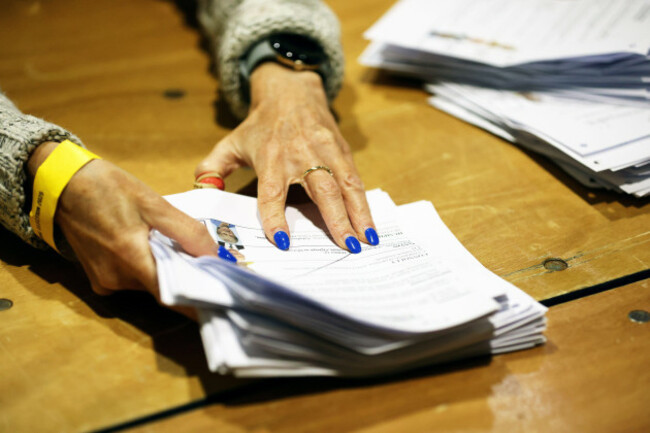
counting-gets-under-way-for-the-irish-presidential-election-in-dublin-ireland-saturday-oct-25-2025-ap-photopeter-morrison Ballots being counted after voters went to the polls last weekend. Alamy Stock Photo Alamy Stock Photo

An outdated and restrictive voting system has kept Fine Gael and Fianna Fáil in government for a century, but government is meant to serve the people, not political parties. When half the electorate opts out of democratic processes, it is the responsibility of the government to make sure the population is fully enfranchised.

The Electoral Commission established under the 2022 Act has done little to advance meaningful reform and its ambitions are lacklustre at best. Currently operating as an information hub, the biggest impact of the Commission so far has been to increase the number of TDs sitting in Leinster House, and the introduction of initiatives to increase voter registration.

One key objective is to update the electoral register; An Coimisiún Toghchái chief Art O’Leary believes the actual register has an inflated number of voters – probably somewhere between 200,000 and half a million people, which could have a small impact on the turnout percentage.

A more ambitious approach would be to adopt the Finnish system of automatic enrollment and a consolidated central data system for all citizens and residents.

The only barrier to rolling out any of these more modern and accessible voting systems in Ireland is political will.

We can not allow political complacency and self-interest to weaken Ireland’s democracy any further. Now is the time for action.

Connolly was a unifying candidate and she will be a unifying president — and she will be my president despite the fact that I was denied the right to vote. This should be the last election where citizens in the North and abroad are denied the right to vote for their president.

Ireland is not just behind European countries on this issue, but the world; 153 countries and territories enfranchise their voters outside the state and many extend this right beyond presidential elections to parliamentary elections.

In the United Kingdom, British citizens retain the right to vote in UK parliamentary elections for life. The UK also offers postal voting to all citizens. Ireland has often sought to cast itself apart from Britain; in this regard Ireland is the parochial outcast.

We need to move this debate forward as part of a wider overhaul of Ireland’s electoral system.

Ireland is considered a high-performing country under the Global State of Democracy framework in all but three categories; inclusive suffrage, electoral participation, and local democracy.

This should not only be a point of shame for the government but a concern for the future of Irish democracy and Ireland’s standing in Europe.

Emma DeSouza is a writer and campaigner.

Readers like you are keeping these stories free for everyone...
A mix of advertising and supporting contributions helps keep paywalls away from valuable information like this article. Over 5,000 readers like you have already stepped up and support us with a monthly payment or a once-off donation.

View 56 comments
Close
56 Comments
This is YOUR comments community. Stay civil, stay constructive, stay on topic. Please familiarise yourself with our comments policy here before taking part.
Leave a Comment
    Submit a report
    Please help us understand how this comment violates our community guidelines.
    Thank you for the feedback
    Your feedback has been sent to our team for review.

    Leave a commentcancel

     
    JournalTv
    News in 60 seconds