Sign in. It’s quick, free and it’s up to you.
An account is an optional way to support the work we do. Find out more.
Sign in. It’s quick, free and it’s up to you.
An account is an optional way to support the work we do. Find out more.
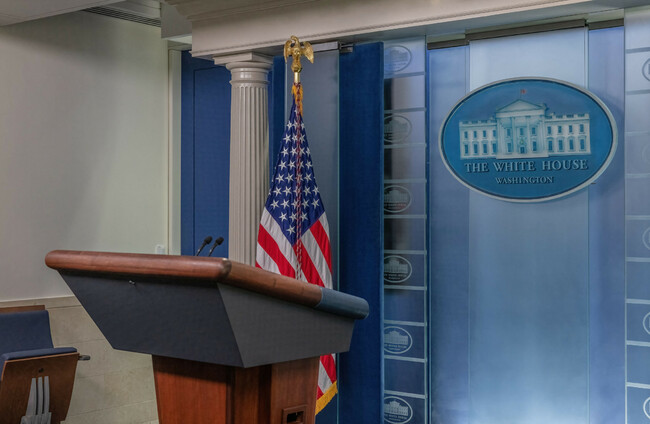

ALTHOUGH SPECULATION CONTINUES about whether an octogenarian President of the United States, one increasingly prone to drifting off to sleep in front of the cameras, is slowing down, Donald Trump is undeniably difficult to keep up with. A ban on CNN, MSNOW and Politico journalists from the White House at last engendered a show of solidarity from other networks and was swiftly undone by Judge Timothy Kelly.
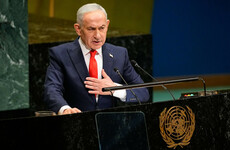
A typically rambling, bravado-laden and menacing address at the United Nations was met with stony silence from fellow heads of states and their diplomatic teams. A summit with China’s President Xi Jinping evidently is revolving around the AI race. According to experts, it mightn’t prove all that consequential. And there has been lots more – an allegedly productive and encouraging meeting between US envoys and Iranian officials in New York, some sort of “deal” with Denmark and Greenland, etc – only recently.
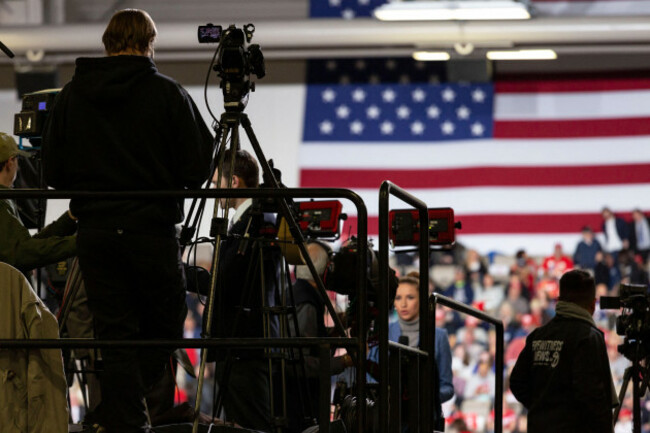
Just to focus on the attempted press ban for a minute, it has been noted that this is definitely not the first time that an American president determined that certain members of the media had it in for him and sought to get them off his case. Indeed, politicians of all stripes have nearly always taken a dim view of those whose job it is to hold them to account.
My own great-uncle Frank Kelly, a Democrat, Boston City Councillor and Attorney General of Massachusetts in his day, was fond of telling his backers who fretted about negative coverage that “a cup of coffee and a slice of pie will buy you a newspaper guy.”
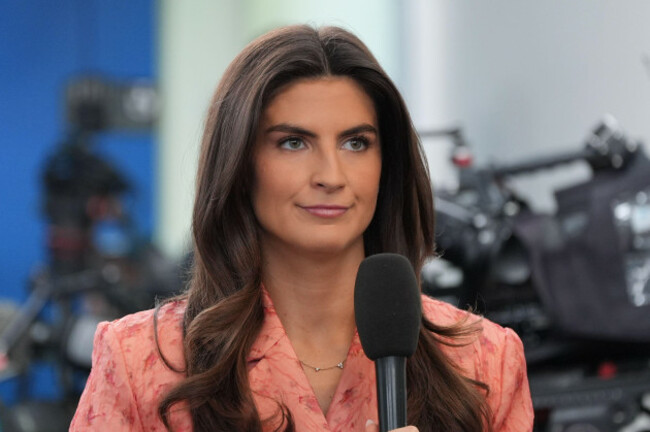
It is perfectly understandable that President Trump would privately disdain those like CNN’s fearless Kaitlan Collins, who invariably rises to the occasion and speaks truth to power in the face of withering, grossly unfair abuse from the occupant of an office we Americans were taught to revere.
Yet barring so-called “fake news” outlets in their entirety was an extraordinary step, even for this president. This administration’s actions and attitude, including reordering the seating in the White House briefing room to favour reporters of a “Trumpian” bent, collectively constitute an assault on the sacrosanct 1st Amendment and, in turn, on democracy.
It is heartening that Judge Kelly pretty much immediately rejected the arguments proffered by Trump’s attorneys that the withdrawal of access for approximately 78 journalists resulted from “his interest in safeguarding national security.”
It is simultaneously another rebuke to those who believe that this president effectively owns all three branches of government, given that this federal judge is not the first jurist appointed by President Trump to remind him that there are lines in the sand that cannot be crossed.
Against these rather lofty ideals, it is unassailable that the media in the US on the whole and this unprecedented president have been in an odd, mutually beneficial, albeit toxic relationship since the billionaire came down the escalator in Trump Tower in 2015 and announced his candidacy for the Republican presidential nomination before a cheering crowd of women and men who were paid to be there. And initially, this improbable quest featured solely in the pop culture or celebrity sections.
But in reality, and over the years, Trump has been good for the American media, and they have been good for him. His rise has also furthered the already partisan, biased nature of reportage there that astonishes visitors. To be blunt, the landscape is bleak, and the future, beyond Trump, is not filled with promise.
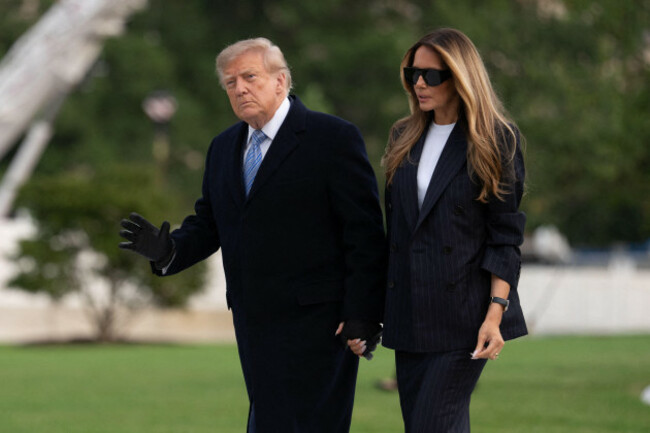
Meanwhile, the commander-in-chief’s approval ratings have reached what may be their nadir, at 29% in one poll. Crucially, multiple surveys indicate that the war on Iran, which Trump avers with no foundation will end after the midterms, is deeply unpopular. Any perceptible fall in the cost of living for hurting Americans would be a miracle at this extremely late stage of the game. There is an abundance of anti-Trump energy on the left. In short, all of the ingredients are there for Democrats to romp to a resounding victory on Tuesday, 3 November.
Virtually no one gives the GOP any chance of retaining control of the US House of Representatives; it is a matter of how large a majority the Democrats will enjoy in January 2027. The US Senate is literally up for grabs with six states – Alaska, Iowa, Maine, Michigan, Ohio and Texas – widely deemed toss-ups. There is speculation that others, such as Kansas, Minnesota, New Hampshire and North Carolina, may be in play.
The burning question with less than six weeks to go was articulated well on X by Prof Larry Sabato, of the University of Virginia and author of Sabato’s Crystal Ball: “Is Nov 3 going to be a big, blue wave, or a blue tsunami?” To repeat, several factors augur for the latter.
That said, to me at least, there are two countervailing considerations. First, as polling data is currently trending strongly for the Democrats, right-wing operatives are correct in asserting that polls clearly overestimated the level of support for progressives in the primaries earlier in 2026 and could be similarly off the mark.
Second, notwithstanding Trump’s sinking numbers, there hasn’t been a massive surge in enthusiasm for the Democratic Party. The Republican campaign machine is kicking into gear, with loads of money behind it, and nasty attack ads are hitting the airwaves and circulating online. Thus, there is a lingering doubt as to whether a decent sized cohort of working-class voters, angry as they may be about their own precarious situations, will in the end tick the box for Democratic standard-bearers, some of whom they cannot relate to or identify with.
To paraphrase Prof Sabato, then, the quandary is whether the midterms will be good or great for the Democrats? This column will examine this known unknown at length in the weeks ahead. What the American electorate decides will have significant repercussions for people at home and everywhere else. And it will help shape the contours of the contest to succeed President Trump in 2028.
Larry Donnelly is a Boston lawyer, a Law Lecturer at the University of Galway and a political columnist with TheJournal.ie.
To embed this post, copy the code below on your site












have your say