Sign in. It’s quick, free and it’s up to you.
An account is an optional way to support the work we do. Find out more.
Sign in. It’s quick, free and it’s up to you.
An account is an optional way to support the work we do. Find out more.
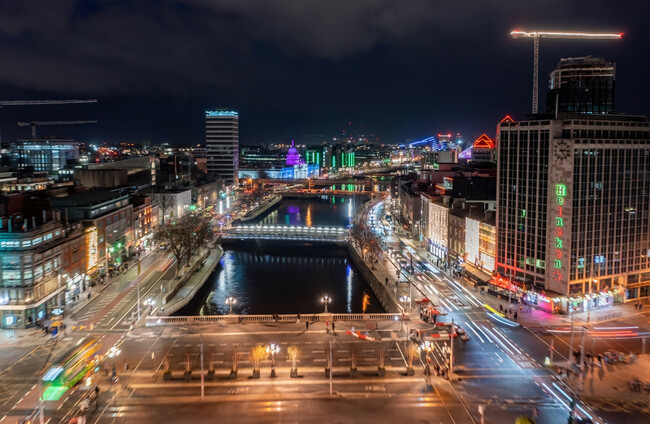
EVER SINCE THE Journal started back in 2010, our readers and their thoughts have been fundamental to our coverage of the news. Here’s what you’ve been saying to us this week. Have something to say? Send a mail to letters@thejournal.ie. You can see our letter guidelines here.
[Citizenship rules to be tightened with longer residency and language test]
Dear Editor,
I am writing regarding the proposed increase in the residence requirement for Irish citizenship from five to eight years.
I am a cardiothoracic surgeon working in Ireland, including in heart and lung transplantation. I came to Ireland legally through the Critical Skills employment route, and in October I will complete four years of continuous legal residence here.
However, I am not writing only for myself.
There are many doctors, nurses, engineers, researchers and other legal residents who came to Ireland, filled areas of genuine need, paid their taxes, integrated into their communities and built their families and futures here on the understanding that the established citizenship pathway required five years of reckonable residence.
The government is entitled to change policy for the future. But there is an important question of fairness when the rules are changed for people already three or four years along an existing five-year pathway.
Imagine running a five-kilometre race and, when you have completed four kilometres, being told that the finish line has moved another three kilometres away.
I respectfully ask the government and the Oireachtas to introduce fair transitional arrangements. People already legally resident before the new legislation takes effect — or at the very least those who have already completed three or four years of reckonable residence — should be allowed to complete the pathway under the existing five-year rule.
Consideration should also be given to Critical Skills workers whom Ireland actively recruits, particularly in healthcare and other sectors facing significant workforce shortages.
Citizenship should certainly require commitment to Ireland. But commitment works both ways. People who have spent years serving Ireland and building their lives here deserve certainty, fairness and reasonable transitional protection when the rules change.
Yours faithfully,
Dr. Ayman Ghoneim,
Dublin
Dear Editor,
I welcome the Vatican’s recent development of the concept of “sinning against ecology”, with Pope Leo reportedly concerned about the ravages of climate change, pollution, and reckless destruction of habitats
Regardless of religious belief or lack of it, we Irish could do worse than heed this message. Almost four years have passed since the Citizens’ Assembly recommended the granting of “rights” to nature in the constitution.
Politicians of all parties vied with each other in their zeal to welcome the idea. The press statements were nicely crafted and gushing with love for the incomparable flora and fauna of our wonderful island nation.
But Mother Nature is still waiting.
An estimated 20% of species in Ireland are threatened with extinction. A third of our precious 101 native bee species are on the brink. Rivers and lakes are still polluted, and wildlife crime is rampant in the countryside.
As if climatic, industrial, and criminal factors weren’t daunting enough, our laws permit the senseless killing of foxes with packs of hounds, and the trapping of hares for coursing.
Confining hares for weeks at a time prior to making them run from dogs is against nature, since these animals belong in the wild, not in captivity, being manhandled by humans, or facing contrived chases for the edification of a baying throng.
While I’m not big into organised religion, I like the notion of “ecological spirituality” that the Vatican has mooted.
It’s clearly the opposite of the mindset that accepts needless attacks on nature, and the species that form an essential part of our teetering biodiversity.
The Catholic Church used to talk a lot in the past about the Seven Deadly Sins. The wilful destruction or widespread “recreational” abuse of a country’s wildlife heritage should be added to the list!
Thanking you,
Sincerely,
John Fitzgerald,
Kilkenny
[RTÉ will broadcast Ireland's Nations League games with Israel]
A Paradox, A Paradox, a most ingenious paradox!
Those of you old enough will remember this line from an old Gilbert and Sullivan operetta, The Pirates of Penzance.
So you might ask where’s the paradox – something that appears self-contradictory?
RTÉ and the cancellation of entry in the Eurovision around Israel’s participation and situation in Gaza! But on the other hand, RTÉ’s showing of the upcoming Republic of Ireland soccer matches with Israel.
Thoughts?
Frank Foley,
Dublin 8
***
[Dublin councils survey residents for city-wide community safety plan]
Every morning, walking home from work around five, I go through Dublin city centre, and what I see sometimes genuinely worries me.
During the day the same streets look like a different city: people heading to work, shops opening, the traces of the night already cleaned away. But just before the city wakes up, Dublin has another face.
People who are extremely drunk, groups shouting at each other, arguments that can turn into fights in an instant. Some mornings I come across broken bottles, blood on the ground, or other signs of what the night left behind.
There are also homeless people who wait outside the 24-hour shops, asking customers going in and out for something. Sometimes they’re given what they ask for, sometimes not. When they’re not, some walk away quietly, but others start shouting and causing a scene. I know most of these people are dealing with a genuinely hard life, that’s not really the point. The point is how often someone walking alone at that hour runs into moments like this.
A few hours later, most of it disappears from view. But that doesn’t mean the problem is over. It just becomes invisible, hidden behind the daytime crowd.
It makes me think of Ireland’s old stories. In the past, the danger of night meant empty roads, dark countryside, or fairy forts people avoided walking past after dark. Today, the place that makes me uneasy at five in the morning isn’t an empty forest, it’s the city centre.
There’s an old Irish rhyme said when you spot a magpie: “One for sorrow, two for joy…” Some mornings, walking at that hour, I catch myself counting not magpies, but how many shouts, arguments, or demands I’ll pass before I get home.
I’m not against nightlife, or people going out to enjoy themselves; it’s normal for a capital to have one. But having fun and a city’s streets turning threatening before dawn are not the same thing.
Maybe when we talk about Dublin’s safety, we shouldn’t judge the city by daylight alone. Because the Dublin most of us know is the Dublin after it wakes up. The one I see every morning is the Dublin just before it wakes.
Fatih Akin,
Dublin
Would you like to have a letter published? See guidelines for submission here.

To embed this post, copy the code below on your site








have your say