We need your help now

Support from readers like you keeps The Journal open.

You are visiting us because we have something you value. Independent, unbiased news that tells the truth. Advertising revenue goes some way to support our mission, but this year it has not been enough.

If you've seen value in our reporting, please contribute what you can, so we can continue to produce accurate and meaningful journalism. For everyone who needs it.

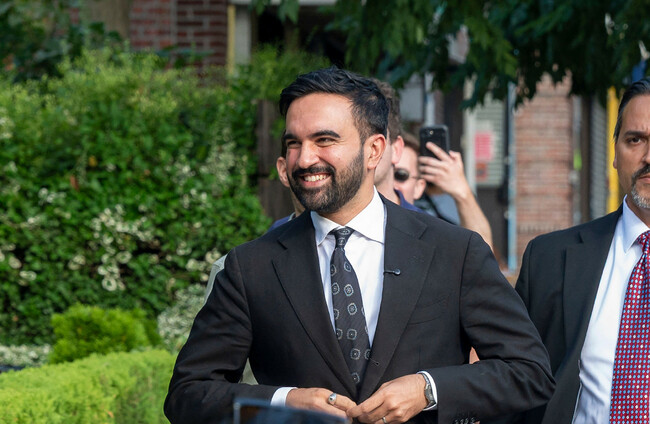
New York City Mayor Zohran Mamdani. Alamy Stock Photo

Opinion Mamdani’s New York is listening to its citizens. Why is Ireland not?

In contrast to New York’s experiment in mass engagement, Ireland’s commitment to citizens’ assemblies is waning, according to Dr Seána Glennon.

LAST UPDATE | 2 hrs ago

ONE OF THE first actions of New York City’s new mayor, the charismatic democratic socialist Zohran Mamdani, has been to announce an ‘Office of Mass Engagement’. The new office is aimed at giving ordinary New Yorkers an unprecedented level of participation in city governance. It is not clear yet exactly how the office will operate, but it states that it will work across agencies and community organisations to incorporate public feedback directly into city policies and “proactively reach communities that have historically been excluded from policymaking.”

Mamdani’s stunning path to power was largely achieved through grassroots action; his campaign amassed an army of over 100,000 volunteers to pound the pavements, knocking on doors and drumming up support, and they were rewarded with the largest voter turnout in the city for decades. With the establishment of this new office, the new mayor looks set to stay true to his commitment to engage ordinary people in public decision-making. These exciting developments in democratic participation may prompt us to ask the question: What has happened to Ireland’s momentum in engaging ordinary citizens in the democratic process?

Up until very recently, Ireland was seen around the world as a trailblazer in incorporating citizens’ voices into public decision-making, through the consistent use of citizens’ assemblies. We have seen a series of such assemblies on topics as diverse as marriage equality, abortion, drug use, biodiversity, models of local governance and gender equality. Ireland has been held up as the poster child internationally for taking the lead in making serious efforts to meaningfully incorporate citizens’ voices in law and policymaking. Yet, since the resounding defeat in 2024 of the family and care referendums (which were preceded by a citizens’ assembly) there has been radio silence from the government on establishing any further assemblies. Is Ireland’s decade-plus-long love affair with citizen deliberation at an end?

For over a decade, citizens’ assemblies were largely seen as a positive development for Irish democracy. There was broad consensus across political party lines that they could make an important contribution to public decision-making, and the feedback from the participants was overwhelmingly positive. Polling also shows a strong awareness among the public of the workings of some of the previous assemblies, most notably the Citizens’ Assembly on the Eighth Amendment. Ireland’s approach of incorporating citizens’ assemblies into the referendum process has been praised as an innovative approach to injecting deliberation into an act of mass democracy and has been held up as a blueprint in other countries.

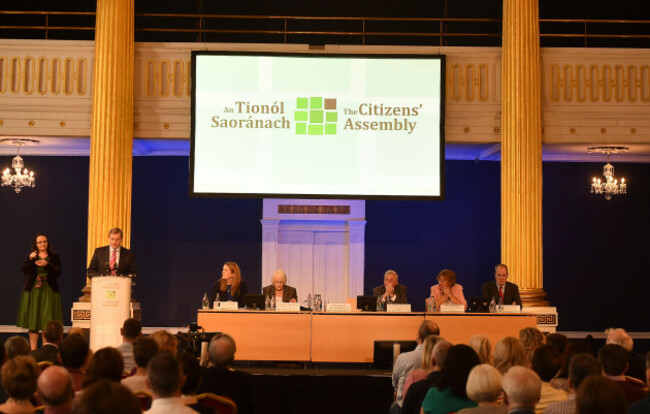
taoiseach-enda-kenny-left-speaks-during-the-citizens-assembly-a-special-committee-set-up-to-deliberate-on-irelands-strict-abortion-regime-at-dublin-castle Former Taoiseach Enda Kenny at the Citizens' Assembly set up to deliberate on Ireland's strict abortion regime at Dublin Castle.2016. Alamy Stock Photo Alamy Stock Photo

Yet, our experience has also been criticised on several fronts. Several batches of citizen recommendations over the years have been ignored by the government. The choice of topics for citizen deliberation over the years has also been somewhat eclectic – from highly salient issues like abortion, to trivial topics like the question of reducing the Presidential term of office (one of the topics considered by the Convention on the Constitution).

Public participation

The main problem with the Irish approach to citizens’ assemblies, however, is the fact that the process around them is far too tightly controlled by the government. It is the government – not the public – that decides when we hold a citizens’ assembly, on what topic or topics, and crucially, whether to actually implement the recommendations made.

Take the 2020/2021 Citizens’ Assembly on Gender Equality as an example. It carefully deliberated on a swathe of issues relevant to the topic of gender equality. Among its recommendations were that constitutional referendums should be held on the so-called “woman in the home” provision in the Constitution, and to protect families beyond only those based on marriage in the Constitution. A cross-party governmental committee carefully considered the assembly’s recommendations and produced draft referendum wording.

Yet despite this body of work, the government inexplicably proposed a different form of wording for the amendments, which was greeted by disbelief by even those parliamentarians who supported constitutional change. Both referendum questions were resoundingly defeated in a grave embarrassment for the government, and perhaps as a result, no further citizens’ assemblies have been established. The assembly on education and Youth Assembly promised in the 2020 Programme for Government has not been established, and no further assemblies have been mentioned in the 2025 Programme for Government.

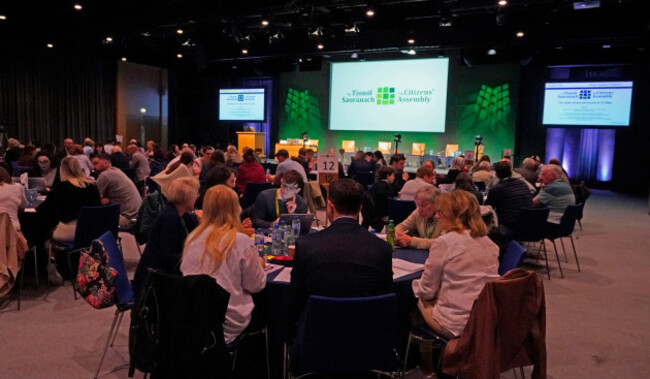
the-citizens-assembly-on-drugs-use-at-dublin-castle-picture-date-saturday-may-13-2023 The Citizens' Assembly on Drugs Use at Dublin Castle in 2023. Alamy Stock Photo Alamy Stock Photo

This state of affairs is a shame, because our experience with citizen deliberation over the past decade and a half has proved that ordinary citizens are capable of producing sensible recommendations on even highly complex topics, that are then taken up by elected decision makers and actioned. If we are serious about protecting our democracy against disillusionment and malaise, we need to find concrete ways of involving our citizens in decision-making, and these methods need to be embedded into our democratic system and not left up to the whim of the government of the day.

We can look to other countries for inspiration: in the German-speaking region of Belgium, for instance, there is a permanent, institutionalised citizen body known as the Citizens’ Council or Bürgerrat, which consists of a rotating cohort of ordinary citizens who select topics to be considered by citizens’ assemblies. The citizens’ output is not legally binding; but Parliament is obliged to engage with the recommendations produced and respond fulsomely.

Approaches like these do not usurp the role of elected representatives – but they give ordinary citizens a real agenda-setting role and enhance accountability on the part of the government.

It remains to be seen if Mayor Mamdani’s new office will live up to the hype – but while other countries are seeking to increase the momentum around democratic innovation, Ireland should be careful not to lag behind. The price is our democratic health.

Dr Seána Glennon is an Irish lawyer and a Postdoctoral Fellow at the University of Ottawa Faculty of Law.

Readers like you are keeping these stories free for everyone...
A mix of advertising and supporting contributions helps keep paywalls away from valuable information like this article. Over 5,000 readers like you have already stepped up and support us with a monthly payment or a once-off donation.

Close
36 Comments
This is YOUR comments community. Stay civil, stay constructive, stay on topic. Please familiarise yourself with our comments policy here before taking part.
Leave a Comment
    Submit a report
    Please help us understand how this comment violates our community guidelines.
    Thank you for the feedback
    Your feedback has been sent to our team for review.

    Leave a commentcancel

     
    JournalTv
    News in 60 seconds