Sign in. It’s quick, free and it’s up to you.
An account is an optional way to support the work we do. Find out more.
Sign in. It’s quick, free and it’s up to you.
An account is an optional way to support the work we do. Find out more.

LAST UPDATE | 4 Dec 2024
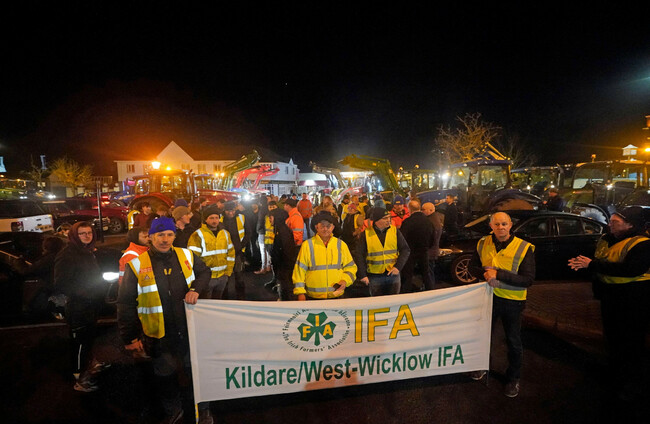
NOT ONE BUT all three leaders of the largest parties in last week’s general election debate raised their objections to ‘Mercosur’ when being quizzed on farming and climate, but what exactly is this issue that could unite the entire political spectrum in opposition, and what has it do with Irish farms?
Well, Mercosur has become shorthand for the EU-Mercosur trade deal, a deal between the European common market and the South American trade bloc made up of Argentina, Bolivia, Brazil, Paraguay and Uruguay as full members alongside various associate members.
Given that the members of Mercosur contain the largest beef exporter in the world, Brazil who exported three million tons of beef and veal in 2023, along with the fourth and tenth largest, Argentina and Uruguay respectively, the topic of beef was always going to be key to trade negotiations.
The EU already allows imports beef and poultry of Brazilian and Mercosur beef, approximately 170,000 tonnes was imported in 2022, including 29,500t of prime cuts along with another 10,000t from Argentina and 10,000t from Brazil at 20% tariff with the remainder on higher tariffs.
However, the proposed EU-Mercosur deal would allow for 99,000t, 45% frozen and 55% fresh higher value product, to be imported at a further cut down tariff of 7.5%. In poultry meat, a further 180,000 tonnes will be imported annually, entirely tariff free.
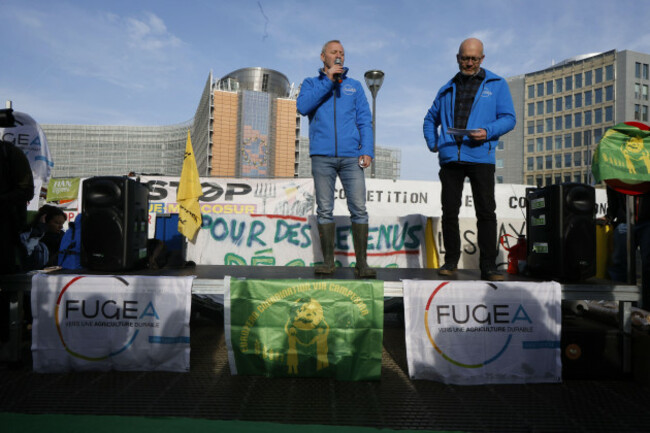
Farmers across Europe, in particular in France and Poland, have staged large-scale protests against the deal. Their objections surround the lower standards and traceability of Brazilian beef production, in particular the use of hormones and deforestation. A recent EU Audit concluded that Brazilian authorities cannot guarantee products supplied to the bloc do not contain beef treated with ‘17β-oestradiol’ despite it being banned by EU authorities in 1988. This led to Brazil being required to suspend exports of beef from female cattle where the product was used.
In addition, particularly given the recent push to restrict access to various pesticides and fertiliser in order to meet targets set out in the EU Green Deal, farmers have pointed to what they see as the hypocrisy of increasing imports given that as recently as 2022 saw record Amazonian deforestation. Despite worthy efforts by the current Brazilian administration to curb this trend, farmers raise concerns that a return to prior political landscapes could trigger rapid land clearance for cheap beef again.
Though not normally bedfellows on many matters, this topic has united in opposition both farming organisations and environmental groups, with Greenpeace, Friends of the Earth and the World Wildlife Federation all calling on EU member states to reject the deal.
Assessments of the Mercosur deal, along with already concluded free trade agreements with New Zealand and Australia, are expected to reduce prices paid to farmers by 2.4% by 2032. This is at a time when the majority of Irish beef farmers according to the Teagasc Farm Survey are already unable to keep their farms viable due to low market returns. However, the extent of the impact also depends on the form of beef ultimately imported, a slowing Chinese economy and trade difficulties with the US could result in Brazilian and Argentine exporters maximising their return by ensuring only the highest value cuts are shipped.
In attempts to counter farmer concerns, trade experts have pointed to the number of years Brazil and Argentina didn’t maximise their existing quotas, however, since the end of the Covid pandemic exports have sharply risen growing by 47% in 2023 compared to 2022.
France has proposed fundamentally rewriting the deal, and suspending all actions until then, in particular adding various ‘mirror clauses’ which would require an identical level of standards for products to be implemented. However, trade experts and even negotiators involved with the original deal have warned against ‘mirror clauses’ due to their non-compliance with World Trade Organisation (WTO) trade rules.
The WTO states it is illegal to ban products purely based on their production method but only on the basis of health or risk of the product, such as microbial infection or chemical residues such as pesticides.
These politicians in France and Belgium along with farming representatives have stated that this fails to address the divide between the EU’s environmental and animal welfare ambition and such a trade deal.
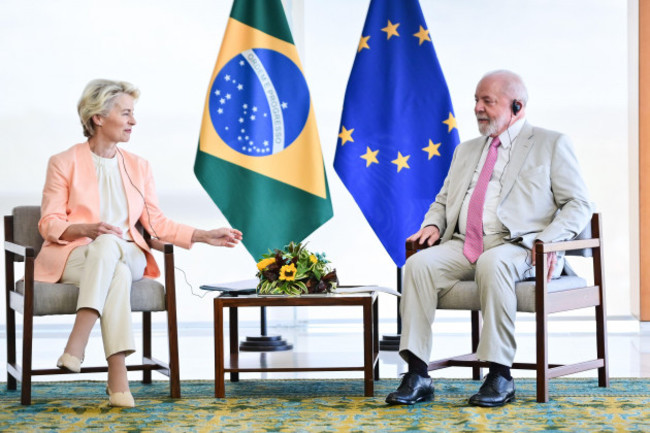
On the side of the trade deal in particular are Germany and Spain and many in the EU Commission, including Commission President Ursula von der Leyen, who has strongly thrown her support behind the deal.
Germany has been a staunch supporter as a key element of the deal is in exchange for lower tariffs on beef it allows for reduced tariffs for cars at a time when the German economy is in particular difficulty due to competition from Chinese EVs.
Despite many of the parties in Ireland stating their opposition to Mercosur, the only real hope of blocking the deal would be to back the efforts of France to secure a blocking minority of EU states representing at least 35% of the EU population. Along with other countries whose French diplomats have targeted, such as Italy, Austria and the Netherlands.
All of this has a tight timeline, ahead of a key Mercosur summit in Uruguay on the 5-6 December, at the end of this week. Beyond this, the next Irish Dáil might face the question of whether it can advocate for an individual veto on such a deal, despite the pressure from other member states.
Thomas Duffy farms in partnership with his parents and sister in Co. Cavan. He is the former President of Macra na Feirme and former Vice President of CEJA, the Council of European Young Farmers.
To embed this post, copy the code below on your site
















have your say