Sign in. It’s quick, free and it’s up to you.
An account is an optional way to support the work we do. Find out more.
Sign in. It’s quick, free and it’s up to you.
An account is an optional way to support the work we do. Find out more.

MY NINE-YEAR-OLD’S REQUEST seemed simple enough. “Mum, can I get a music player so I can listen to my own songs?”
For any parent, like me, who has winced at their Spotify Wrapped at the end of each year to find their beloved musical algorithm hijacked by their children’s ‘eclectic’ taste in songs will know an ask like this one is literal music to their ears.
Finally, gone would be the reign of musical terror inflicted on my once carefully curated playlists, that now featured earworms like It’s Raining Tacos, Steve’s Lava Chicken and my own personal nemesis Everything is Awesome.
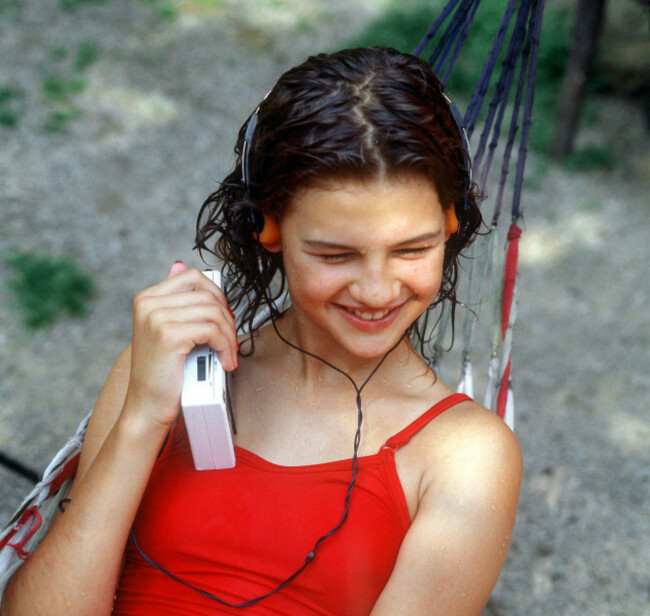
When I was my son’s age in the mid-90s, I had a Walkman cassette player and a horde of tapes from bands I followed and loved obsessively and could happily listen to whenever I wanted. At home, in the car, out walking. It felt like a big step toward being more independent and a real rite of passage, which allowed me to develop my own musical tastes without intervention from parents.
There was also a grown-up thrill in heading down to Golden Discs or HMV and browsing through the latest releases and seeing if I had enough pocket money for a single or an album. Plus, who could forget the frantic, panicked fun of recording songs off the radio before the ads started?
I was excited that my eldest was now taking more of an interest in music, and that he was ready to discover bands and form his own devotions and interests like I did when I was a kid. But there was one big problem that had sort of flown under the radar until now.
Namely, I’ve had to give my son my smartphone, or he had to use the family tablet to hijack my music streaming service and listen away to his own songs. Gone are the days of using a Walkman or Discman, and unless I dusted off my old iPod or minidisc player from 20 or so years ago, I couldn’t figure out how exactly I was going to grant a seemingly simple request for my child to listen to his own music under his own autonomy, without putting a smartphone or device in his hands?
Not only has the current arrangement been cumbersome for both adult and child, but it’s also not been conducive to him getting to listen to music or discover it on his own terms. Essentially, it’s limited his exposure to songs and artists, because it’s hard to do via a parent and their device. What it means is that for pre-phone children, listening to music by themselves and for themselves has become another request for screen time.
Parents are constantly encouraged to limit children’s screen time or delay the introduction of smartphones for as long as possible. We are repeatedly warned about the dangers of hooking young children and pre-teens into smart devices and screen use too early and the damage it can do. Most of us already feel huge guilt over how much tech is in our young children’s lives. On a basic level, if pre-teens want to have anything like the formative relationship with music, bands, and artists that many of us had as a child, it’s invariably happening via the use of smart devices and screens.
Music is hugely important for us all, but especially for children. Listening to music is associated with mood regulation and stress reduction. For pre-teens and teenagers, music can help with emotional regulation and identity, provide a sense of belonging, and create a private space that feels like their own.
But even away from the academics, discovering bands or artists for yourself is a formative experience. While it’s one we may tend to associate more with teenagers, for this slightly younger age group it feels like they are missing out and now experience music at arm’s length. For them, listening to music is predominantly via a parent’s phone, and many of the songs this age group seems to know are from YouTube/TikTok content creators or Netflix movies.
We know that this age group loves music as much as any other. According to research in the UK, 84% of eight-to-fifteen-year-olds listened to music, spending an average of 8 hours 22 minutes per week doing so. The most common device was a phone (63%), followed by radio (36%) and tablet (29%).
The radio is great, and I’m a huge fan, but particularly for pre-teens, it doesn’t deliver the experience they are after. Smart speakers can be another good option, but not every child has one in their room, and even if they do, it tends to deliver that same passive, algorithm-driven selection of songs, rather than putting their own direction in the driving seat.

I’ve had no choice but to go down the rabbit hole to try and find a solution that works. Many parents suggested getting an old phone, wiping it, and only leaving Spotify or another music streaming app on it. It was the obvious choice, but I couldn’t help feeling as though it was ultimately the counterintuitive one.
It reminded me of when, as children, we ate those white stick-shaped sweets that came in cigarette-style packets, and we all walked around pretending to smoke. Yes, technically, I’d not be putting a fully functioning smartphone in the possession of my nine-year-old, but wasn’t I planting the phone seed far too early?
What I needed was something that’s not quite a smartphone but allows my son the chance to listen to and choose his own music. On my search, I found devices that are not phones but are still techy by nature, with touchscreens and phone-style interfaces. Many others were often clunky to use or were too expensive. Most had limited song choices, or the choices and playlists were still made by or via an adult, removing the whole burgeoning and all-important autonomy piece.
I thought perhaps I could upload some CDs to the laptop and get the songs onto an MP3 player that way, but soon felt a million years old because no laptop in the house has a CD drive anymore. Other devices I found required an internet connection to download the music as MP3s and then upload them onto a player. My eyes glazed over at the truncated process involved, having flashback to the Limewire and Napster days.
The search goes on for now, and while it might feel like all hope is lost, I was encouraged to see that Gen Z are leading the charge back toward physical media and screen-free music. Vinyl is now seeing a record resurgence amongst younger generations. According to a recent survey of vinyl fans, over a quarter (76%) of Gen-Zers buy records at least once a month, with 80% owning a record player. Even more encouraging is that the report indicated that half of the respondents saw vinyl and physical media as a break from digital life.
Let’s hope Gen Alpha can follow their lead and continue the charge. Still, at nine years old, I can’t quite see my son starting his very own vinyl collection as a way to listen to Steve’s Lava Chicken quite yet.
Niamh O’Reilly is a freelance writer and journalist.
To embed this post, copy the code below on your site














have your say